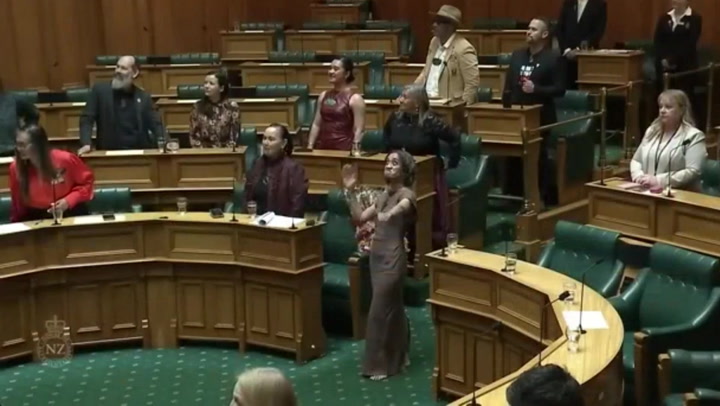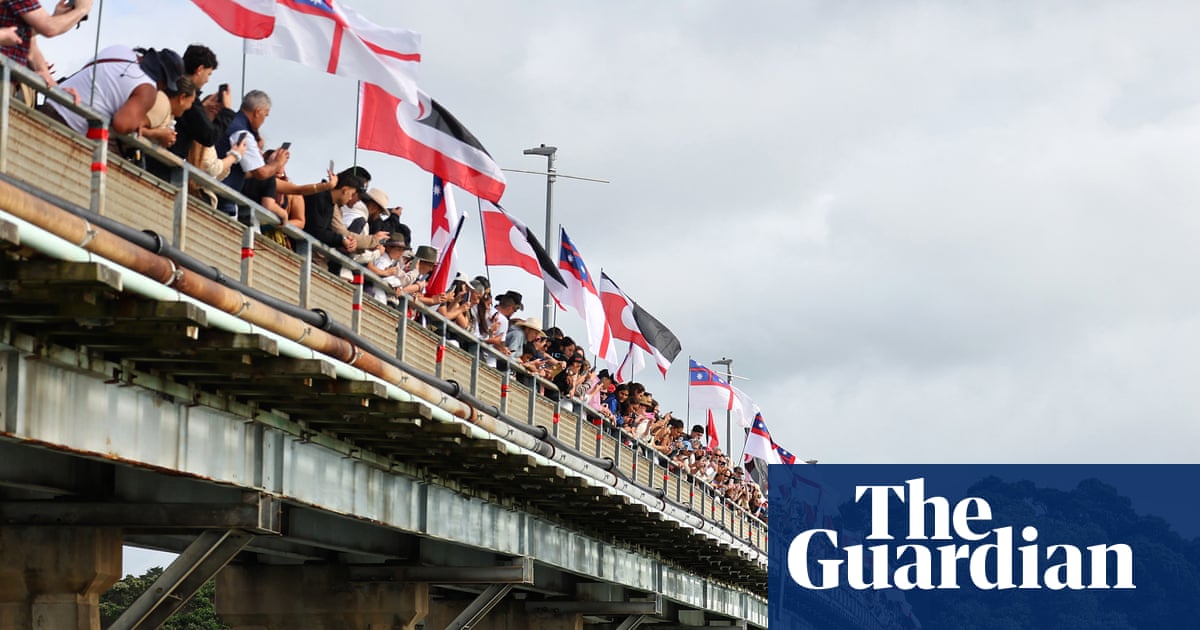
Subdued tone as political leaders spoke on eve of Waitangi Day amid some fatigue in Māori communities over divisive coalition policies
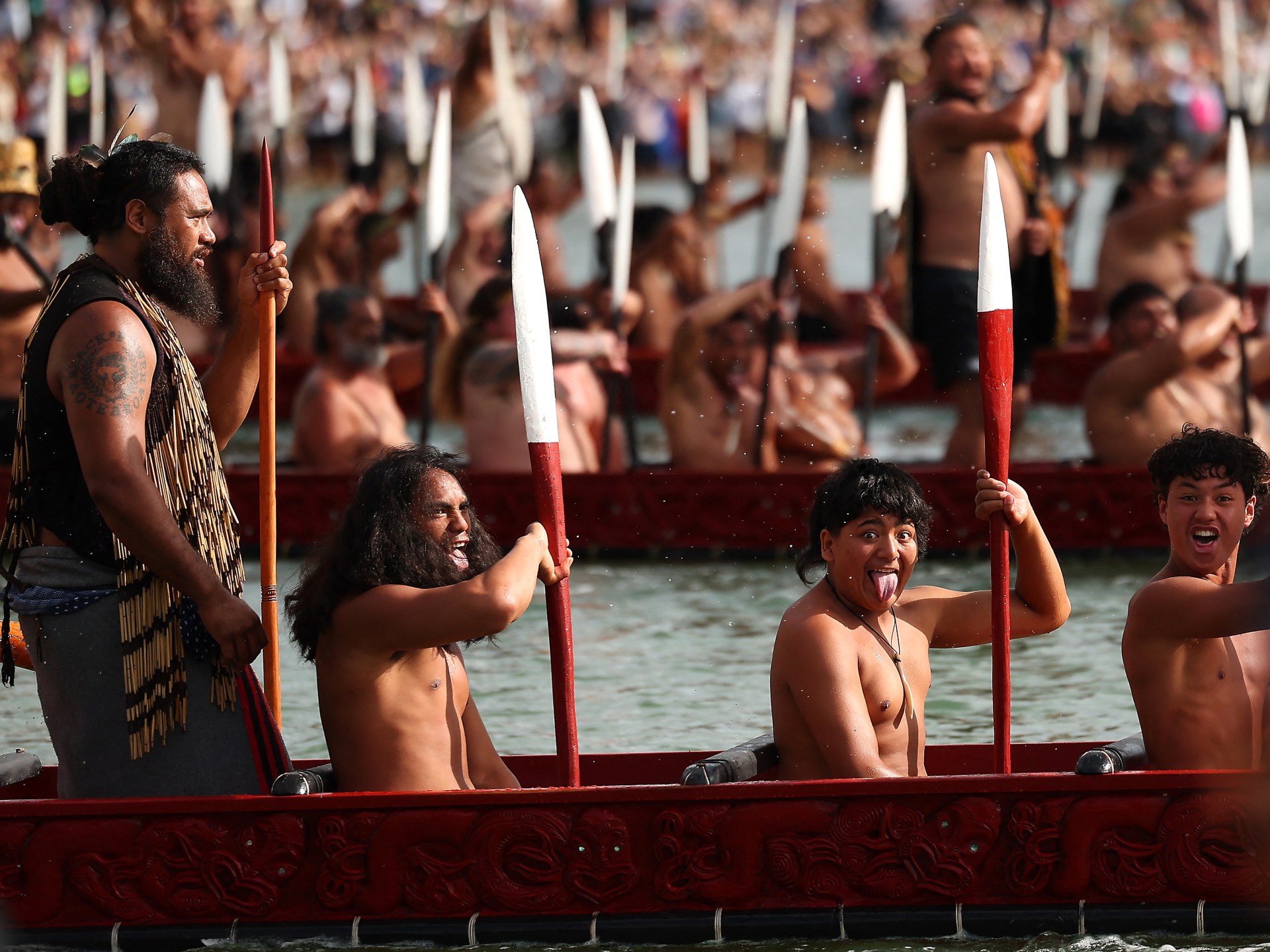
When New Zealand’s political leaders gathered to speak at the Waitangi treaty grounds where Māori chiefs and the British Crown forged a nation 186 years ago there was a striking absence: the public.
As a light rain fell on the green peninsula in the far north of New Zealand on Thursday, fewer than 100 people gathered to watch the leaders welcomed onto the grounds, and only a handful of people heckled ministers as they spoke.
The muted tone on the eve of Waitangi day, which commemorates the signing of the nation’s founding document the Treaty of Waitangi, marked a dramatic shift from a year earlier. In 2025, protesters turned their backs on government ministers and twice removed a microphone from David Seymour, the Act party leader and architect of the divisive treaty principles bill that sought to radically alter the way the treaty was interpreted. A year earlier, the rightwing coalition government faced record crowds and heated protests over their policies that many fear are undermining the treaty and rolling back Māori rights.
The absence of protest does not necessarily mark a shift of sentiment in favour of the coalition government, which faces an election in November. Rather, it signals fatigue within the Indigenous population, a breakdown in trust in the government, and a desire to refocus attention towards Māori communities, visitors to the grounds tell the Guardian.