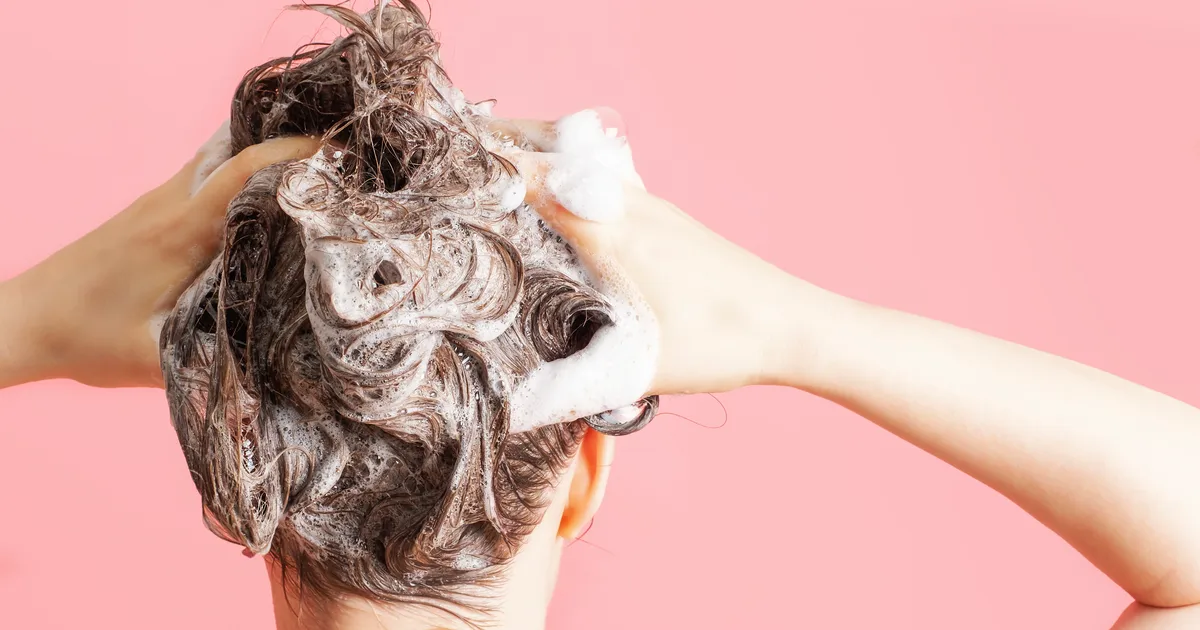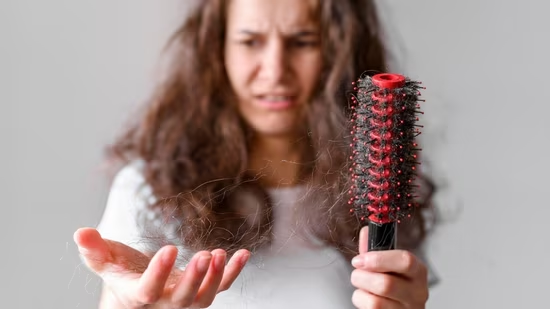
I’ve lost count of the number of times I looked at the hair left behind in the shower and panicked, wondering if I would find a bald spot after I toweled off. I have yet to notice a significant difference in the amount of hair I have before and after a shower. However, that doesn’t stop me from panicking and wondering whether the amount of hair I lose in the shower each day is typical or a sign of a problem. Is losing hair in the shower is a common occurrence, then why? And how much hair loss is too much? Could showering less frequently be the secret to slowing hair loss? We asked three top hair specialists to weigh in. The natural growth cycle plays a big role in when it falls out. To understand why so much hair falls out in the shower, we need to start with the hair growth cycle.Hair grows in cycles with three main phases: anagen, catagen and telogen. “Anagen is the phase where the hair grows the most, gets thicker in diameter and longer, and telogen is the phase where the hair is shed,” explained Dr. Akhil Wadhera, a dermatologist with Kaiser Permanente in Northern California. In between anagen and telogen is the short catagen phase, during which hair growth stops and the hair follicle shrinks in preparation for shedding. Once hair enters the telogen phase, it’s ready to fall out. Many strands of hair get trapped after our body sheds them. Even though it may seem like no hair falls out on some days and gobs fall out on others, hair loss each day is usually consistent from day to day. “We naturally lose 50 to 100 hairs daily as part of the normal growth cycle,” explained Dr. Zafer Çetinkaya, head hair transplant surgeon at EsteNove in Istanbul, Turkey. Most people may shed some individual strands of hair throughout the day without noticing, according to Dr. Alan Bauman, a hair restoration specialist at Bauman Medical in Florida. However, most of the hair we shed doesn’t fall out immediately. That’s because many of these strands “stay trapped or entangled with other hair,” which keeps them on our head, Wadhera explained. Yana Iskayeva via Getty ImagesOur trapped strands of hair eventually fall out, but it usually takes a little work to release them.Trapped hair usually falls out in the shower. Our trapped strands of hair eventually fall out, but it usually takes a little work to release them. For many of us, that work takes place when we wash our hair. “The shower is the primary site for shedding because of mechanical action. The act of massaging the scalp while shampooing and the weight of the water” help dislodge hair that has already stopped growing, and shed, Çetinkaya said.“Seeing hair collect in the shower can be alarming, but in most cases it is completely normal,” Bauman explained. The reason many of us see a pile of hair in the shower each day is that these trapped hairs are “coming out all at once rather than gradually throughout the day,” he explained. Should you count the number of hairs you lose in the shower to ensure you aren’t losing too much hair? It can be tempting to count the number of strands in the shower to make sure your hair loss is within normal limits or isn’t getting worse. However, that’s not a good idea. “While it can be helpful to notice trends, I caution my patients against ‘hair counting,’ which can lead to unnecessary anxiety,” Çetinkaya said.If you notice a larger pile of hair on the floor after a single shower, there is nothing to be concerned about, Bauman said. The most common reason you may lose more hair in the shower on any given day is skipping a shower. Going a day or two without washing your hair “usually means you will notice more shedding when you go to shampoo your hair the next time,” he explained. Even a short-term increase in shedding usually does not indicate a problem. A temporary increase in hair loss may occur “after illness, childbirth, major stress or starting a new hair treatment,” Bauman said. This type of hair loss should stabilize after two to three months, he explained.To monitor hair loss over time and account for short-term changes, Çetinkaya recommends tracking “the diameter of your ponytail or the visibility of your part line over 6 months.” A smaller diameter or a larger part line after six months may indicate you are losing more hair than the typical 50-100 strands a day consistently, he said. If that happens, it may be time to get an evaluation. What should you do if you notice increased shedding in the shower? If you notice that you are unexpectedly losing more hair, there is no need to panic. However, it may be worth getting to the bottom of why you are losing so much hair.For some people, hair loss is a normal part of the aging process. For women, accelerated hair loss may start in their 40s. For men, hair loss may begin in their 20s and 30s, with up to 50% of men having thinner hair by age 50. If you fall within this age range, your hair loss is likely a normal part of the aging process. Sometimes the culprit is poor haircare practices, which are usually easy to remedy. Rubbing your hair too vigorously during washing, using hair dryers on high heat, washing with harsh shampoos, applying harsh styling products, and rubbing wet hair too vigorously with a towel can contribute to hair loss, Wadhera said.There are a couple of telltale signs that your hair care routine may be to blame. If a significant amount of lost hair in the shower does not have a small bulb at the end and is short and jagged, your higher-than-average hair loss is likely due to breakage, Çetinkaya explained. If age or haircare routine isn’t to blame for increased shedding, Bauman recommends consulting with a dermatologist or hair restoration expert to get to the bottom of the issue. “It may indicate an underlying issue such as physiologic or mental stress, hormonal changes, nutritional deficiencies, or genetic hair loss,” he explained.Is there anything we can do to stop shedding in the shower? The hair most of us see in the shower was “destined to fall out,” Bauman said. Hair shedding is a regular part of the hair growth cycle, and there is nothing you can do to stop it entirely, he said.Some of Bauman’s patients believe that showering less frequently will stop or slow hair loss, but this isn’t the case. “Skipping washing can worsen scalp inflammation, which negatively impacts hair growth,” Bauman said.Nevertheless, Bauman added, “If shower shedding feels excessive, persistent, or distressing, it is important to seek professional guidance.”
The Real Reason Your Hair Falls Out In The Shower — It's Not What You Think
If you think the answer is to shower less frequently, you’re wrong.
1,138 words~5 min read