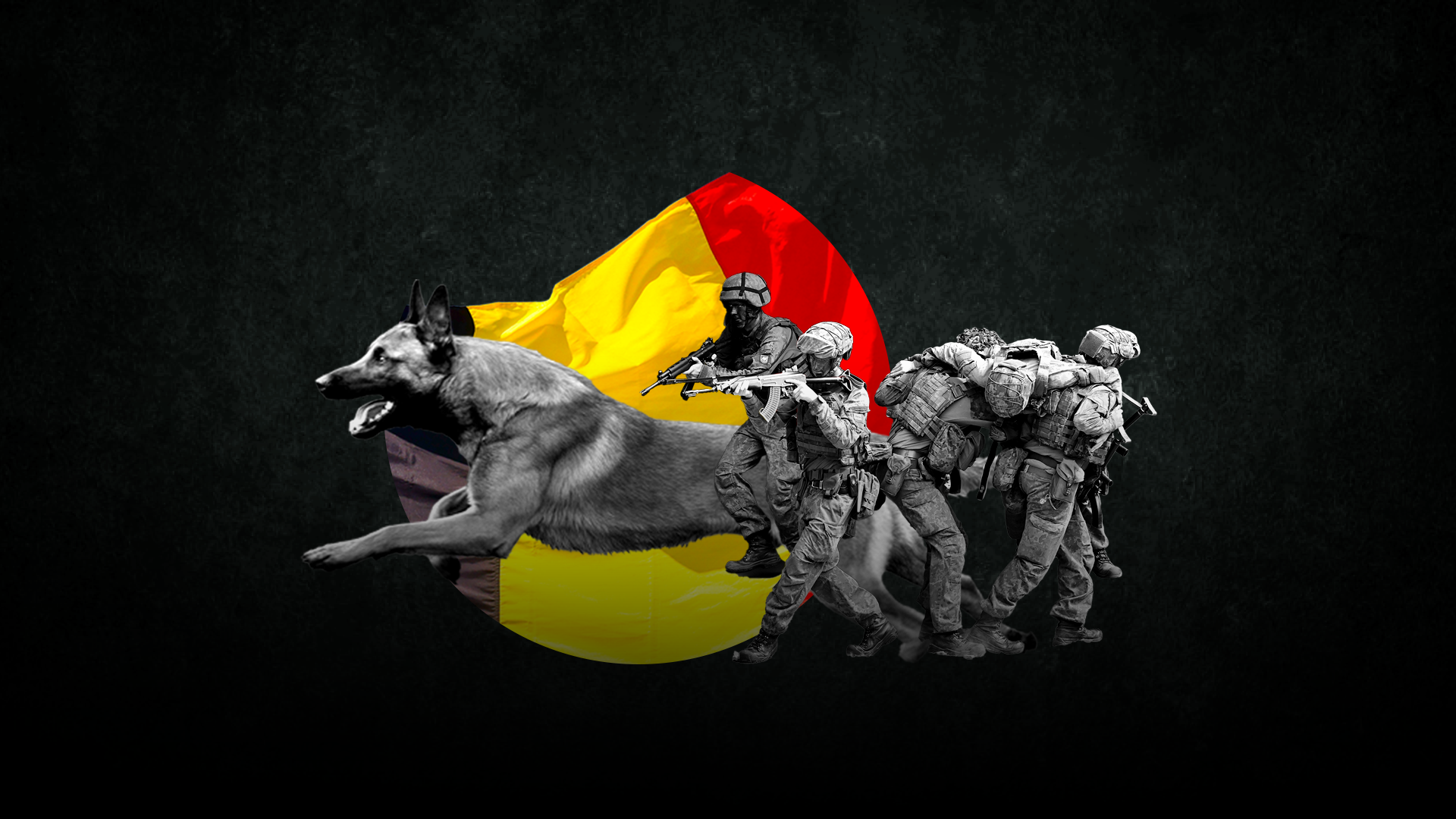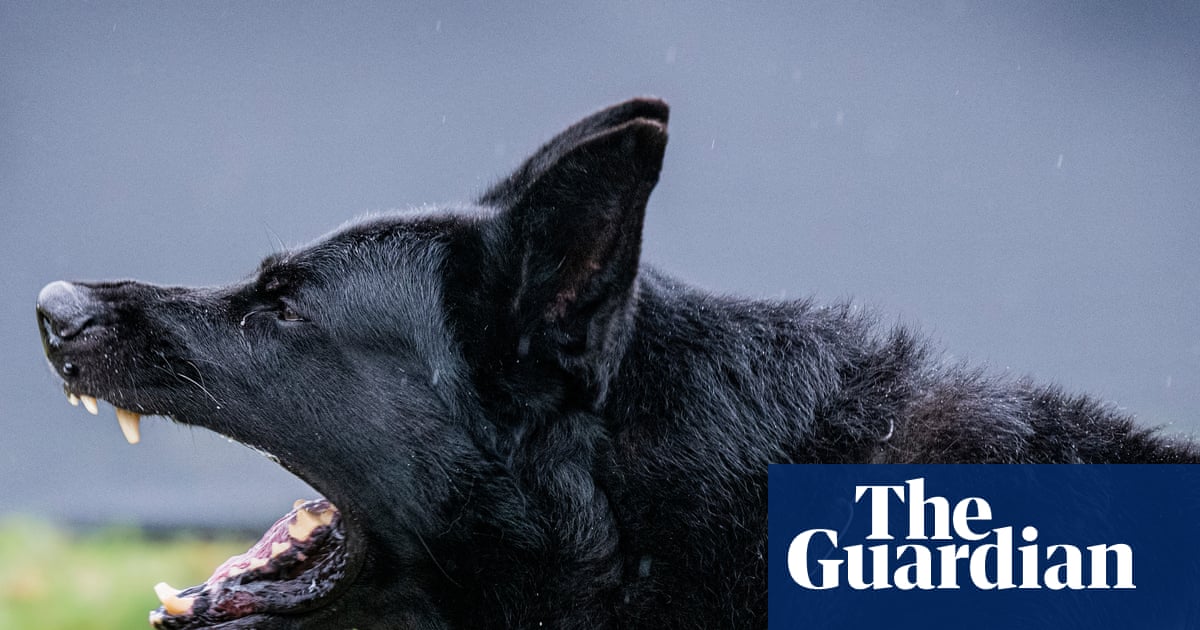
Pets trained to bite, hold and release on command are growing ever more popular in the UK. But why – and at what cost to the animals and their owners?
E
ven if you’re not afraid of dogs, you might be a little intimidated by Butch Cassidy. His tail may be wagging, but the Belgian shepherd weighs 40kg and moves with awesome agility. Even a casual brush of his body could knock you off your feet if you weren’t expecting it. “I don’t for a minute think he’s going to bite anyone,” said his owner Grahame Green earlier. “Although he would, if I asked him to.” Now Green’s about to demonstrate.
He brings Cassidy to heel, and gets him to sit. Facing them is another man, Florin, already braced and wearing a protective arm sleeve. The dog is visibly quivering with excitement, so keen is his anticipation for what comes next. Green gives a one-word command, in German. Cassidy darts forward, an auburn arrow, and in that split-second clamps on to Florin’s forearm. Florin is engaging every muscle to remain upright, but Cassidy does not let go until Green gives the word.
Both men are experienced dog handlers, and Cassidy is under control. Still, it is not hard to imagine how even a highly trained animal such as this might misfire in an unpredictable situation, or less confident hands – and chilling to imagine the outcome.