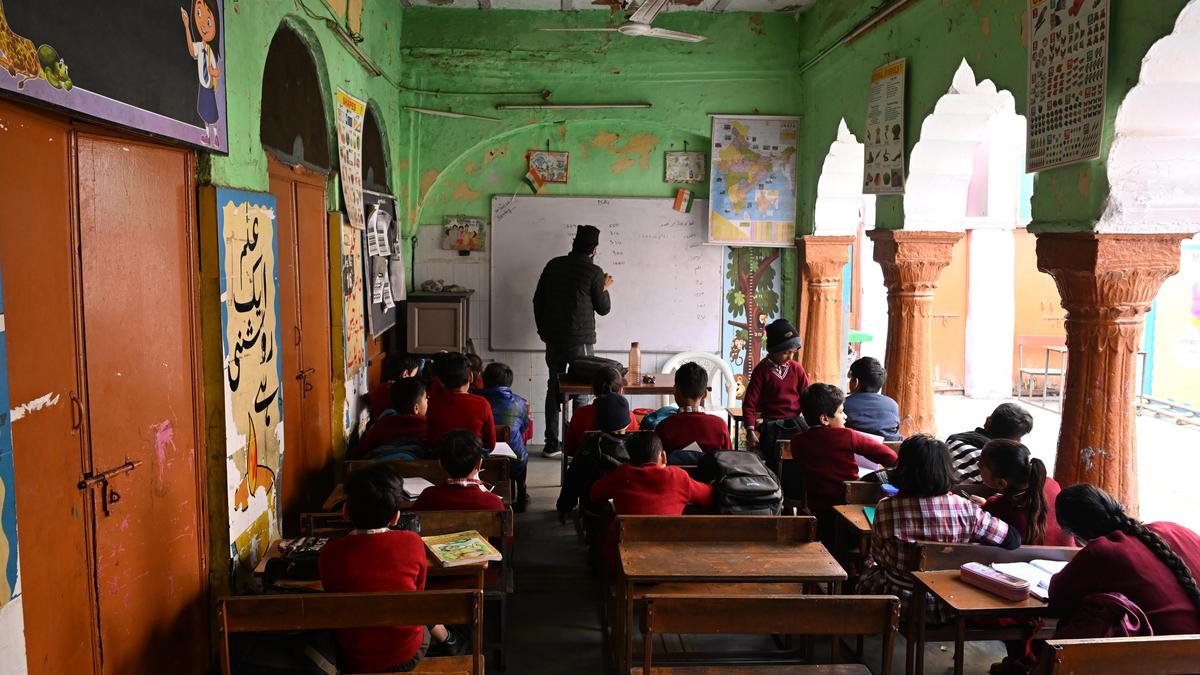
On a fog-laden Delhi morning, the staff of a Municipal Corporation of Delhi (MCD) school begins lining up students for assembly. The primary school is tucked into the by-lanes of Old Delhi, the Capital’s walled city. With more than 100 children, the open space is so small that when they’re asked to stretch their arms out, they get in each other’s way. Run out of a haveli abandoned during Partition, this Urdu-medium school is attended by children who live in the congested lanes around. This school, like many others, was started in the 1960s.
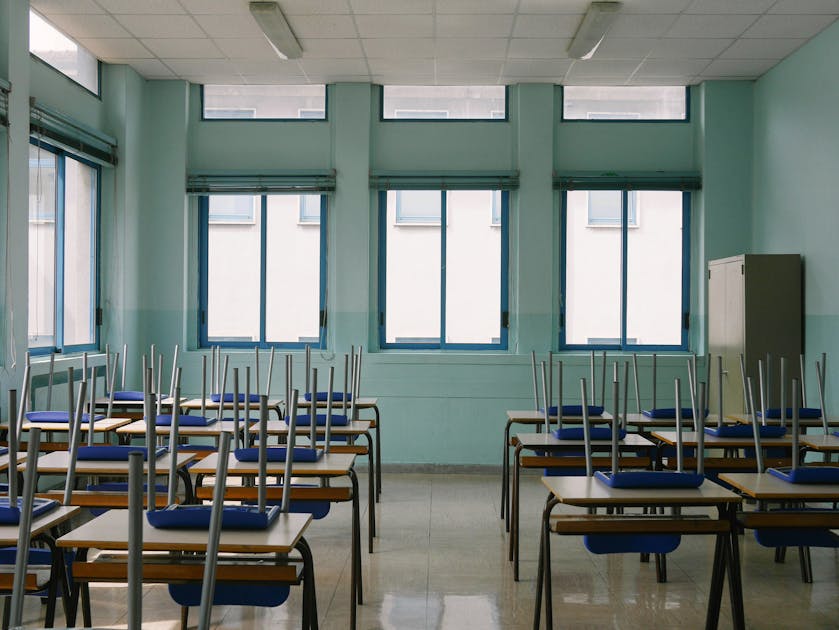
Soon after assembly, conducted in Hindi, students from nursery to class 2 are ushered into a classroom. Three empty classrooms remain locked. Children from classes 3 to 5 take their places on benches in three rows in the arched hallway outside the classroom, facing a blackboard. Some run around. Others chat, distracted by the noise spilling out from the classroom next door. The school has an enrolment of 120 students, 90 boys and 30 girls.
‘No Aadhaar, no school’: Education of Pakistani refugee kids in Delhi stuck in a limbo
Armaan (name changed to protect privacy), hired as a teacher for children with special needs (CWSN), is conducting classes for the whole school through the day. The only other teacher is out on administrative work. There are only two CWSN students in the school, but Armaan moves between the hallway and the classroom, assigning work to different groups. He chooses a chapter on ‘family’.