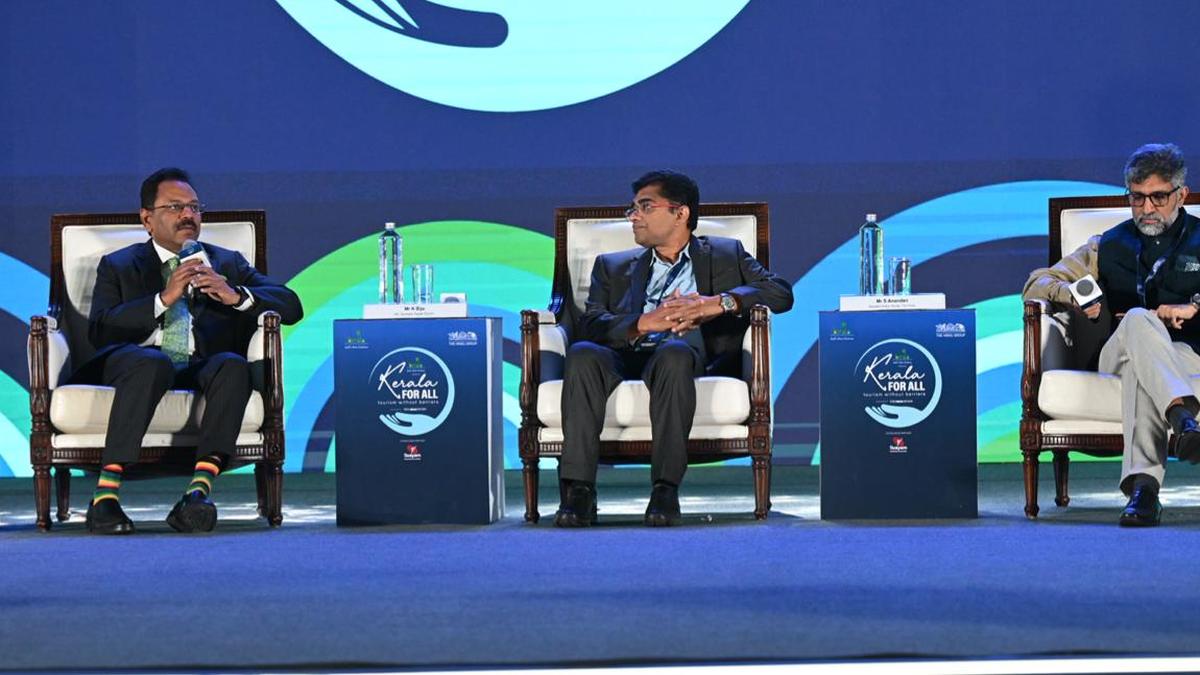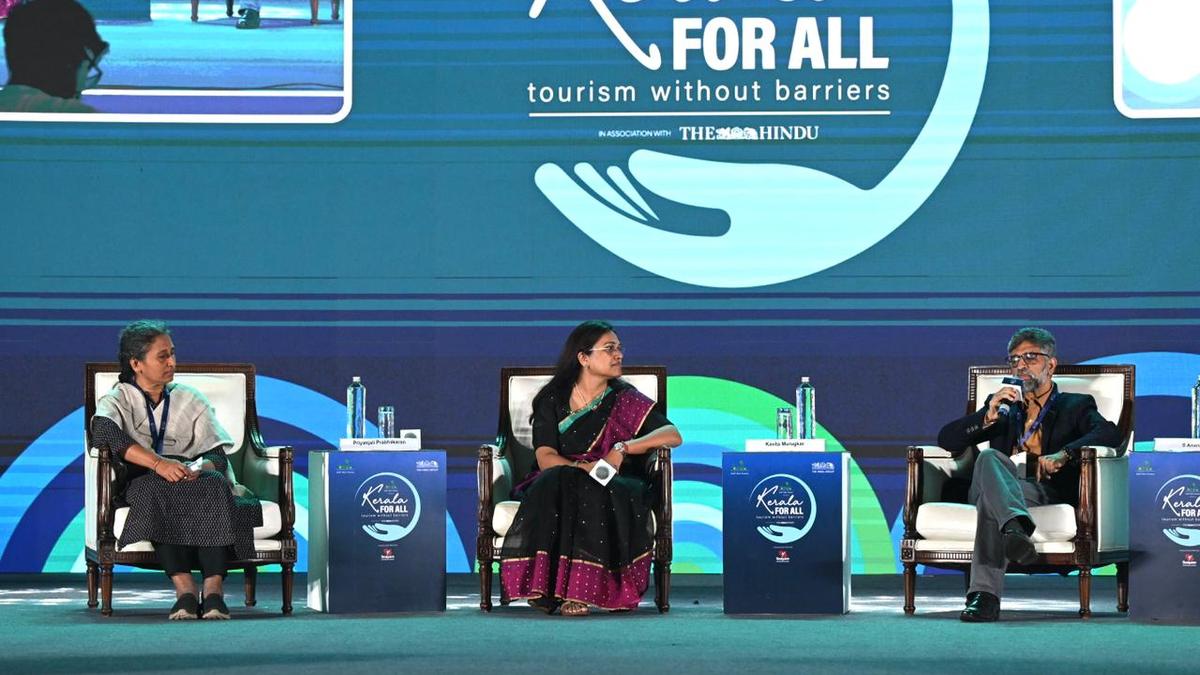
Lack of empathy, inadequate dissemination of information, and the absence of continuous education for architects are hampering universal accessibility, observed Priyanjali Prabhakaran, principal investigator, Barrier Free Consultancy Cell and Professor, Department of Architecture and Planning, College of Engineering Trivandrum, along with Kavita Murugkar, architect, educator, and universal design evangelist.
They were speaking at a session on Accessibility First: Designing Tourism without Barriers (A Broader View on Accessibility) at the two-day Kerala for All–Tourism Without Barriers conclave, jointly organised by Kerala Tourism and The Hindu, which commenced at hotel Grand Hyatt here on Saturday. The session was moderated by S. Anandan, Resident Editor, Kerala, The Hindu.
Emphasising the three main components of the Accessible India Campaign—built environment accessibility, transportation system accessibility, and information and communication system accessibility—Ms. Prabhakaran noted that while standards exist to ensure accessibility, they are not being implemented on the ground. She attributed this failure largely to a lack of empathy.
Ms. Murugkar, however, pointed out that the problem was not only empathy but also the absence of proper dissemination of information. She said only a small percentage of architects are aware that their building designs must incorporate accessibility standards. Accessibility is also missing from the curriculum of architecture and design schools, preventing it from being mainstreamed. As a result, architects graduate without adequate knowledge or technical capacity to implement accessibility. Continuous education for architects, since rules change regularly, should be institutionalised. Moreover, those supervising implementation are often untrained, lacking both technical expertise and awareness of errors that need to be avoided.