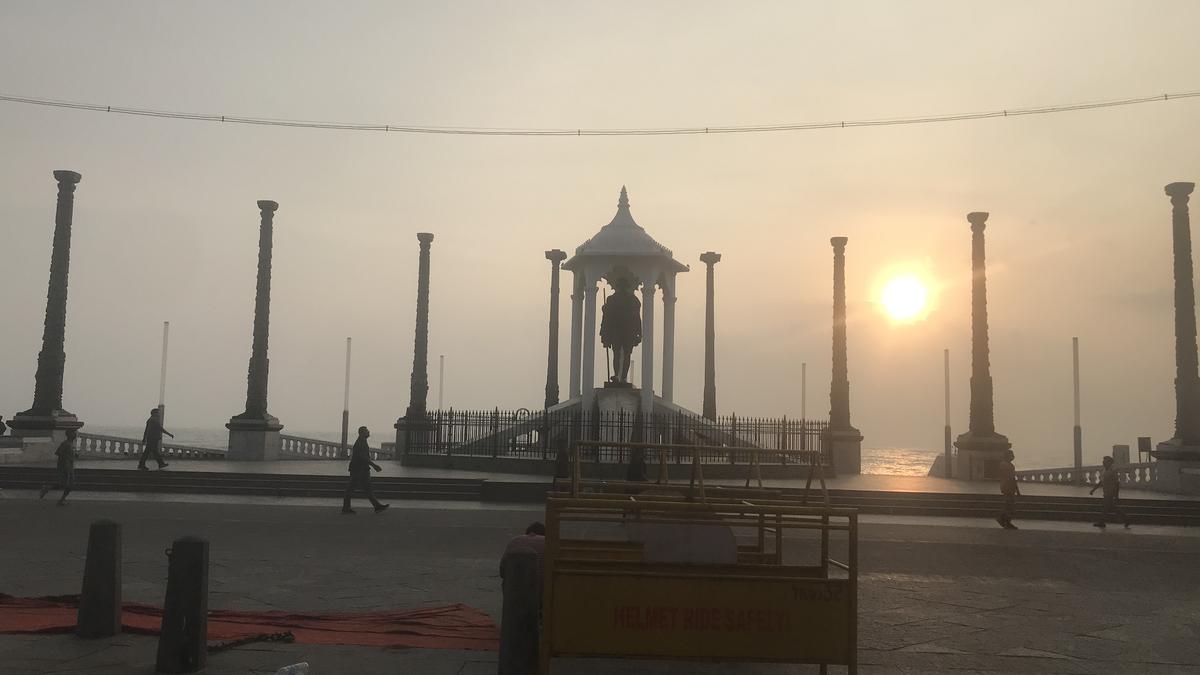
Wandering around the promenade at Pondicherry on a rainswept morning last week, I stopped by the Gandhi statue, which is a fairly pedestrian work of art when compared to D.P. Roy Choudhuri’s magnificent piece that adorns the Marina in Madras. But as always, what caught my attention was the set of eight pillars that stand around the statue. These, and a few more that stand in neighbouring Ayi Mandapam/Bharati Park, were all once at the Venkataramanaswami Temple at Senji and then brought here by the French to adorn their beachfront. What is forgotten is that once, there was a colonnade of 32 pillars here that the French brought in from Madras in 1746. The British took them back to Madras following their siege of Pondicherry in 1762.
These pillars, all of Pallavaram gneiss, were owing to Governor George Morton Pitt, who, during his tenure in the 1730s, had them put up in four rows from the sea to the entrance of Fort St. George. Though meant to be an ornamental and ceremonial arcade to beautify the city (shades of Singara Chennai here), the passage became the city’s first commodities exchange, with trade happening in the spaces between the pillars. A row of shops came up on one side, and these, along with the colonnade itself, can be seen in a picture by William Daniells in 1793.