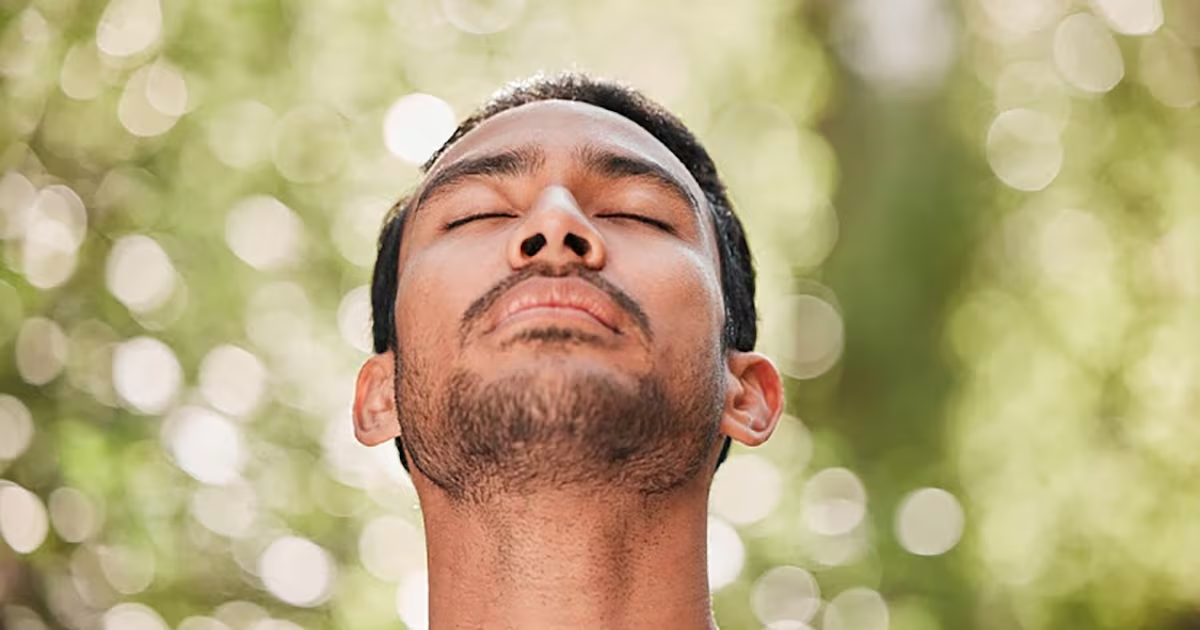
I’m lying on a massage bed in a dimly lit treatment room in Mayfair, breathing so hard I think I might pass out. Rob Rea, one of London’s most sought-after breathwork practitioners, is guiding me through holotropic breathwork – a technique developed in the 1970s at Esalen, in California, by Christina and Stanislav Grof, pioneers in LSD research, as a drug-free way to access altered states of consciousness.
“Just keep going,” Rea encourages, as I start to wonder what exactly the point of all this minor discomfort is. After about 20 intense minutes – with batches of roughly 15 long inhalations, each followed by a short, sharp exhalation – something extraordinary happens. My body shakes from the inside out and I experience what researchers call “oceanic boundlessness” – a dissolving of physical boundaries.
For the next 10 minutes Rea tells me to imagine myself in two years’ time, walking through a meadow. I’ve never taken LSD, but I imagine this slightly strange, freeing feeling is the goal. As quickly as it started, it’s over. My body has done something remarkable, and all I did was breathe.
What just happened? When you breathe rapidly like this, you blow out CO2, which causes the blood vessels to become narrower, thereby cutting off blood flow to the brain. This creates an altered state of consciousness: “60 to 70 per cent of people doing holotropic breathwork will cry at some stage,” Rea tells me afterwards, “because it’s a big emotional release.” I don’t cry, but I leave with a new respect for what our bodies can achieve through breath alone.