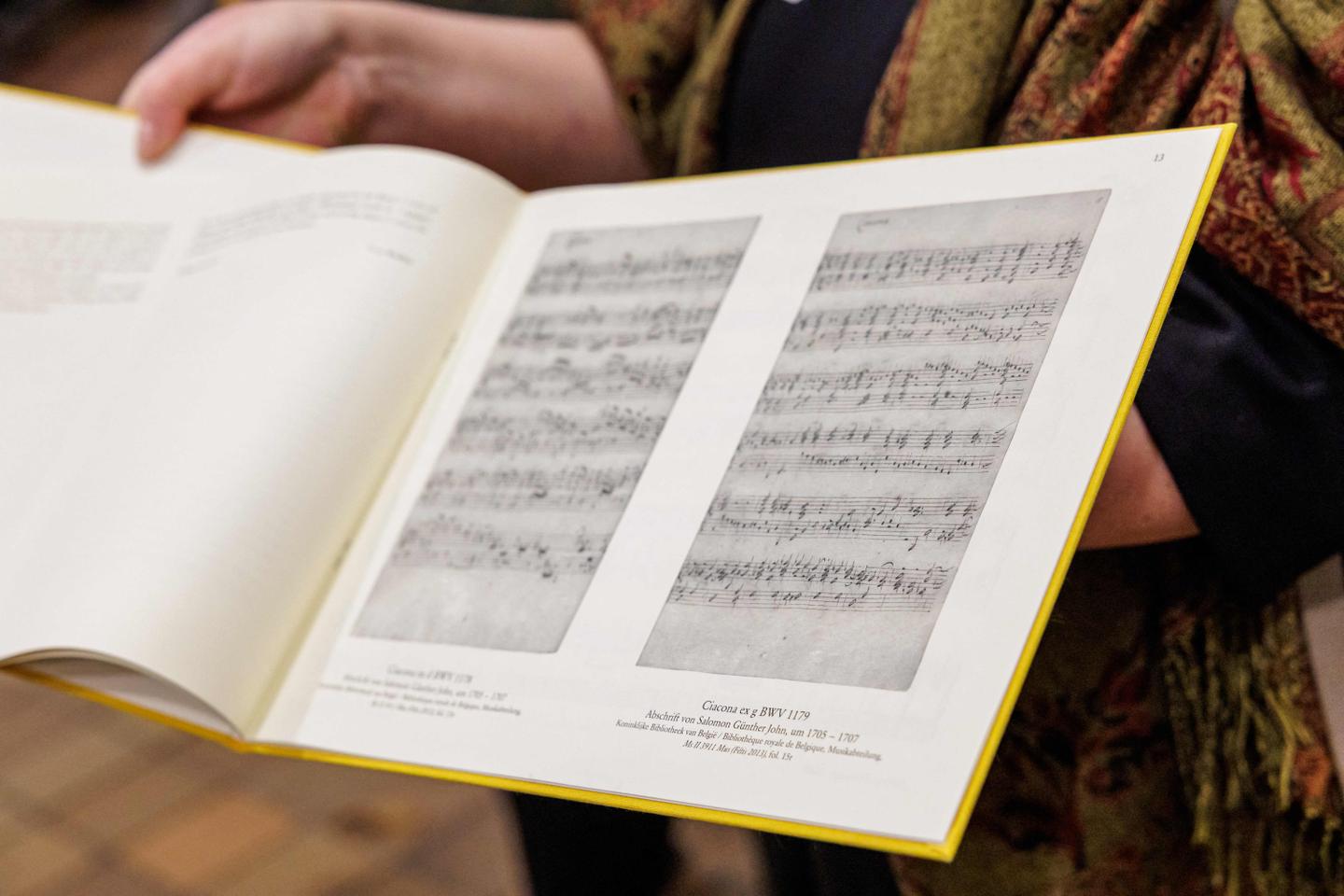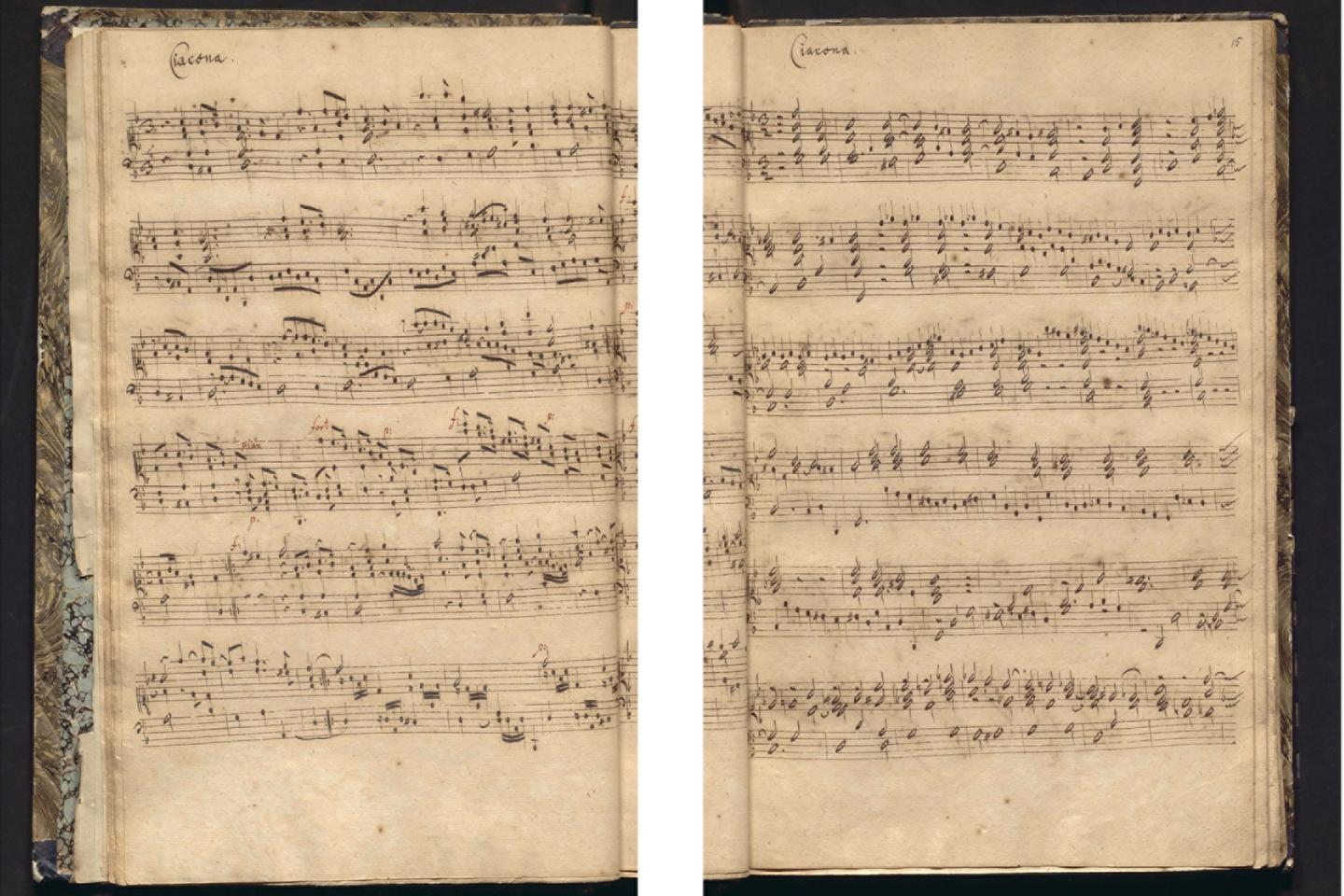
The two scores attributed to Johann Sebastian Bach, at the Royal Library of Belgium, in Brussels. BIBLIOTHÈQUE ROYALE DE BRUXELLES
Statues, cafés, museums and shops, concerts and cakes decorated with musical notes: One must imagine the reverence for Johann Sebastian Bach (1685-1750) in Leipzig, Saxony, Germany, to understand the significance of the discovery of two previously unknown scores by the great German Baroque composer in autumn 2025. Nearly a dozen elected officials – local, regional and federal – gathered on November 17, 2025, to hear, for the first time in 320 years, the performance of the two chaconnes – a popular musical genre in the 18th century – on one of the two organs of the Thomaskirche, the very church where Bach served as choirmaster for more than 25 years and where he is now buried. The event, broadcast live, was celebrated as a miracle in a country where music is an essential part of its national identity.
The story is indeed worthy of a detective novel. It unfolded over 35 years, between two countries and at least four cities, involving several researchers around Peter Wollny, the current director of the Bach Archive in Leipzig. It began in 1991 or 1992, when Wollny, then a young musicology student, came across two unsigned scores at the Royal Library of Belgium in Brussels, known for its collections of archives of Bach and his family.