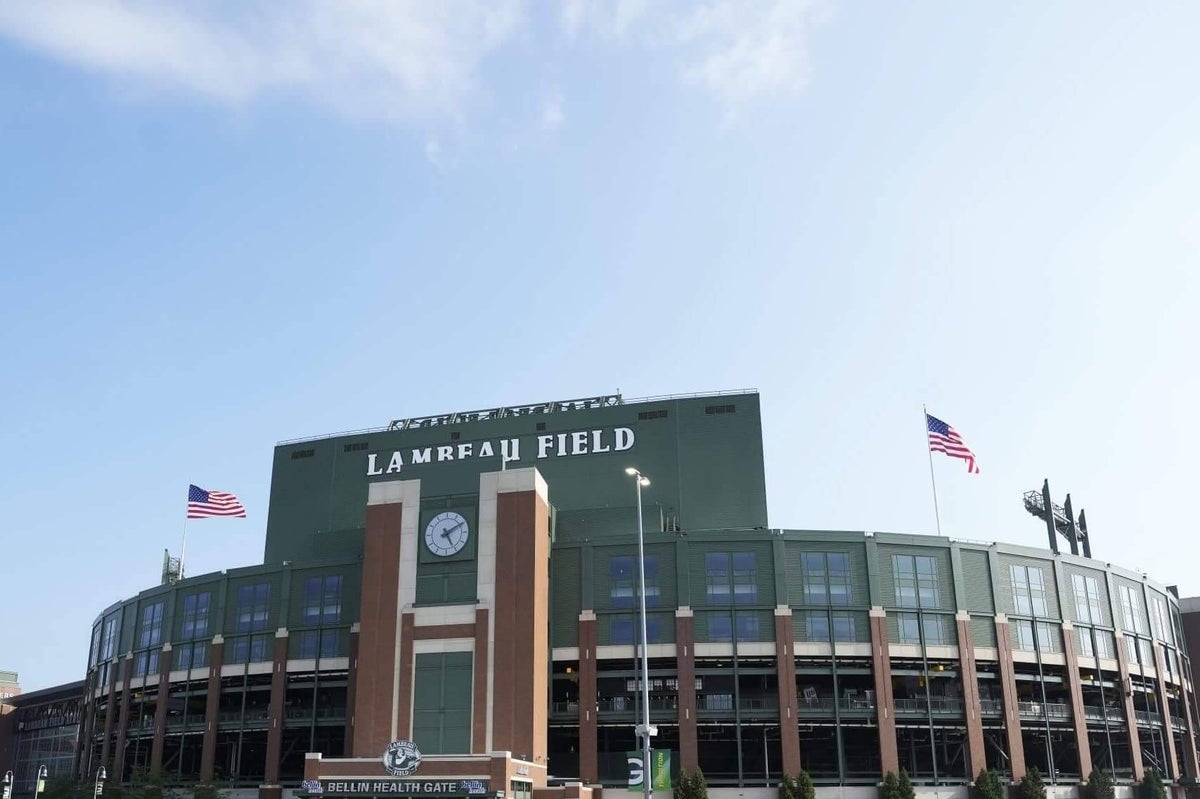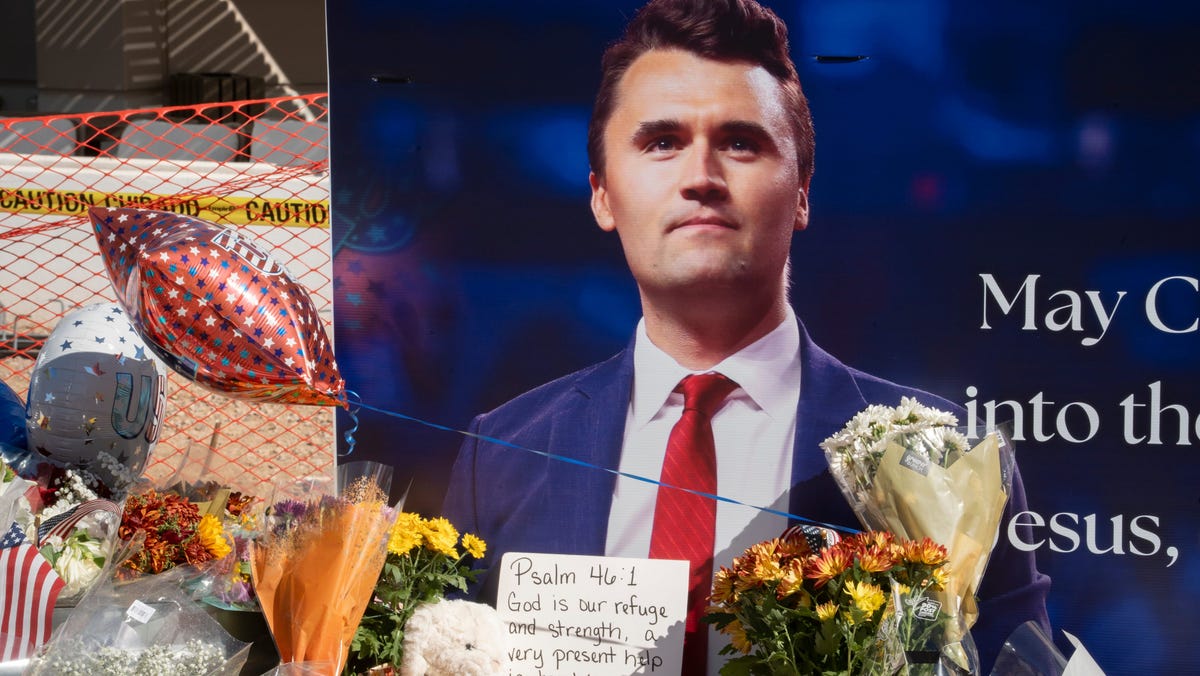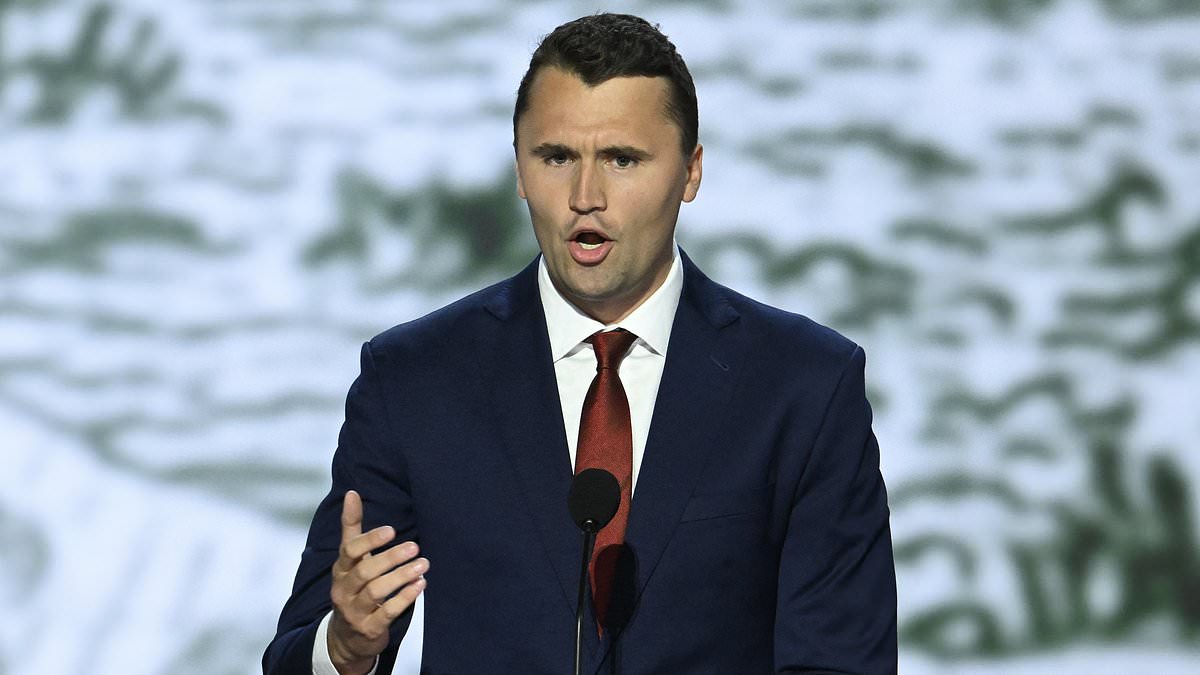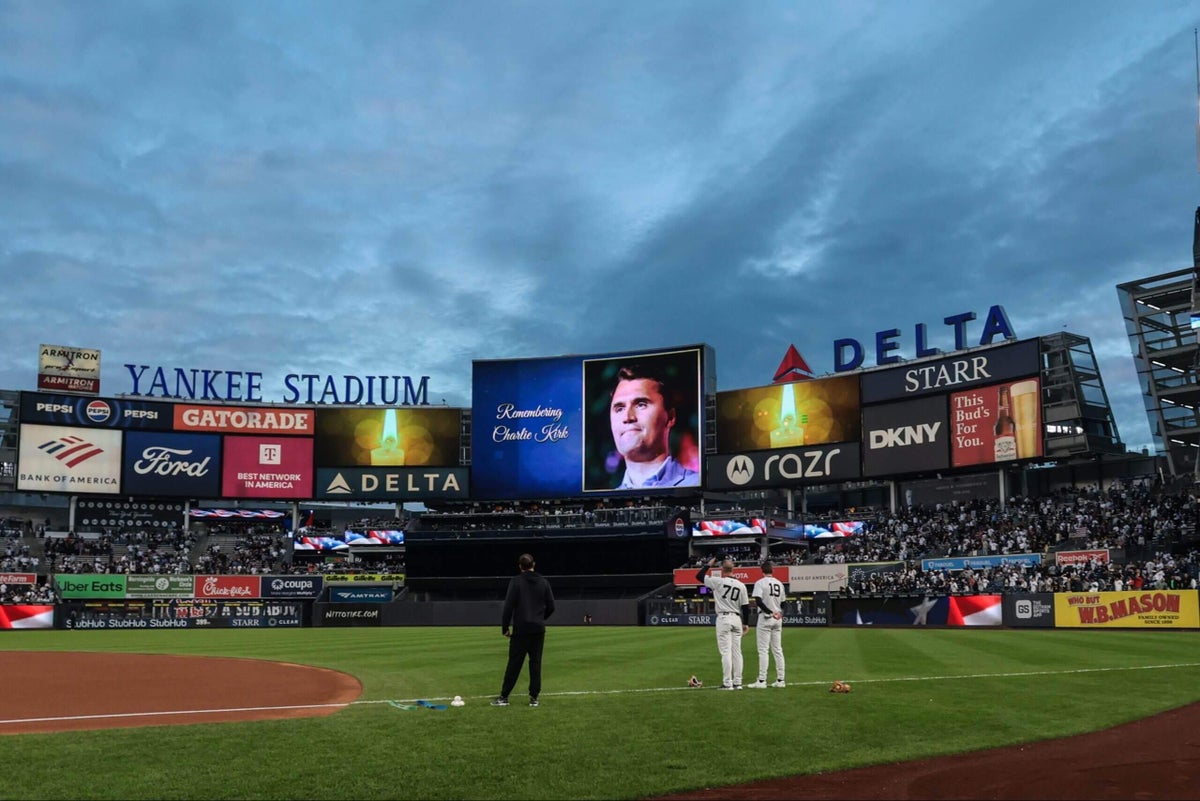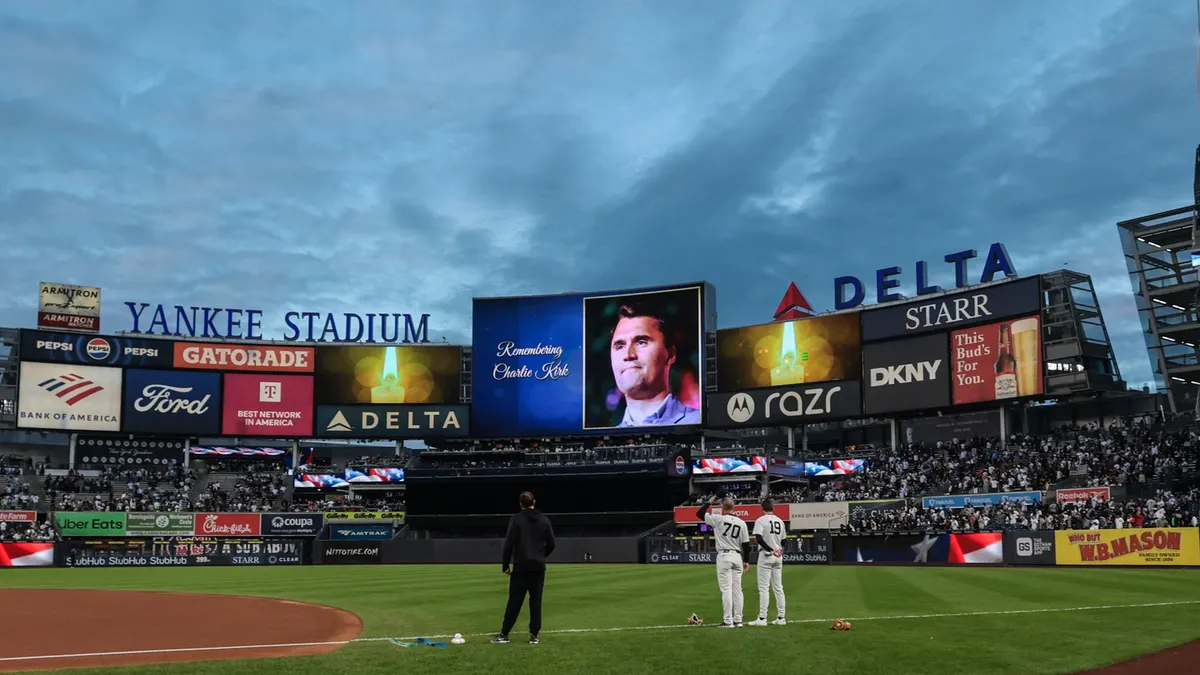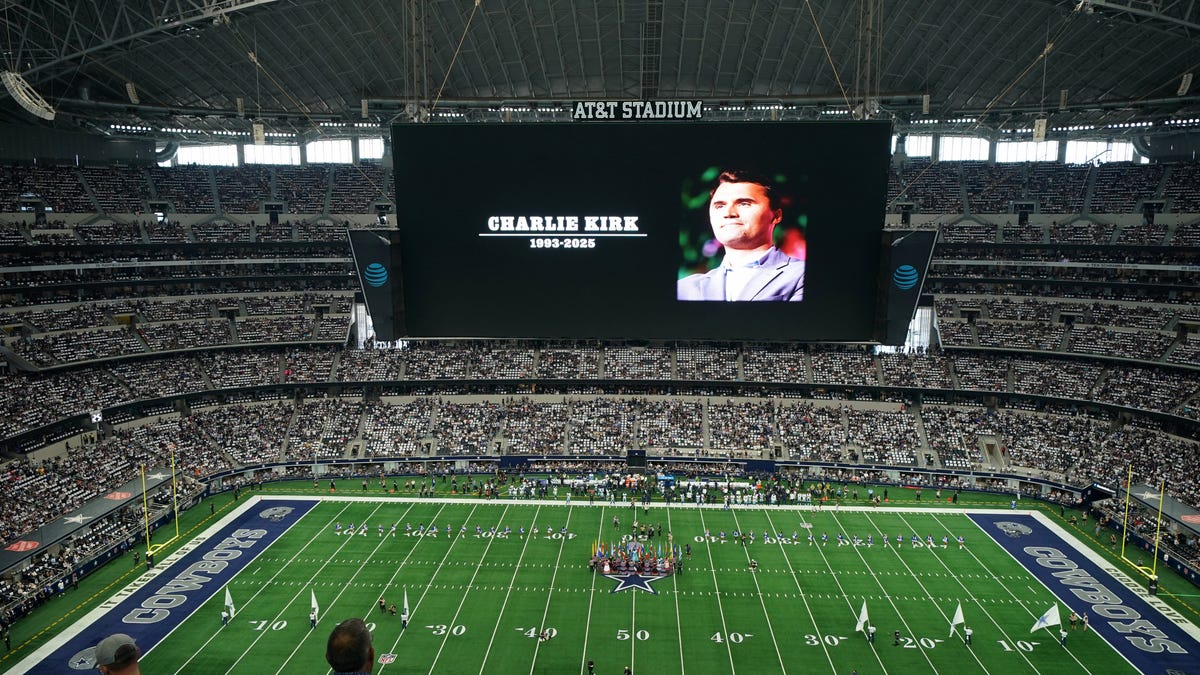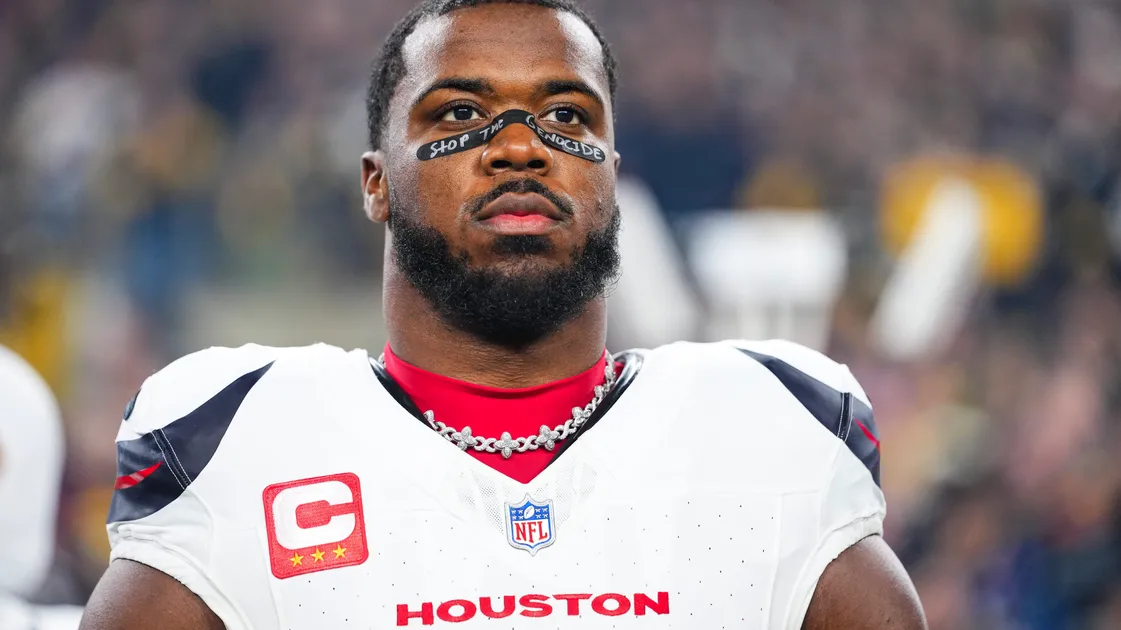
On Sept. 14, 2025, four days after Charlie Kirk was fatally shot during a Turning Point USA event at Utah Valley University, several NFL teams held moments of silence for the right-wing activist. The Green Bay Packers went first — the day after Kirk’s assassination, Sept. 11 — combining their tribute with remembrances for 9/11 victims. The Dallas Cowboys put Kirk’s face on their Jumbotron. The New York Jets rolled a video package. The NFL appeared to have had no qualms about paying homage to a person who vocalized anti-Black sentiments, even though over half of its players are Black Americans.Fast forward 18 weeks. On Sunday, Jan. 18, a day before Martin Luther King Jr. Day and hours before a pivotal Texans-Patriots playoff matchup, the league fined Houston linebacker Azeez Al-Shaair $11,593 for wearing eye black that read “stop the genocide” during the previous week’s game against Pittsburgh, citing its rule against personal messages.Al-Shaair’s message was apparently too political. And before anyone tries to frame this as partisan, let’s be clear that not wanting innocent humans to die — many of whom are children — is not political. It’s human.The NFL’s support for player expression appears conditional, welcomed when it serves the league’s interests but discouraged when players address systemic racism or social justice.The same league that fined Al-Shaair for condemning mass violence in Palestine had no issue with some of its teams broadcasting tributes to Charlie Kirk — a man with zero connection to football whose entire brand was built on inflammatory political commentary. The same league that silenced Colin Kaepernick for kneeling against police brutality later painted “End Racism” in NFL end zones and made “Lift Every Voice and Sing” a pregame fixture after George Floyd’s murder.The NFL’s support for player expression appears conditional, welcomed when it serves the league’s interests but discouraged when players address systemic racism or social justice.When Colin Kaepernick kneeled in 2016, we saw it play out. Meanwhile, the league has slapped social justice slogans in multiple endzones since 2020 (though it removed the slogan “End Racism” in the 2025 Super Bowl), wrapped itself in pink for Breast Cancer Awareness Month (which has slowed since the second Trump term), rolled out military flyovers and given lukewarm nods to LGBTQ+ Pride. The calculation feels performative, with the league cherry-picking causes it deems safe, marketable, and non-threatening to its bottom line. Players speaking their minds about very real human rights issues? That’s a liability.Seven teams — the Bengals, Lions, Ravens, Steelers, Colts, Vikings and the Raiders — did not honor Charlie Kirk with a moment of silence. (The Texans held a moment of silence without explicitly naming Kirk, instead honoring “all victims of violence and natural disasters.”) One could argue that Kirk has no relevance to the game as someone who spread election conspiracy theories, made incendiary comments about race and built a career on owning liberals. Those seven NFL teams were free to make the choice to not honor Kirk.But Azeez Al-Shaair, a Muslim American player watching the death toll in Gaza climb into the tens of thousands, couldn’t get away with expressing his feelings on the subject publicly. The hypocrisy feels suffocating.This argument isn’t about whether you agree with Al-Shaair’s message or Kaepernick’s kneeling. It’s about who gets to have a voice. The NFL can blast its carefully curated politics across stadium screens and paint them onto the turf. But the second a player steps out of line — the second they dare to think, feel, or speak as individuals — the hammer comes down.It gives the message that players are expected to shut up and play the game. Be grateful. Smile for the cameras. Cash the checks. Don’t remind us you’re a human being with a conscience, a faith, a family watching the news in horror. The NFL wants performers. Bodies that run routes and take hits and don’t ask questions about why the league can honor a dead political provocateur but not tolerate a linebacker saying, “stop the genocide.”But respect is a two-way street. And if Charlie Kirk’s life deserves attention, so does one player’s bid for human life.
The NFL Didn't Seem To Have A Problem With Honoring Charlie Kirk — But This Type Of Protest Is Too Much?
The hypocrisy feels suffocating.
687 words~3 min read