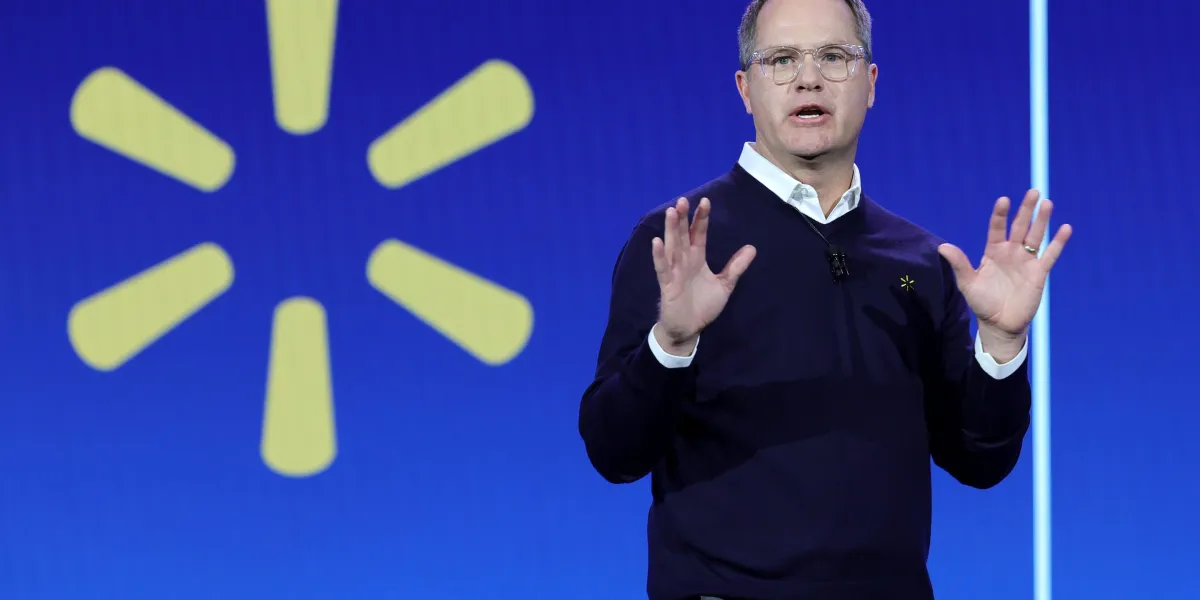
When Walmart last week announced that David Guggina, its U.S. e-commerce chief executive, would become CEO of its nearly $500 billion U.S. division, one thing stood out in his résumé: Unlike his predecessors, Guggina has no experience running stores and has never held a merchandising role, at Walmart or elsewhere. These are two classic job requirements in retail. Incoming Walmart CEO John Furner, for example, who has run U.S. operations since 2019, began his Walmart career as an hourly associate in 1993, and held roles in merchandising, operations, and sourcing.
But there’s another realm of experience that Guggina does have in spades: e-commerce, automation, and supply chain. And by putting him atop the division that generates 69% of company revenue, Walmart is signaling that it now sees itself as a tech company, as well as a retailer. Guggina has spent eight years at Walmart, after nine years at arch-rival Amazon.com. In its announcement, Walmart touted Guggina’s work in building delivery capabilities to serve 95% of U.S. households in under three hours, and said his appointment “positions him to continue to drive our goal of being America’s favorite place to shop.”
In the last decade, after years of fits and starts, Walmart has emerged as a formidable e-commerce player, with U.S. digital sales of almost $100 billion a year—still far behind Amazon, but well ahead of any other U.S. retailer. In its most recent quarter, Walmart’s U.S. e-commerce rose 27%. That has been the result of billions in investments to integrate Walmart’s 4,600 stores with its e-commerce operations. This work has helped ensure faster shipping while also integrating technology more effectively into things like inventory management, supply chain, and in-store customer service. Guggina was instrumental in those achievements, working under Furner, who will become Walmart Inc’s new CEO next week.