ByGuy Martin,
Senior Contributor.
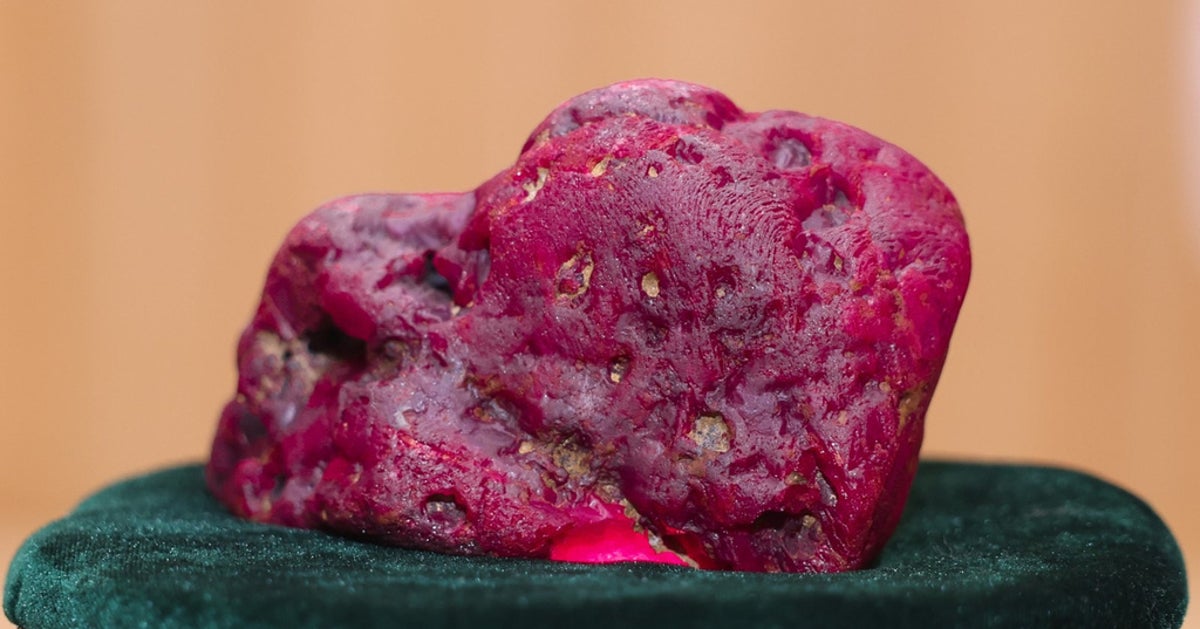
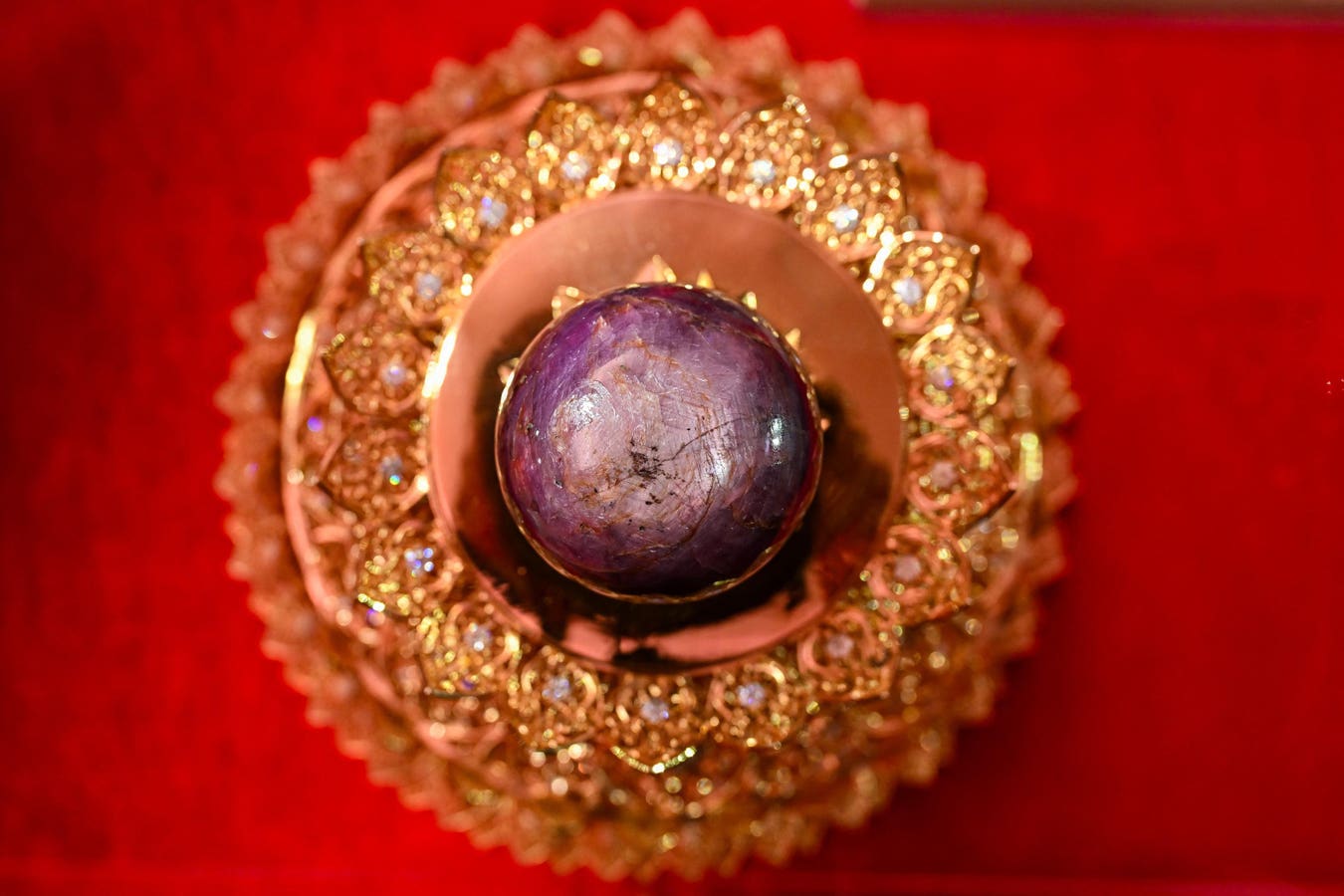
Three thousand five hundred and sixty-tree carats, a measurement of weight and in a certain way a measurement of the size refracted through the density of gemstones, translates as 1.57 pounds, which is just one of the several reason why the ultra-rare Sri Lankan “natural purple” star sapphire, certified on January 17 in Colombo by the American Gemological Institute as the world’s largest of its kind, has just been valued at a curiously flat but still stratospheric $300 million. With no shred of irony, the stone has been named the “Star of Pure Land.” Its estimate rests first on its size — meaning on the extreme rarity of a stone “of” that size — but the value lies in almost equal measure upon its quality.
That elusive value/quality equation works like this: So-called “star” sapphires of the highest natural quality carry what are called needles of the element rutile within them, which refracts light differently within the stone, creating — in this case — the famous six-pointed star reflection on the stone’s surface when illuminated. Ideally, sapphires’ stars are thought best when clearly , geometrically delineated, unsullied by contaminant minerals or whorls within the molecular grain of the stone. With its reported natural clarity the Star of Pure Land has that in spades. Additionally, its purple (not blue) color, as well as its sheer mass at that level of purity means that in this stone’s formation, the conditions of the earth’s crust at that specific point under Sri Lanka were set up perfectly to generate not a tiny, perfect, thing, but a great big perfect thing. Hence the notional $300 million tag. Pictured top, the Star of Pure Land, yet to be abraded or polished.