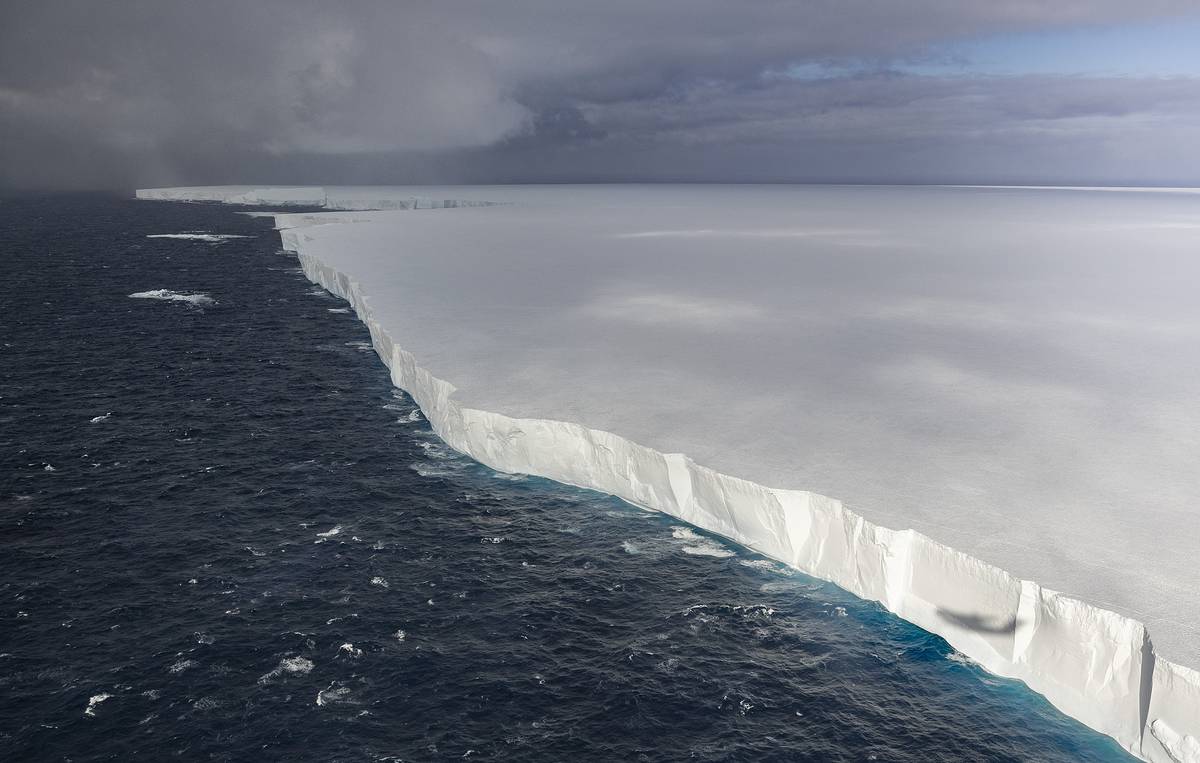
NASA's Earth Observatory captured striking new satellite imagery showing iceberg A-23A, once one of the largest icebergs ever tracked, which is now taking on an intense blue hue as it drifts in the South Atlantic Ocean.
This unusual color is not just a visual curiosity. It is a sign of widespread melting and structural weakening that could herald the iceberg's final breakup.
According to NASA, under typical conditions, icebergs appear white because countless tiny air bubbles in the ice scatter all wavelengths of sunlight equally.
As A-23A has aged and melted, the conditions have changed. In 1986, when it first broke away from Antarctica, the berg was nearly twice the size of Rhode Island. Today, it's about 580 square miles.
On Dec. 26, NASA's Terra satellite's MODIS (Moderate Resolution Imaging Spectroradiometer) instrument revealed extensive pools of meltwater on the surface of A-23A. Earth scientists say these pools appear in deep shades of blue because water preferentially absorbs longer wavelengths of light (reds and yellows), while shorter blue wavelengths are scattered and reflected back to our eyes, similar to why the ocean and deep glacial ice can look blue.