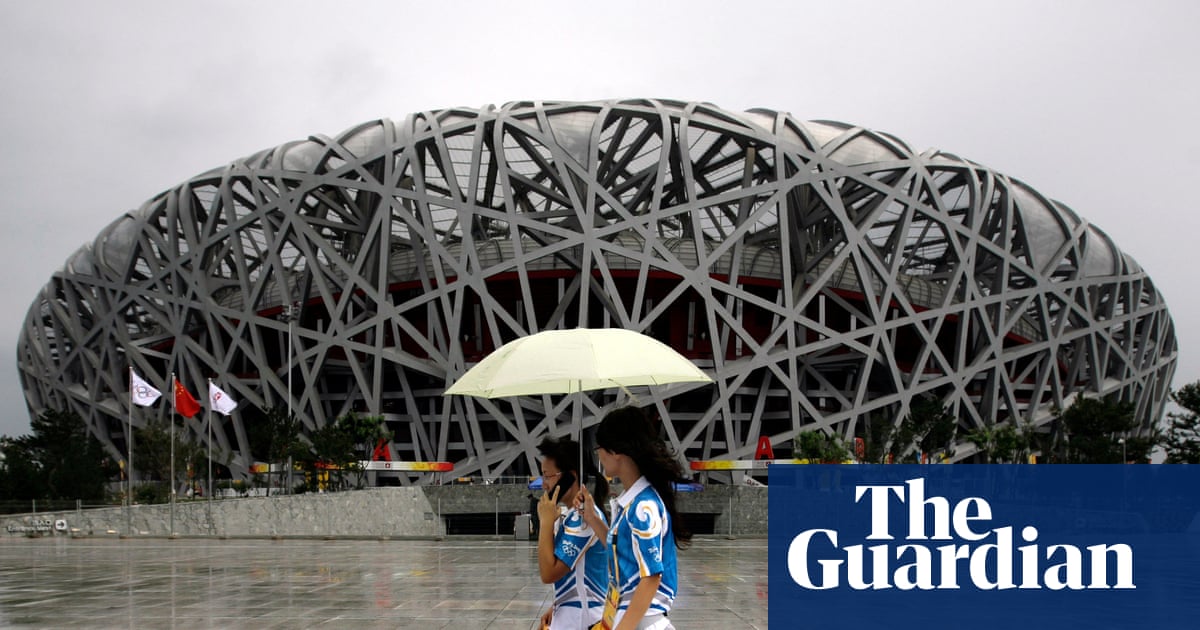
Architects and designers have recycled ancient practice of collecting rainwater to make buildings ecologically friendly
W
hen the legendary Taiwanese rock band Mayday were due to perform in Beijing one evening in May 2023, some fans were worried that the rainy weather could affect the show. Mayday were taking to the stage in Beijing’s National Stadium, also known as the Bird’s Nest, built for the 2008 Olympics. Like the real-life twig piles that give the building its nickname, the stadium is built with an intricate and highly porous lattice, made of steel.
“Don’t worry too much,” reassured an article published by the official newsletter for China’s ministry of water resources. “The Bird’s Nest also has its ‘secret weapon’!”
The secret weapon is a network of capillary-like tubes that weave through the Bird’s Nest’s outer lattice, which are specifically designed to siphon away rainfall. The pipes channel rainwater into one of three underwater storage tanks, where it is filtered and prepared for recycling within the building. According to the water resources ministry, at least 50% of the stadium’s water needs – from flushing toilets to washing the running tracks to watering the lawns – can be met with the reused rainwater. In total, the water system surrounding the Bird’s Nest can treat 58,000 tonnes of rainwater each year.