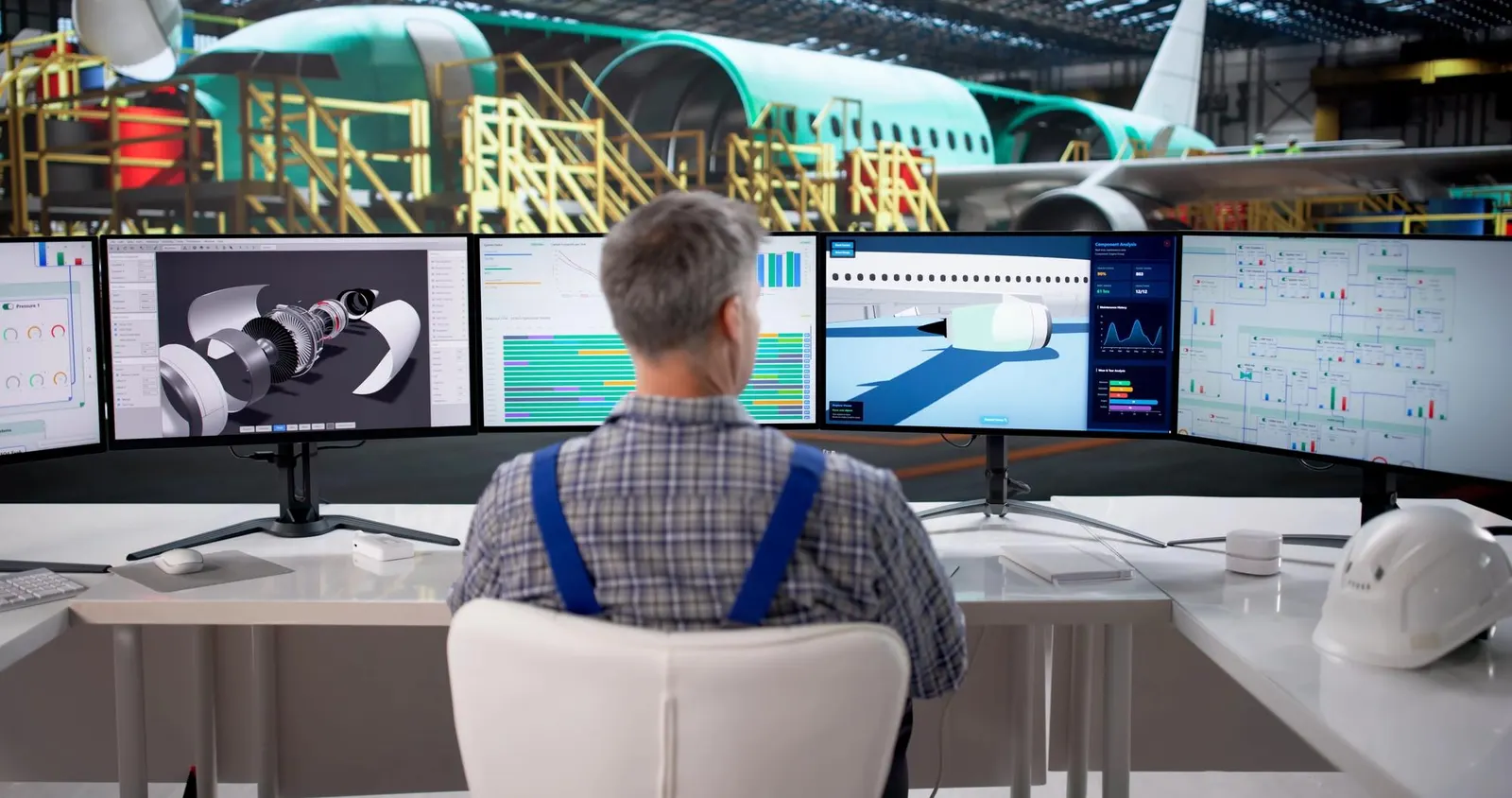
When business leaders hear “AI,” they often think of chatbots, sales automation, or marketing. The headlines emphasize job disruption. But for large industrial firms—for OEMs of turbines, compressors, chillers, heavy machinery—the real value is in accelerating engineering itself. In this domain, AI agents have the potential to alleviate an increasingly acute shortage of engineering talent that constrains product development, customization, and innovation.
Much of the public conversation about artificial intelligence centers on job displacement. But in America’s industrial sector, a different workforce crisis has been brewing for years: a chronic shortage of engineers. China now graduates roughly 1.3 million engineers per year, versus about 130,000 in the United States. This 10-to-one gap matters. It manifests daily as longer development cycles, deferred product improvements, and unfilled requisitions. Industrial capacity still depends on the ability to design, build, and maintain the physical infrastructure of modern life—chillers, aircraft, rockets, semiconductors, power grids, and data centers. Engineering bandwidth, not headcount alone, determines how much of that future we can build.