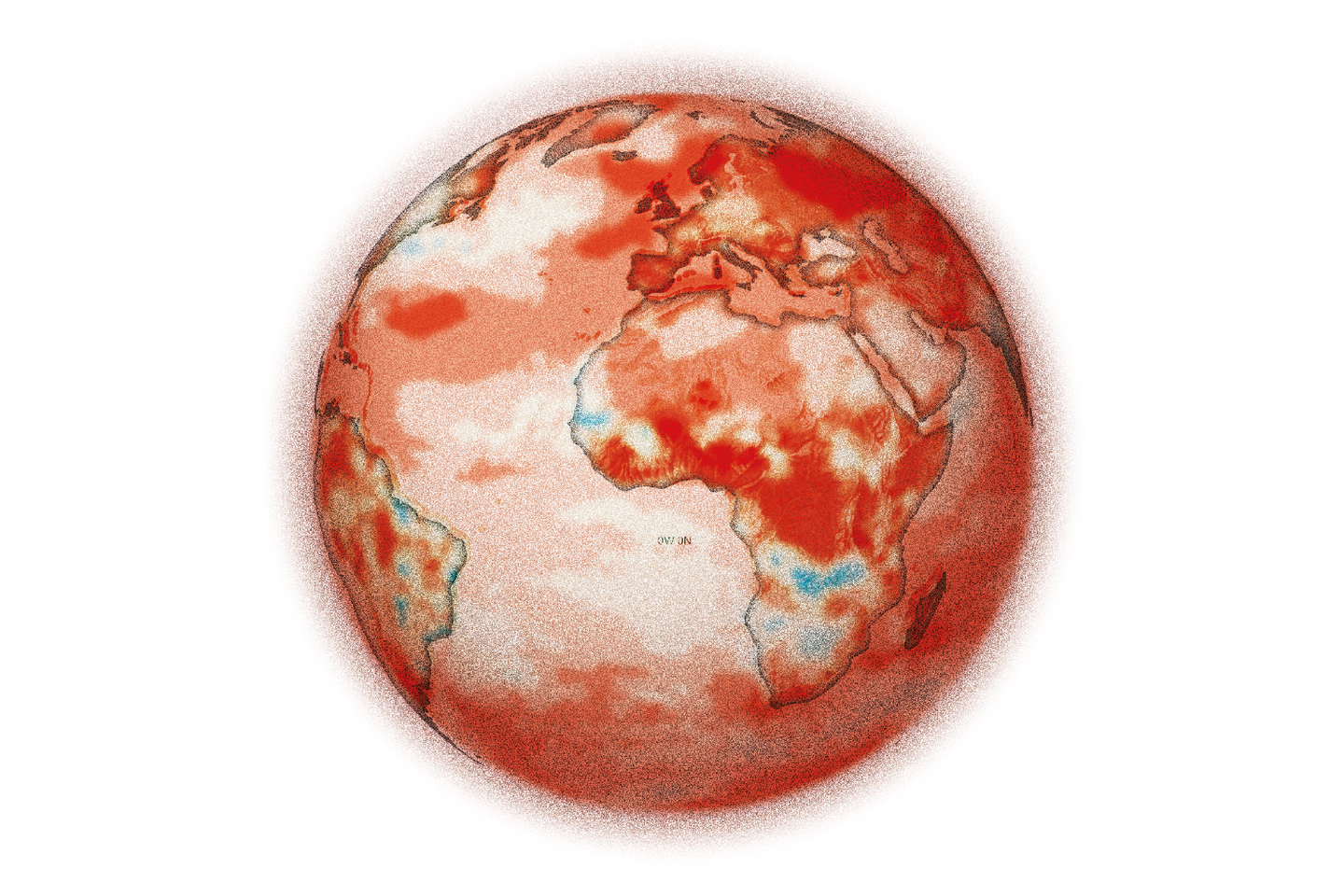
The planet found no respite in 2025. After two unprecedented years, the fever persisted: Last year was the third-hottest year ever recorded worldwide and in Europe, according to a report by the European climate observatory Copernicus, published on Wednesday, January 14. The data show that, for the first time, a three-year period (2023, 2024 and 2025) crossed the symbolic threshold of 1.5°C of global warming compared to pre-industrial times – the most ambitious target set under the Paris Agreement. Three years, three red alerts, and a climate that has settled into a state of enduring exception.
In 2025, global surface air temperatures were 1.47°C above pre-industrial levels (1850-1900). The year 2025 ranked just behind 2023 (by -0.01°C) and was cooler than 2024 (by -0.13°C), which remains the hottest year on record and the only year to have exceeded 1.5°C of warming. The past 11 years have all been the hottest ever recorded.
"The Paris Agreement has not been broken," said Samantha Burgess, strategic lead for climate at the European Centre for Medium-Range Weather Forecasts, part of Copernicus. The objective of the international treaty is measured over a period longer than one or three years. Still, at the current rate, the 1.5°C limit is expected to be crossed for good by 2030, a decade earlier than scientists had predicted in 2015.