To join the CNBC Technology Executive Council, go to cnbccouncils.com/tec
A million bubbles were swirling inside each glass of Champagne poured on New Year’s Eve — which seems about like the number of times artificial intelligence bubbles have been mentioned by tech investors, economists and media pundits in recent months.
Bubble fears surrounds stocks within the Magnificent 7 — Alphabet, Amazon, Apple, Meta, Microsoft, Nvidia and Tesla — as well as Oracle and Softbank and other tech companies’ multi-billion-dollar investments in the unrelenting buildout of humungous data centers to power their AI systems. Data centers are expected to require roughly $7 trillion in capital outlays by 2030, according to a report by McKinsey & Co. The bubble speculations rage almost daily as breaking news and earnings reports send Mag 7 stock prices rising and falling, leading analysts to constantly update their buy, sell or hold recommendations.
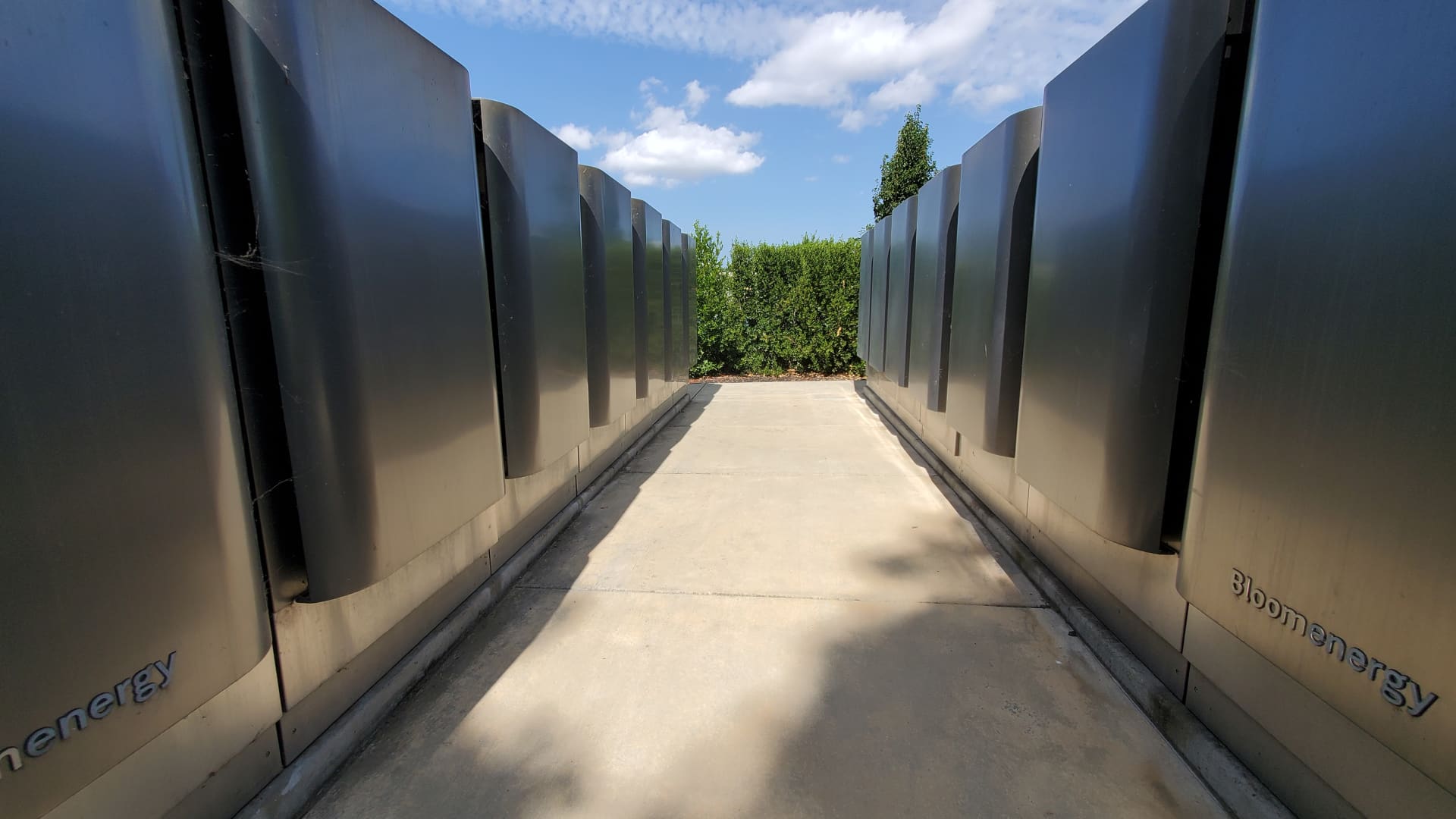
That’s essentially the 30,000-foot, macroeconomic view of AI from Wall Street’s bulls and bears. For a zoomed-in, micro look at the volatility surrounding AI, there may be no better example of adjacent players in the space than Bloom Energy
A one-time privately funded startup darling from Silicon Valley’s initial push into renewable energy which grabbed some marquee customers early on (e.g. Google and Walmart), Bloom was often in the red since its founding in 2001. Following its 2018 IPO at a price of $15 per share, it has been an unremarkable stock, trading near that IPO price as recently as last April. But Bloom has skyrocketed roughly 400% over the past year, ignited by its emergence as a standalone, onsite power supplier for electricity-guzzling AI data centers. It uses stacks of solid oxide fuel cells to provide an immediate, always-on alternative to connecting to public utilities’ strained grids. Bloom is now among the priciest energy stocks, at 125 times forward earnings.