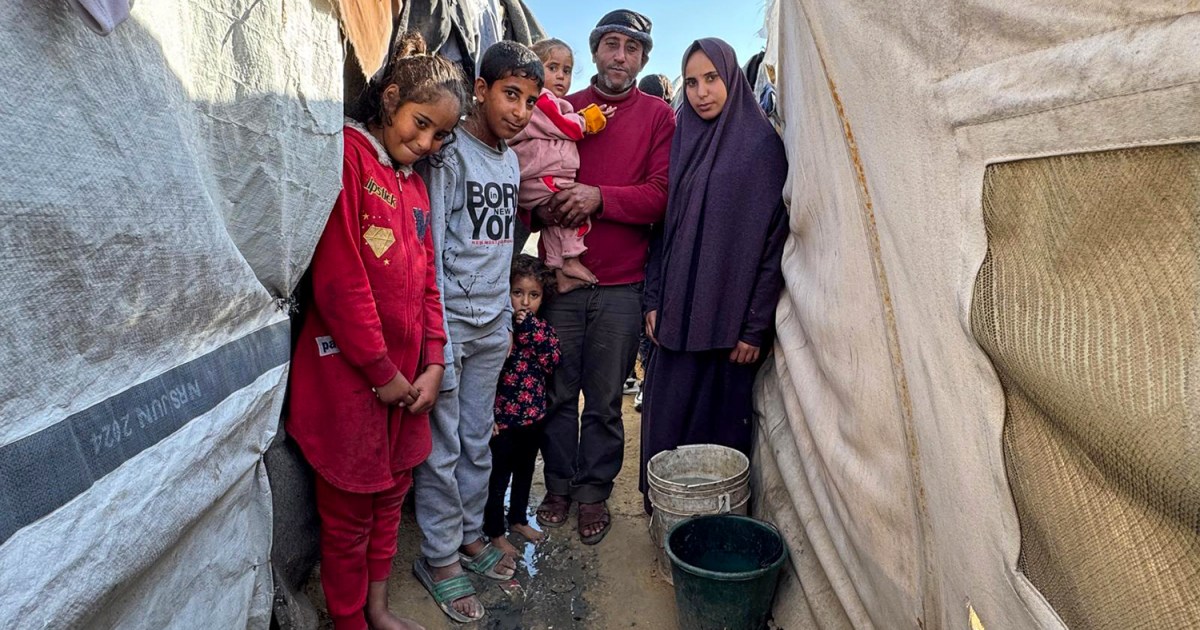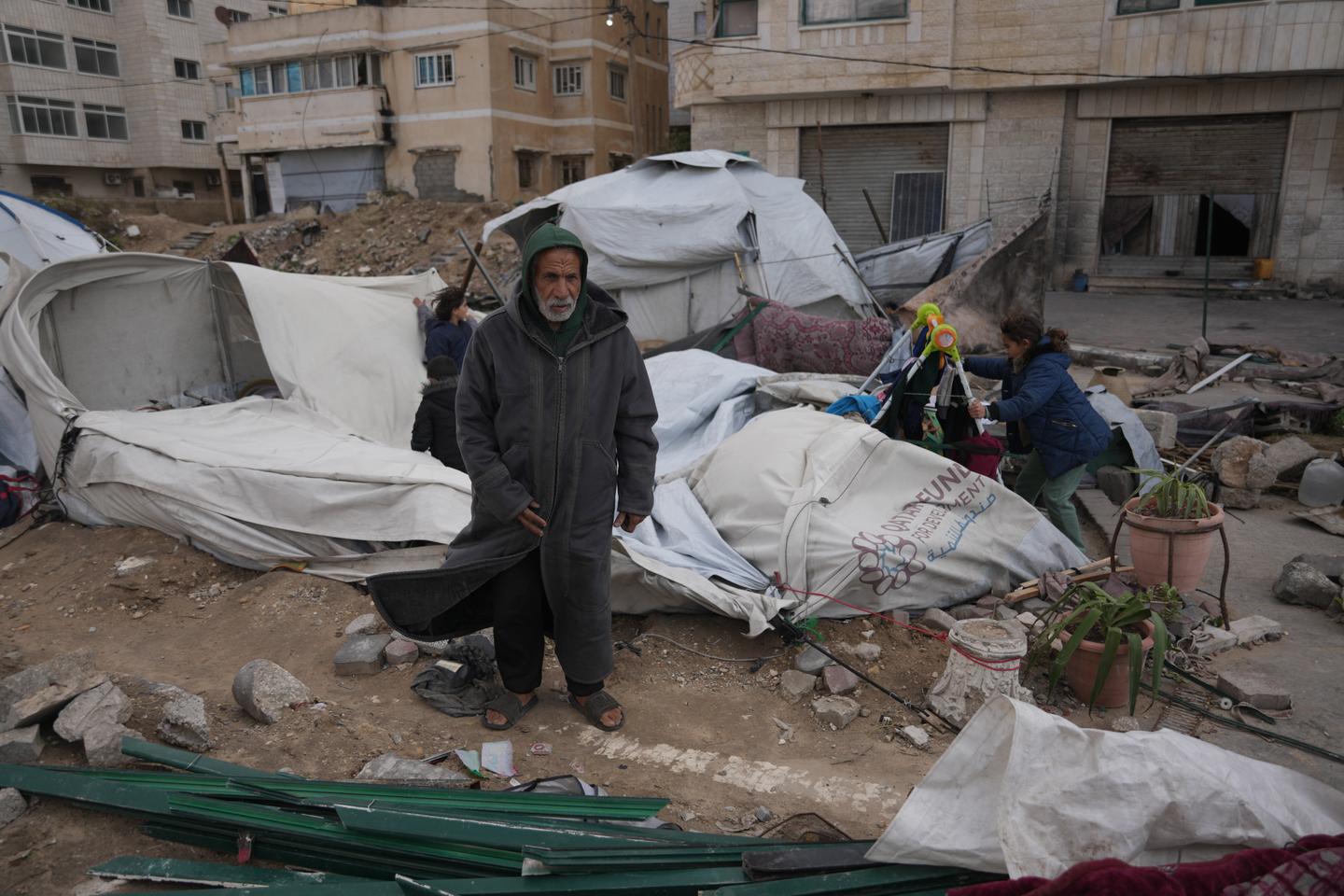
Members of the Al-Ajouri family stand near their tent, destroyed by wind and rain, in Gaza, on December 28, 2025. JEHAD ALSHRAFI / AP
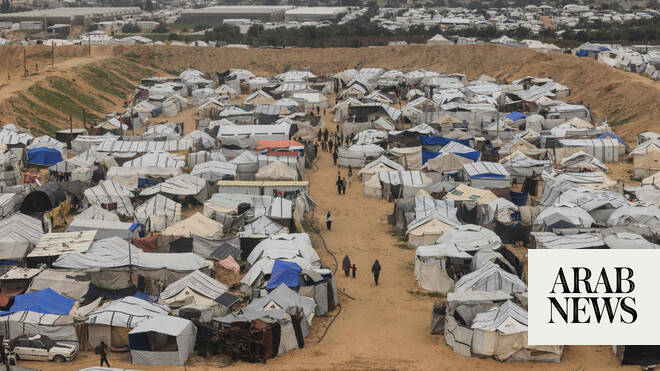
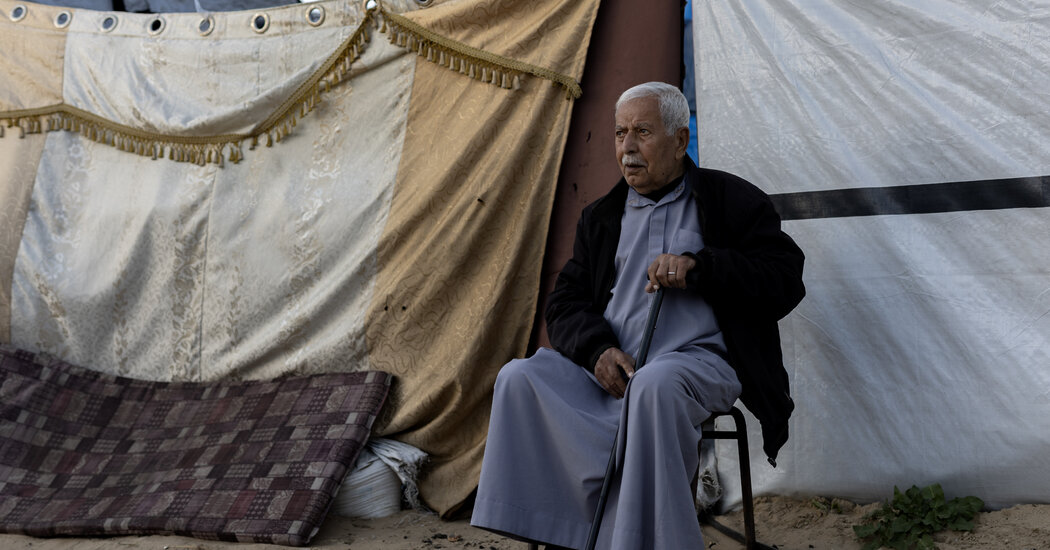
Forcibly displaced by the Israeli army to the Al-Mawassi coast, in the south of the Gaza Strip, 85-year-old Saleh Al-Eid spends his days wrapped in blankets in a makeshift shelter made of a tarp and stretched fabrics. The cold and harsh weather that has swept over the enclave has only worsened the suffering of the people of Gaza, whose tents are regularly flooded by heavy rains. Like nearly one million people who have been displaced over the past two years by the war waged by Israel in retaliation for the Hamas attack on October 7, 2023, Al-Eid has been living here for a year and a half with his wife, his four children, and his grandchildren.
This new upheaval has taken him back decades, reminding Al-Eid, as it does other elderly Gazans, of the period known as the "Nakba" – the forced exodus of 700,000 Palestinians during the creation of Israel in 1948. Now an old man, Al-Eid still remembers every detail of the events that took place when he was just seven years old. "Back then, Israeli soldiers would surround a town, open a passage, and say: 'Leave! Leave!' They killed, yes, here and there, but nothing like today. We have never experienced such destruction. We have nothing left; it is as if we have just been born," he said by phone. (Israel continues to bar foreign media from entering the Gaza Strip.)