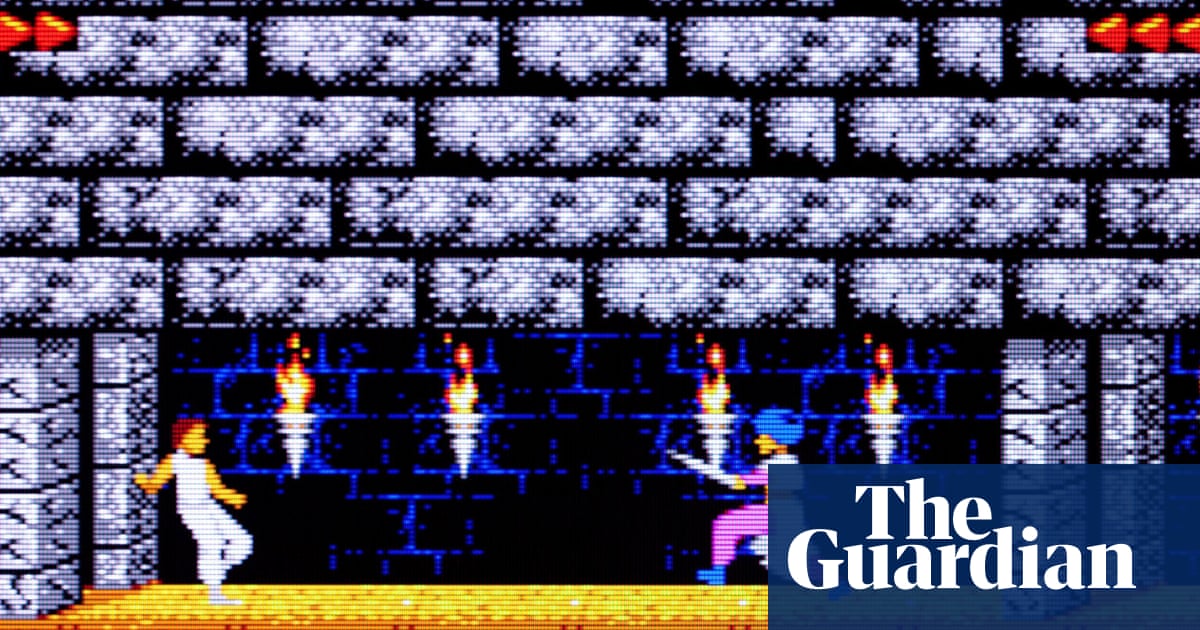
‘There was no animation software in those days. So I videotaped my brother David running, jumping and climbing in a car park’
Programming was very open back in the 1980s. You had to teach yourself, either from magazines, or by swapping tips. When you wrote a video game, you submitted it on a floppy disk to a publisher, like a book manuscript. In my freshman year at Yale university, I sent Deathbounce, an Asteroids-esque game for the Apple II computer, to Broderbund, my favourite games company. They rejected it, but took my next effort, Karateka, a side-scrolling beat-’em-up.
I wanted to do a platform game next, inspired by 1984’s The Castles of Dr Creep, where you could throw switches that opened doors and closed traps. I thought it would be cool to combine those puzzle elements with the same kind of fluid rotoscoped animation as Karaketa, which was unusually realistic for the time. The opening scene of Raiders of the Lost Ark was also a big inspiration; I wanted the same excitement, like you could die at any moment. I devised a story about a princess locked in a tower by an evil vizier – and you have one hour to save her. It came from an unconscious place: the game describes the hero as an adventurer from a foreign land, but I realised later I was echoing my family’s history as Jewish refugees.