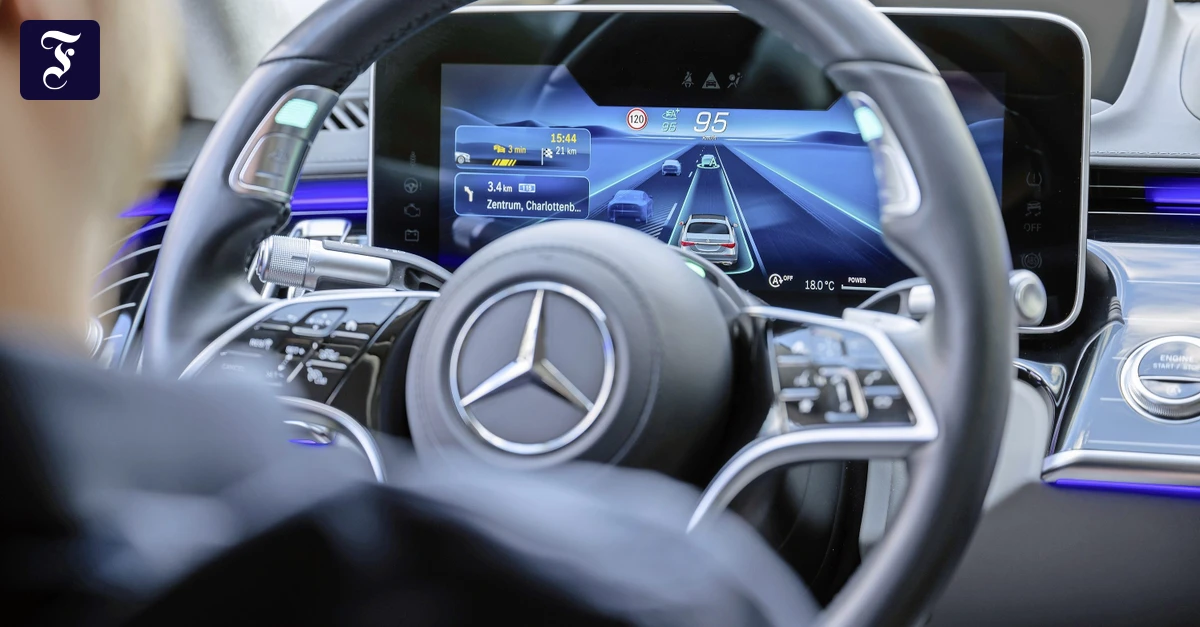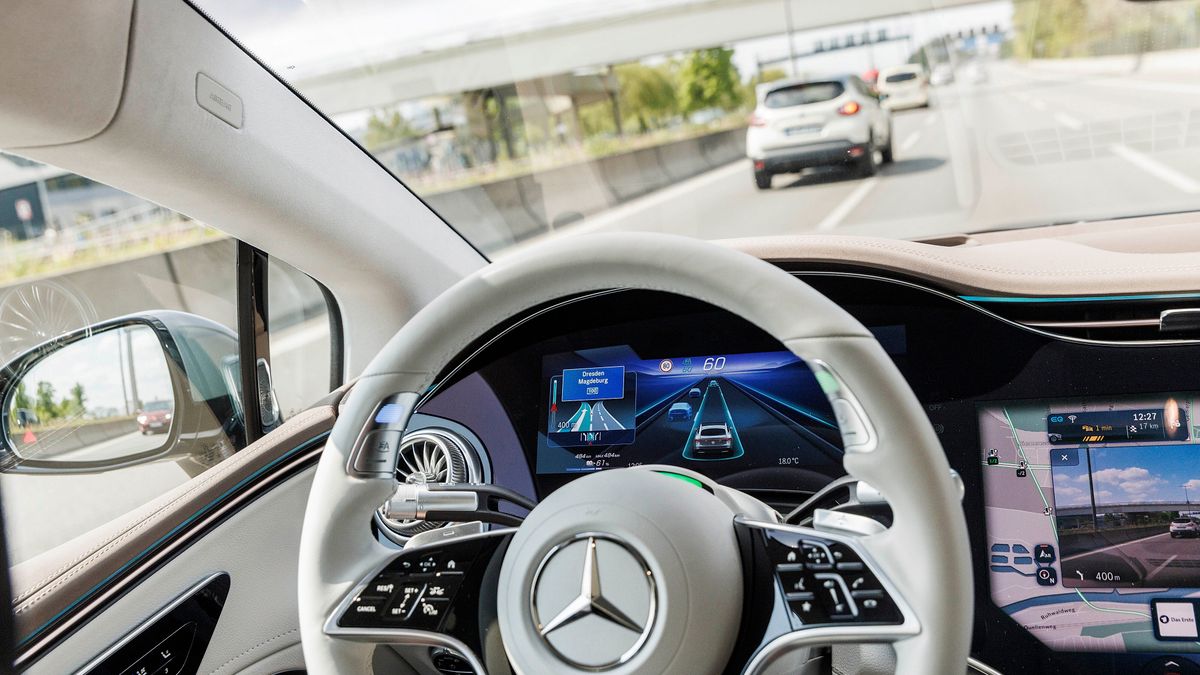
Light applications of the brake—to shed a few miles per hour, not to conduct an emergency stop—will slow the car, which then resumes its original speed, much the same way you have always been able to apply the throttle to temporarily speed up while using cruise control.
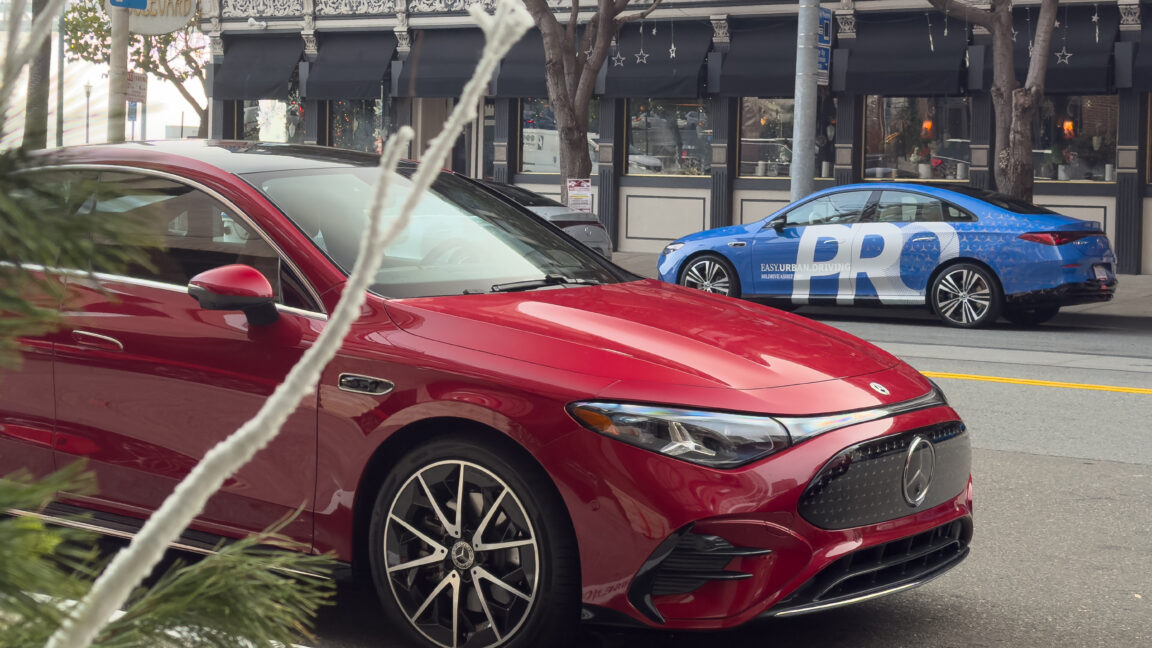
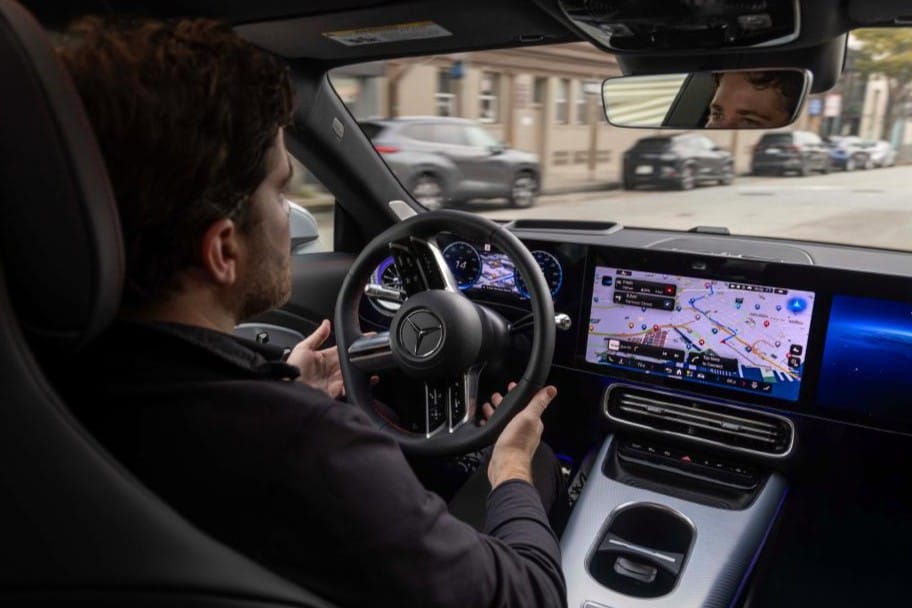
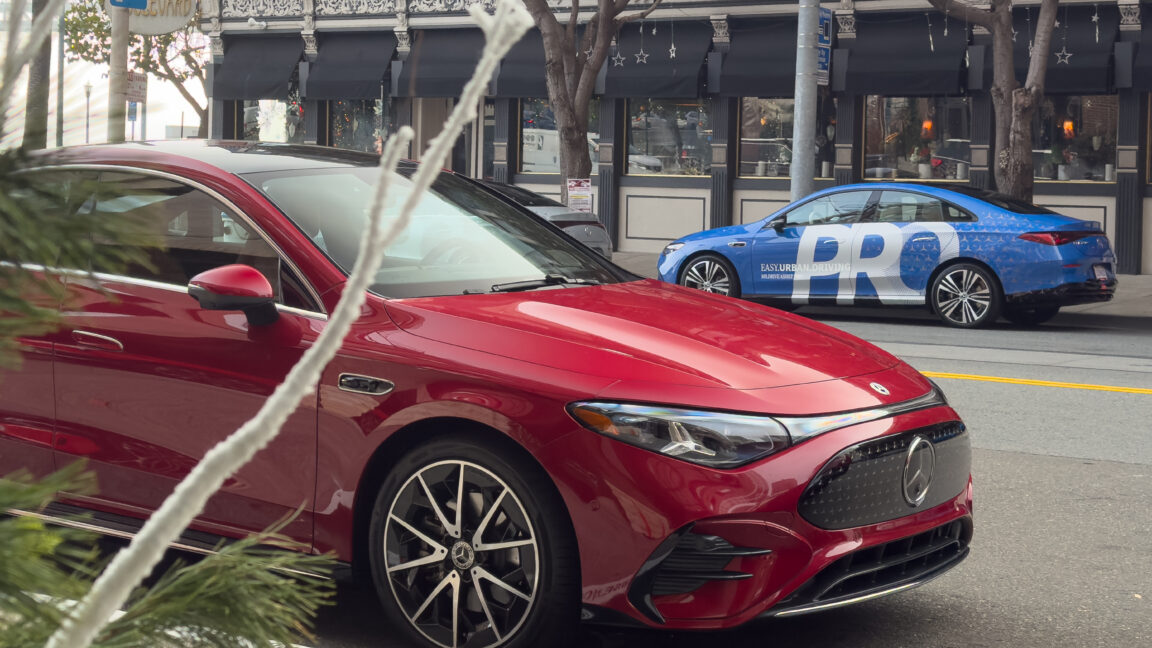
Drive Assist Pro takes this collaborative approach between the car and driver and runs with it. Given a destination to work with, it knows which lanes you’ll need ahead of time, and the car reads both stop signs but also traffic lights. It even detects and slows down for speed bumps. On a 20-minute drive around the Waymo-clogged streets of the tech industry’s favorite city, the engineer in the driving seat didn’t have to intervene once, though I believe at least a couple of colleagues’ demos got confused by human crosswalk attendants moving around with their stop signs.
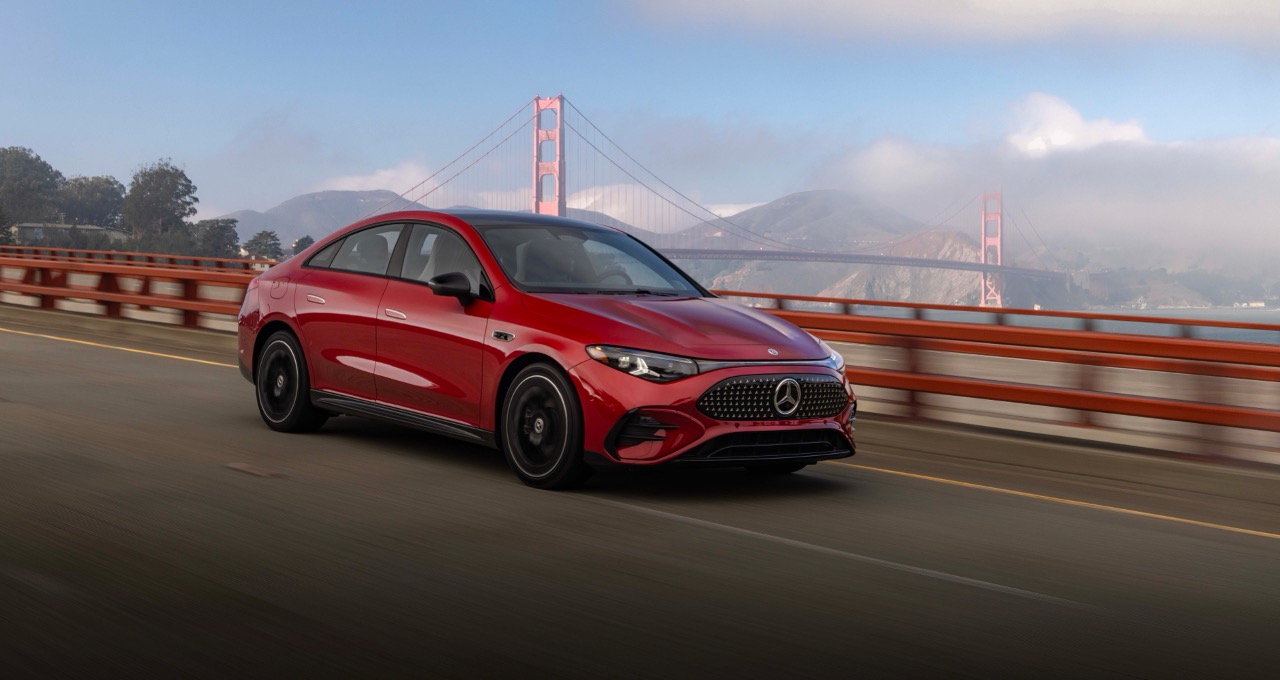
The CLA drove at safe and legal speeds, knew how to handle construction zones, and wasn’t flummoxed by one of the most common city driving annoyances: the double-parked car. The time it takes for the car to come to a complete stop at stop signs can and will irritate human drivers behind you; it’s definitely not a California stop.
Needs to be an SDV
All of this is possible thanks to the CLA being what the industry calls a software-defined vehicle. Four powerful computers run all the electronics, rather than dozens and dozens of discrete black boxes. One of those computers is (of course) from Nvidia—that company’s Orin, which handles things like perception and path planning.