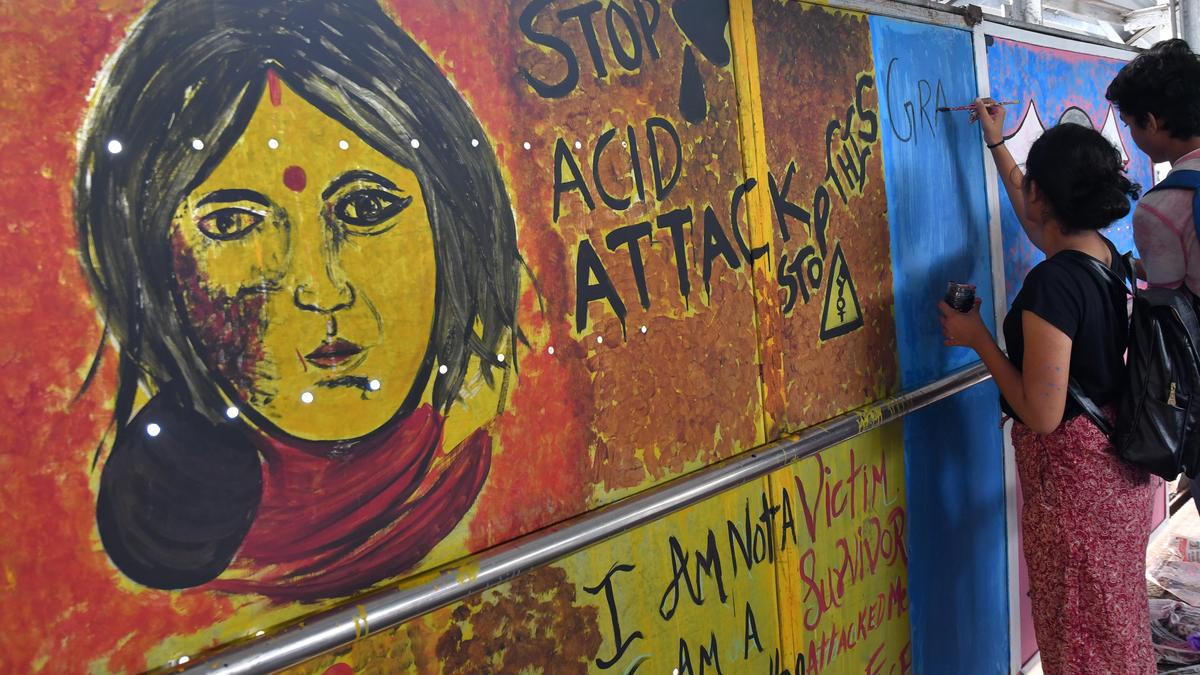
The story so far:
When a Delhi court acquitted the three main accused in a vicious 2009 acid attack case on December 24, 2025, it was not just a devastating end to the 16-year battle for justice fought by survivor and social activist Shaheen Malik, but also shone a harsh light on the legal and judicial scenario facing acid attack survivors in the country. Ms. Malik was a 26-year-old MBA student and counsellor in Panipat when she was attacked outside her workplace. She underwent 25 reconstructive surgeries and lost vision in one eye, but continued her legal battle through it all. She plans to appeal the verdict in the Delhi High Court but says the verdict will discourage other survivors from seeking justice. Hers is not an isolated story: of 703 acid attack cases in the courts in 2023, the last year for which data is available, there were 16 convictions and 27 acquittals.
Punishment for forcibly administering acid must be stricter than under UAPA : SC
What are acid attacks? How often do they take place?
An acid attack is an assault where a corrosive substance is thrown on a person with the intention of harming them. Sulphuric, hydrochloric, and nitric acid are the most commonly used substances, though others are also used. Such attacks, which can melt the skin and flesh, exposing and even dissolving bones, can cause excruciating pain, severe burns, scarring, blindness and other disabilities, maiming and other deformities, disfigurement, especially on the face, or even put a victim into a permanent vegetative state. Apart from the physical injuries, acid attacks cause significant psychological trauma and socio-economic harm.