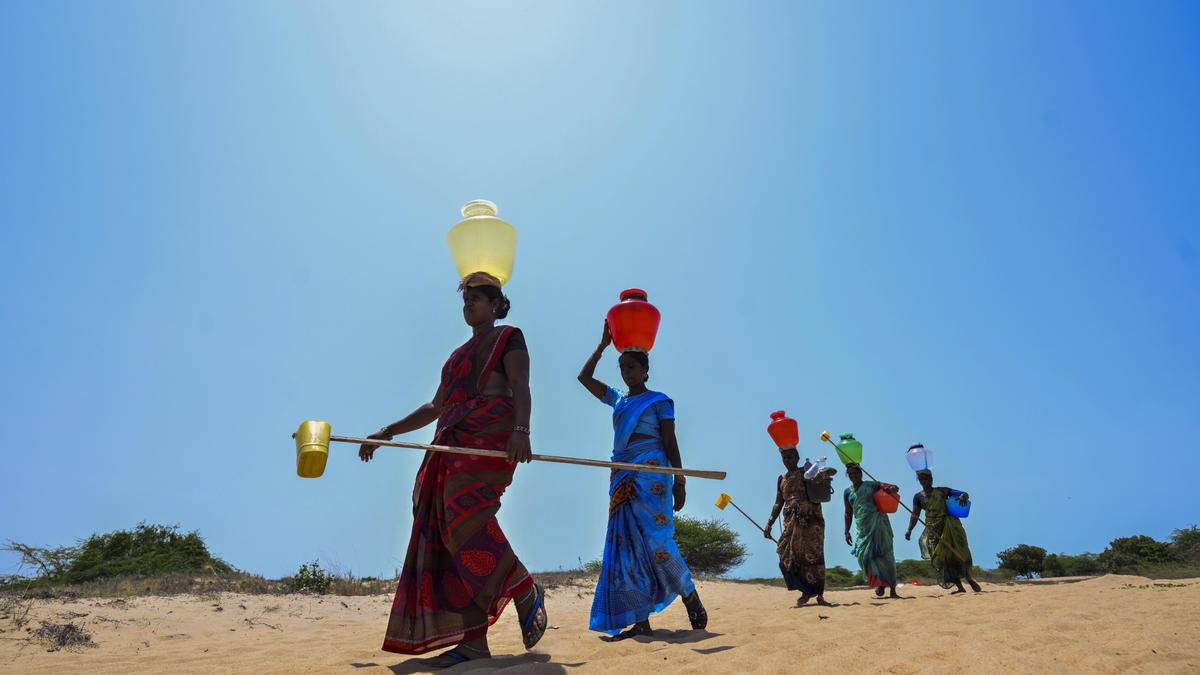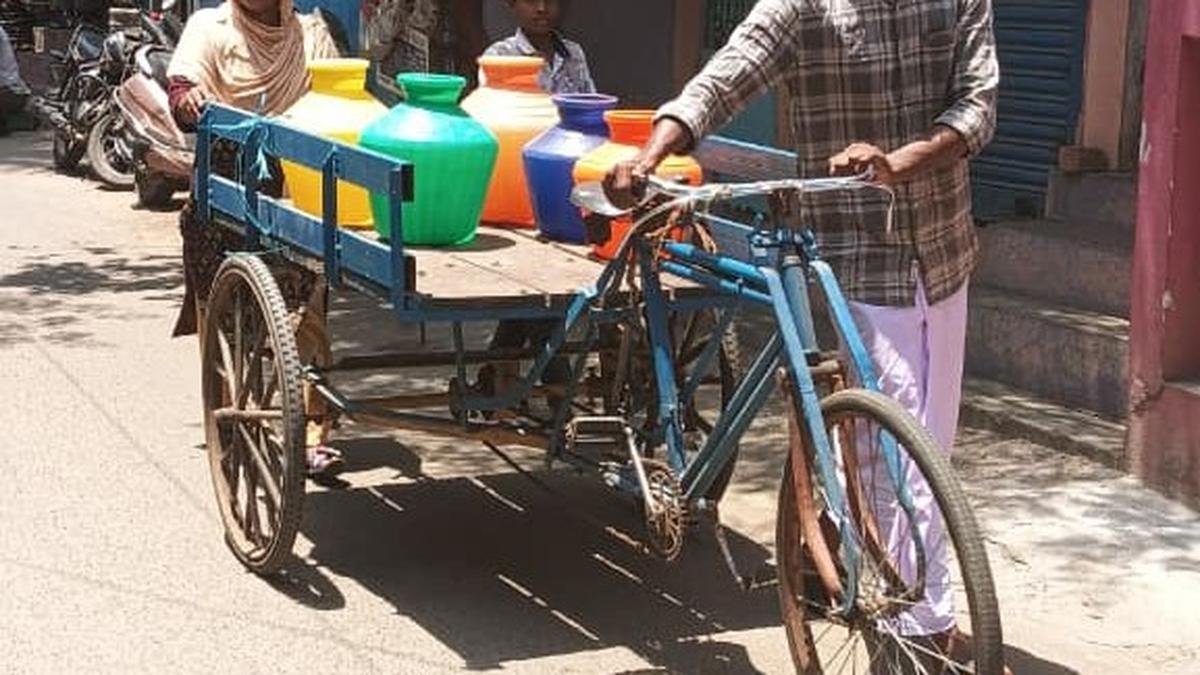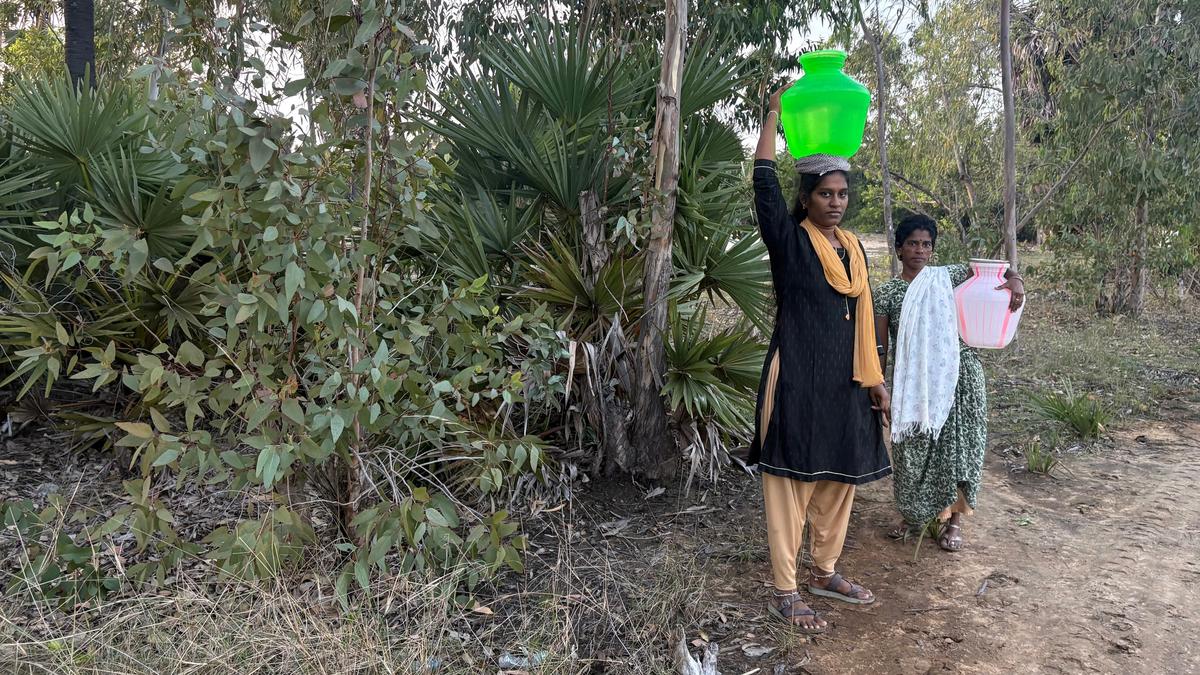
Every morning and night, the women of Kameswaram fishing hamlet, in Kilvelur taluk, set out with empty pots on a 2-km walk to fetch drinking water — a journey that ends near a cemetery, along a dark and unsafe stretch of road.
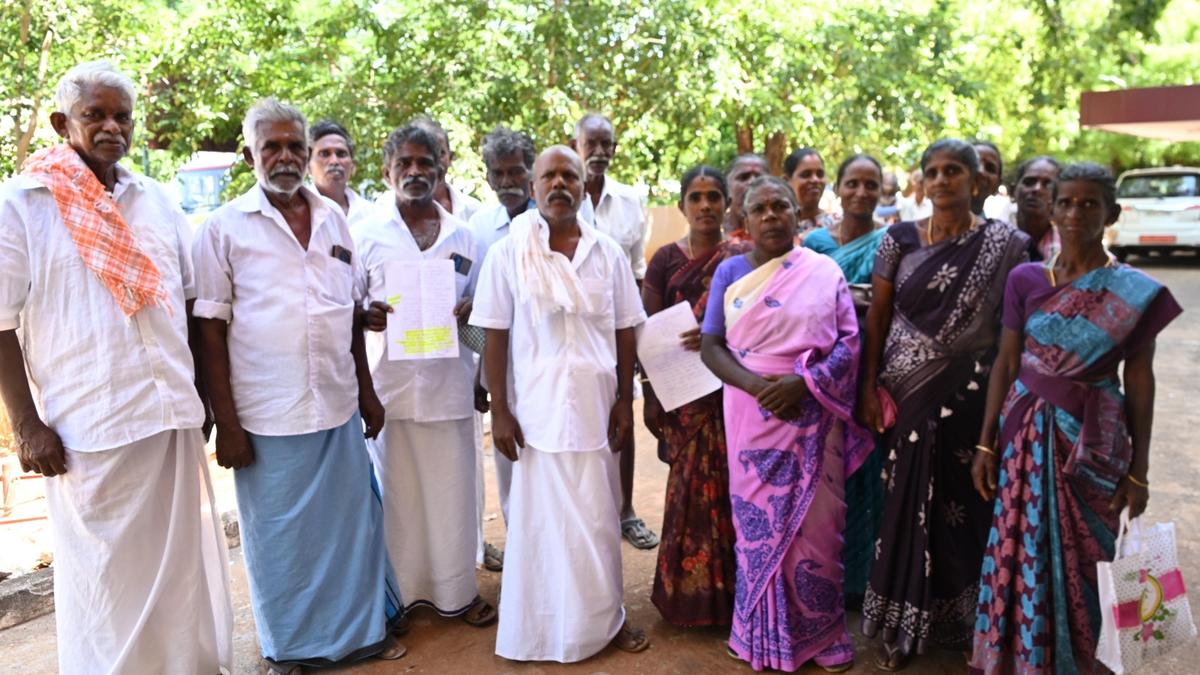
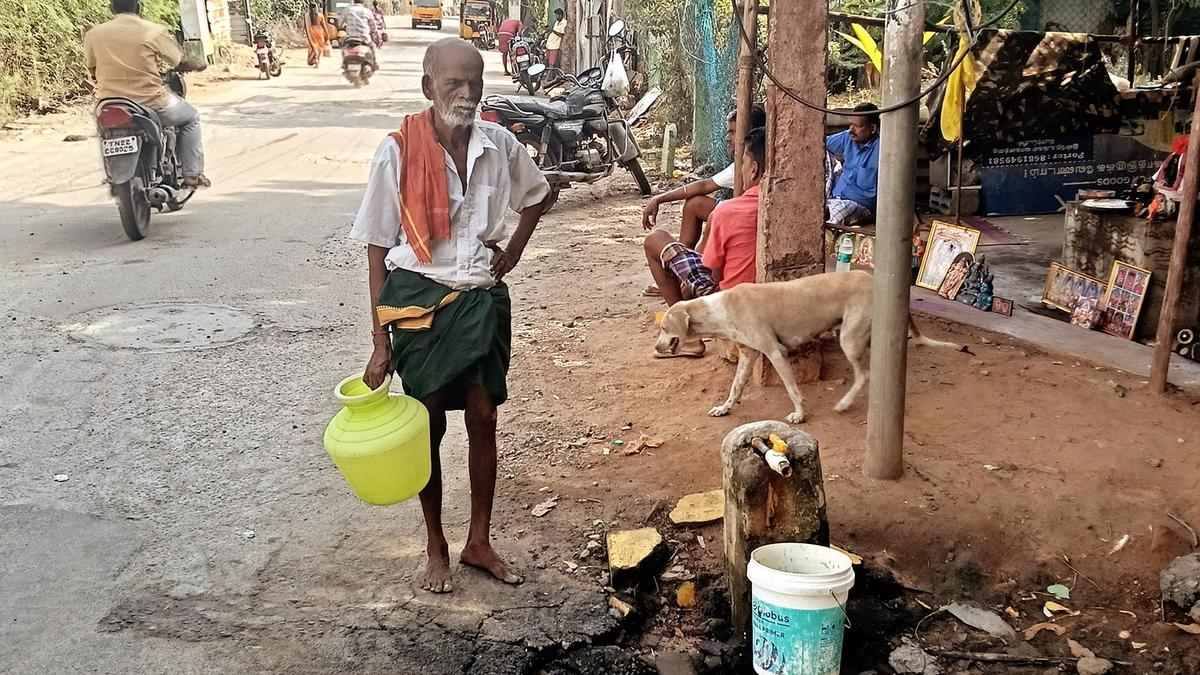
The fishing village, home to more than 320 families, has been without a reliable drinking water source for years. Piped water supply under the Kollidam scheme has not reached the settlement, forcing residents to depend on a lone hand pump located outside the village limits.
“After the tsunami, the groundwater here turned salty. All our wells became useless,” said Sakunthala V., a fisherwoman. “There is no water left inside the village. This hand pump is our only option.”
Although pipelines under the Jal Jeevan Mission have been laid across Kameswaram, not a drop of water flows through them. “The pipes are there, but they are dry,” said Mala M., another resident. “We keep waiting, but nothing changes.”
Reaching the hand pump is itself an ordeal. For nearly a kilometre, the road has no street lights. Women walk through stretches flanked by eucalyptus and cashew trees, often in complete darkness. The pump is located close to a burial ground.