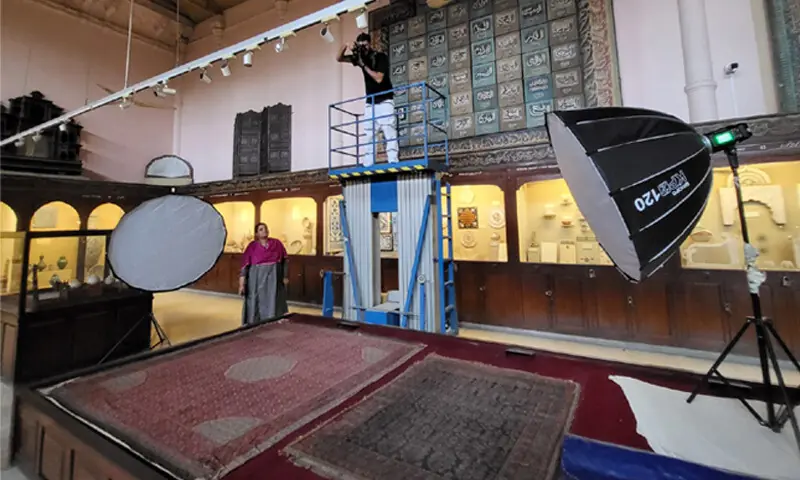
ISLAMABAD: At the Islamabad Museum, history no longer sits quietly behind glass.
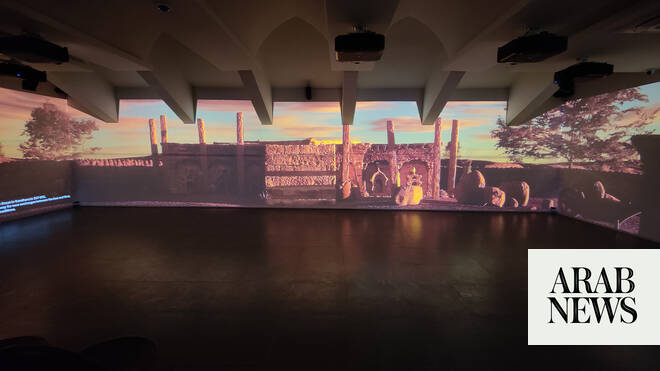
In September 2025, the museum introduced Pakistan’s first Digital Immersive Gallery, an experiment in how ancient civilizations can be narrated in the age of artificial intelligence, 3D projection and virtual environments. Developed in collaboration with the Korea Heritage Agency, Pakistan’s Department of Archaeology and the National Heritage and Culture Division, the gallery marks a shift from object-centered displays to experience-based storytelling.
Rather than beginning with labels and timelines, the gallery opens with movement, sound and light. Visitors are invited to step into a reconstructed visual world shaped around Gandhara, one of South Asia’s most influential yet often under-explained civilizations that developed across what is now northwestern Pakistan and parts of eastern Afghanistan and later played a foundational role in the spread of Buddhism beyond the subcontinent.
“We have shown here in our Immersive Gallery how Buddhism flourished here, how it was introduced, how it declined and how it shifted to China, Korea and Japan from here,” Dr. Abdul Ghafoor, Deputy Director at the Department of Archaeology and Museums, told Arab News.