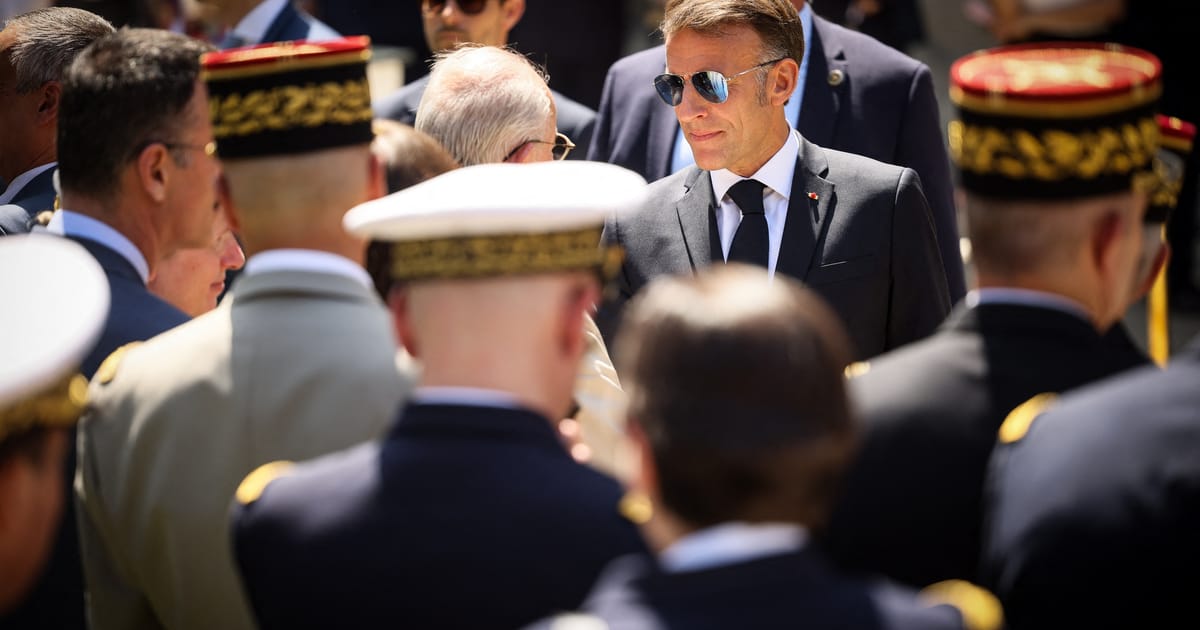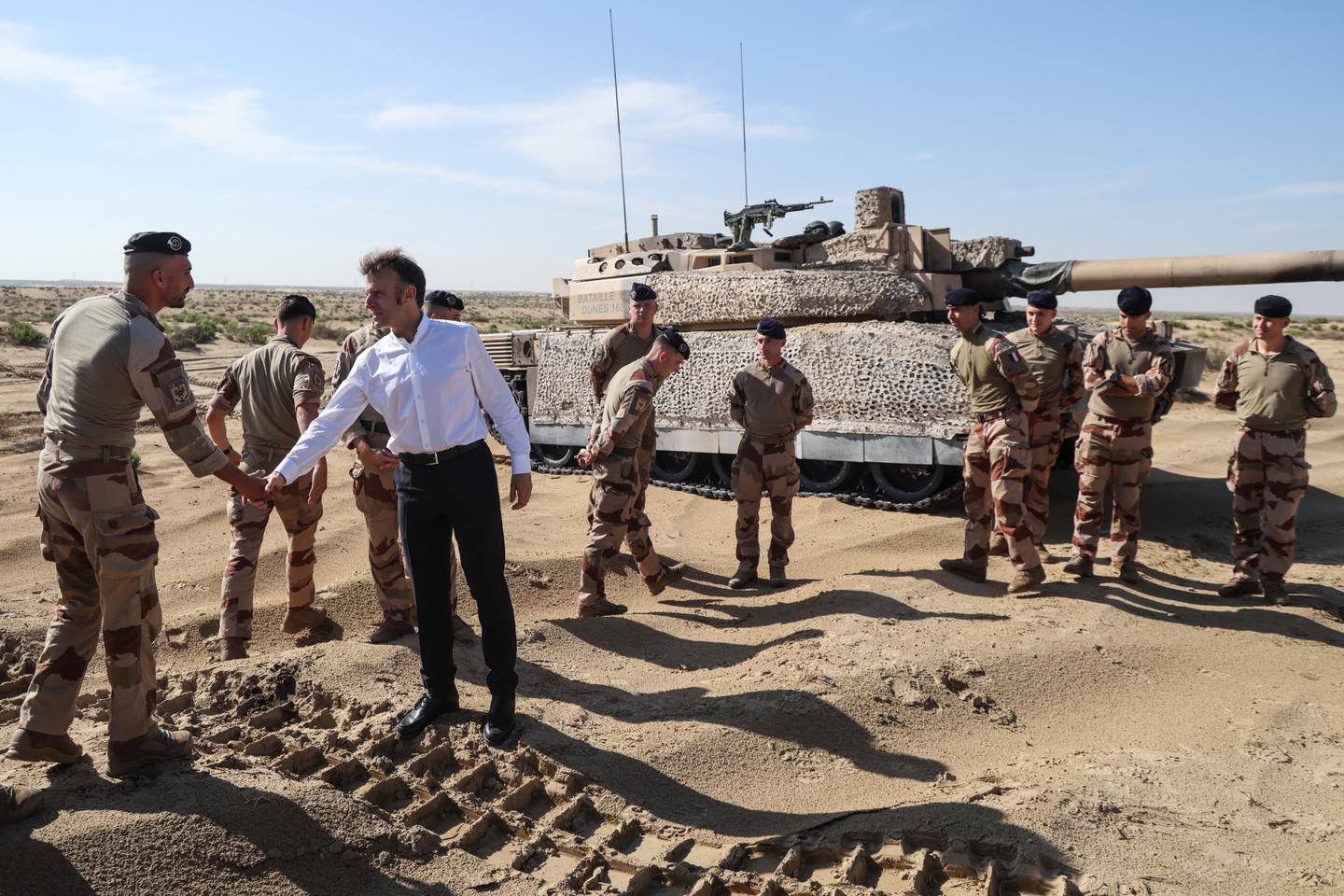
Emmanuel Macron, who traveled to celebrate Christmas with French troops, met with soldiers during a military exercise in the United Arab Emirates on December 22, 2025. LUDOVIC MARIN/AFP
Over the years, and through a series of unprecedented crises, Emmanuel Macron has seen the range of achievable promises narrow considerably. His failed gamble on dissolving the Assemblée Nationale in June 2024 severely undermined his ability to act domestically. His unpopularity – now at its highest since his election in 2017 – reflects a frayed relationship with the French public. As the 2027 presidential election approaches, contenders for his succession – including his two former prime ministers, centrist Gabriel Attal (Renaissance) and center-right Edouard Philippe (Horizons) – have been keen to distance themselves from Macronism.
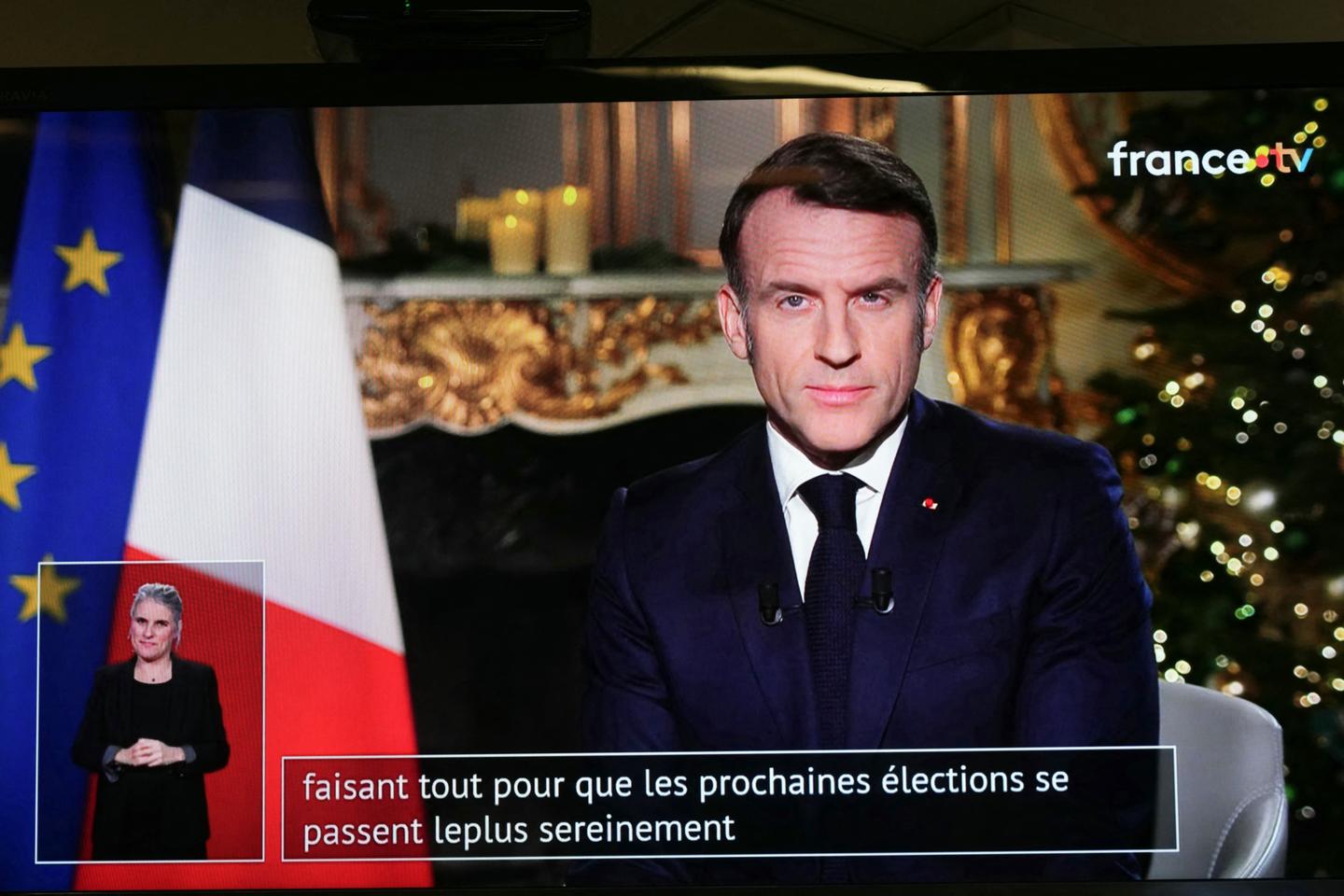
For the occupant of the Elysée, who cannot seek re-election, this last full year in office resembles a race against time to restore his decade in power. On December 31 at 8 pm, he will address his ninth New Year's wishes to the French people, marking the start of that effort.
The president and his close advisers are preparing a "sober" address, with a "strong geopolitical and international dimension." Macron intends to continue focusing most of his efforts on foreign policy, traditionally a president's prerogative. Another meeting of the "coalition of the willing" countries is scheduled in Paris in early January, so that European nations can play a important role in a peace agreement between Ukraine and Russia.