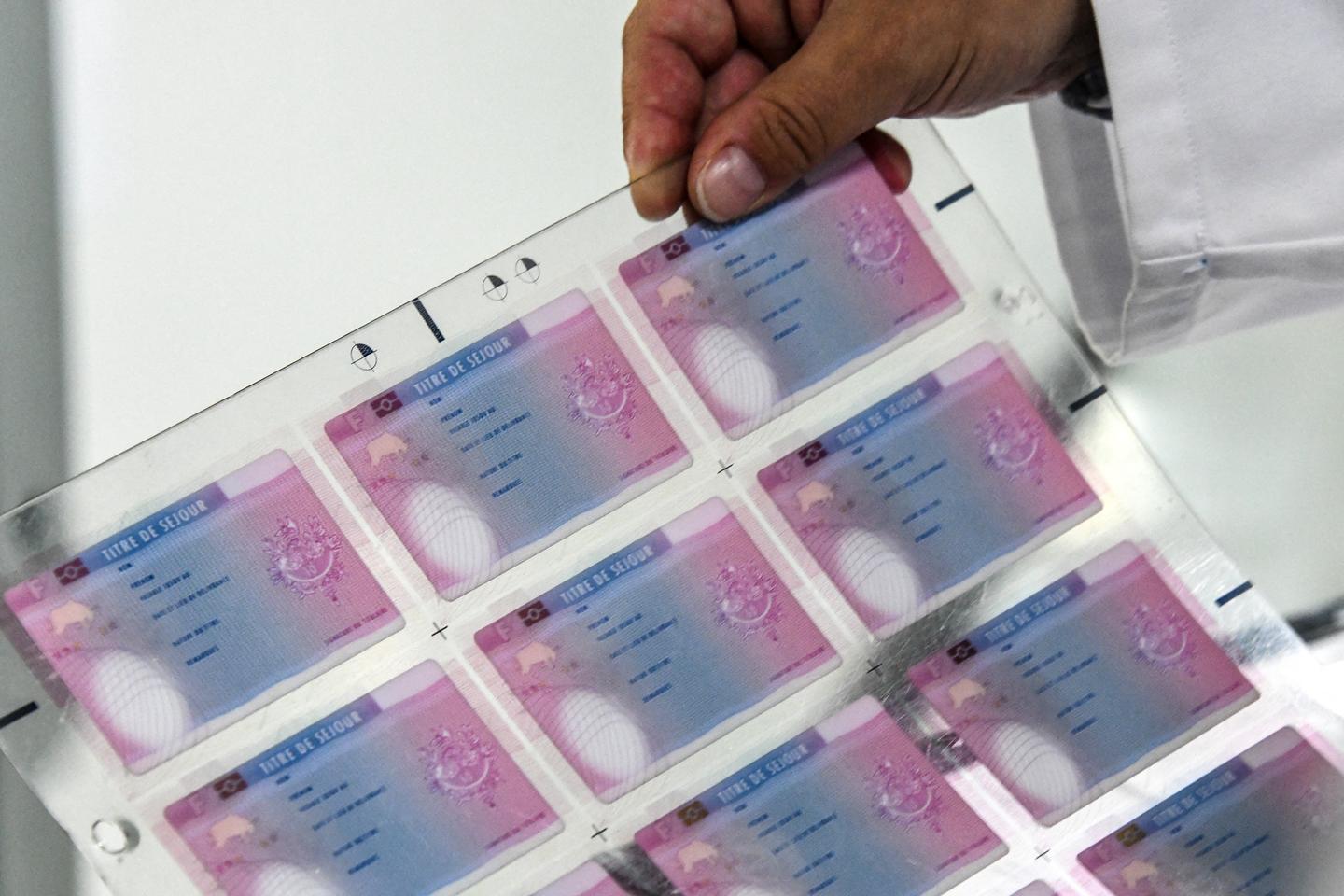
A tray of national identity cards at the French National Printworks, in the northern French town of Flers-en-Escrebieux, on July 5, 2019. DENIS CHARLET/AFP
Tetiana (who, like all others referred to by their first names, requested anonymity) thought she was having heart palpitations. Her daughter Rita noticed her growing stress levels. She knew that, when her mother gets nervous, "her mind freezes," and she would struggle to find her words in French. She wondered if she might get the questions mixed up, as she walked her mother to the exam room.
Forty-five minutes later, Tetiana, a 53-year-old Ukrainian woman, emerged from the room relieved. She had just taken the "civic exam," a new test which, from January 1, 2026, will be required for foreign nationals applying for French multi-year residency permits, 10-year residency cards or naturalization. With the exception of certain categories of people, such as refugees, potentially more than 100,000 foreign nationals would need to pass the test each year.
The exam takes the form of a multiple-choice questionnaire with 28 knowledge questions and 12 scenarios featuring an invented situation, which are set to vary depending on the type of application. It was established by an October 10 decree, signed by then-interior minister Bruno Retailleau just days before he left office, after he had spent a year hammering home his goal to reduce immigration rates.