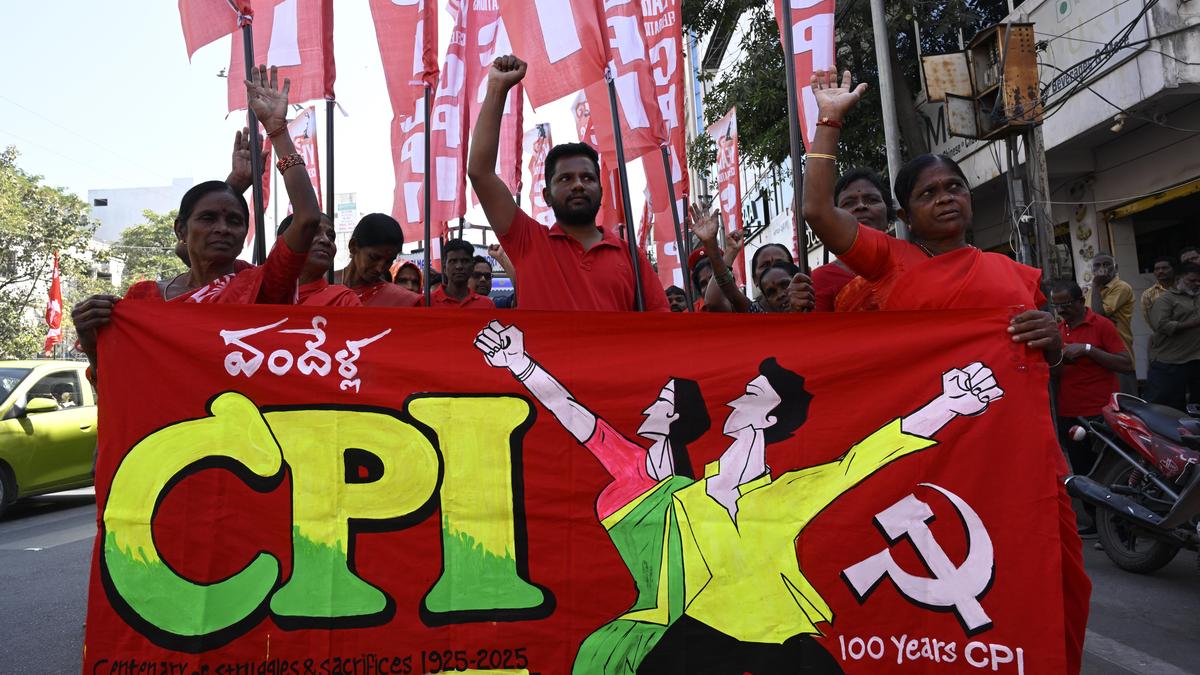
On December 26, 2025, the Communist Party of India turns 100. This centenary is not merely the marking of time for a political party but a moment of historical reflection on a movement that profoundly shaped India’s freedom struggle, its vision for the future of the nation, and its social and economic vision. From its earliest years, the CPI gave voice to the revolutionary slogan “Inquilab Zindabad”, coined by Maulana Hasrat Mohani — who chaired the Reception Committee of the historic Kanpur Conference — and immortalised by Bhagat Singh and his comrades. Through communist activists, this call for revolutionary transformation travelled to every nook and corner of the country, becoming a living expression of resistance, hope and patriotism. The CPI emerged confronting colonial rule and sought to answer a fundamental question confronting the national movement: freedom for whom and to what end. Over a century, the CPI has consistently argued that political independence without social and economic transformation would leave the masses trapped in old and new forms of exploitation.
The historical roots of the CPI lie in its uncompromising struggle against colonial capitalism. British imperialism subordinated India’s economy to the needs of foreign capital, destroyed indigenous industries, imposed exploitative land relations, and produced widespread poverty. At the same time, it created a modern working class and exposed Indian revolutionaries to global currents of socialist thought, particularly after the Russian Revolution of 1917. Indian activists and revolutionaries who encountered Marxism abroad or through international networks began to see that national liberation and social emancipation were inseparable. This understanding matured into organisational form with the founding of the CPI in December 1925 at Kanpur.