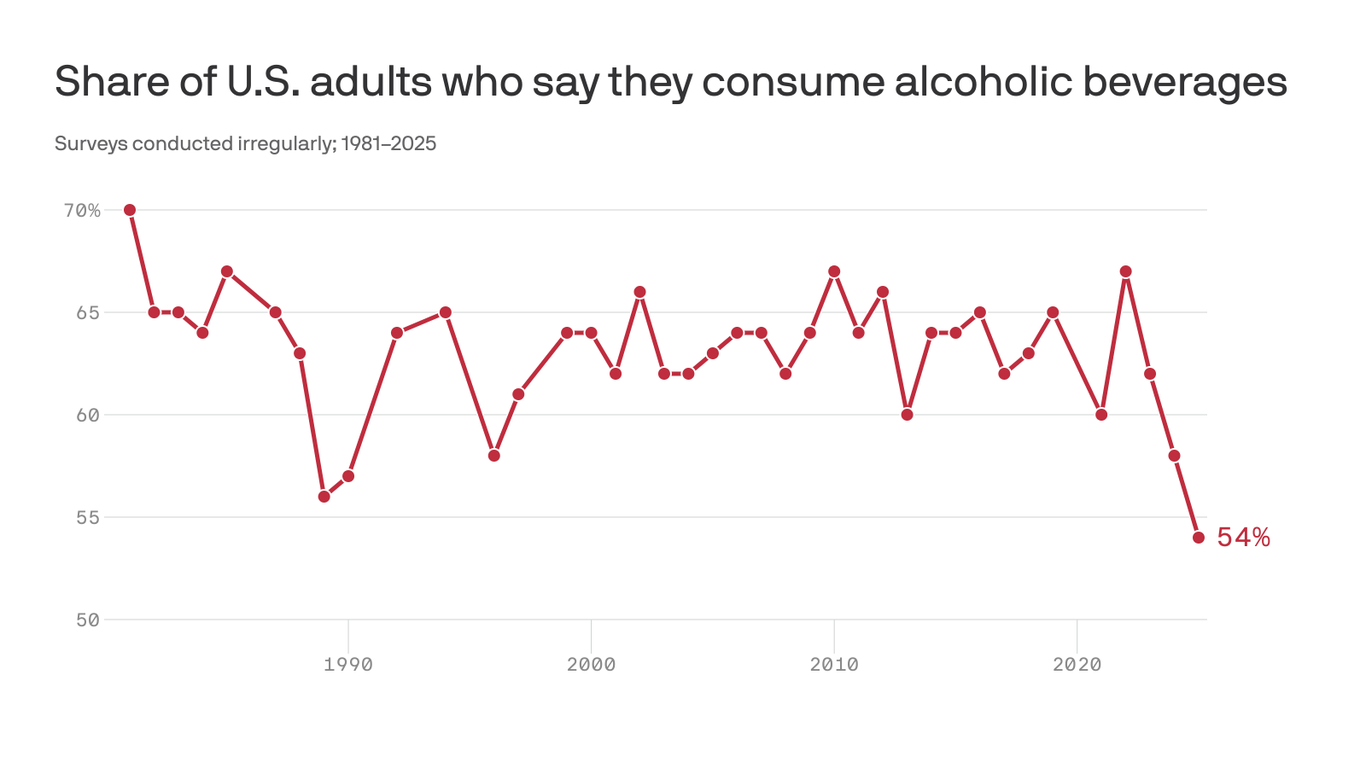
Throughout the pandemic, many Americans turned to alcohol as a way to cope. Surveys suggest that 60% of people are drank more than they did pre-COVID. Those who say they’ve been feeling stressed are especially likely to say they’re drinking more — and more often — than they used to.
This, in turn, suggests the number of “gray area” drinkers may be on the rise. It’s a nonclinical and somewhat vague term, albeit one that has gained traction in recent years. It generally describes people who drink with regularity, but do not meet clinical criteria for alcohol dependence.
Curious about gray area drinking? Here are some basics you should know.
What gray area drinking is — and isn’t
Again, “gray area drinking” is not a formal term that doctors or many addiction specialists will use. Still, it’s a concept that has lately captured public imagination, because it describes a category of people who’ve long been left out of conversations about substance abuse: those who aren’t necessarily living with addiction, but who have questions about their relationship with alcohol.