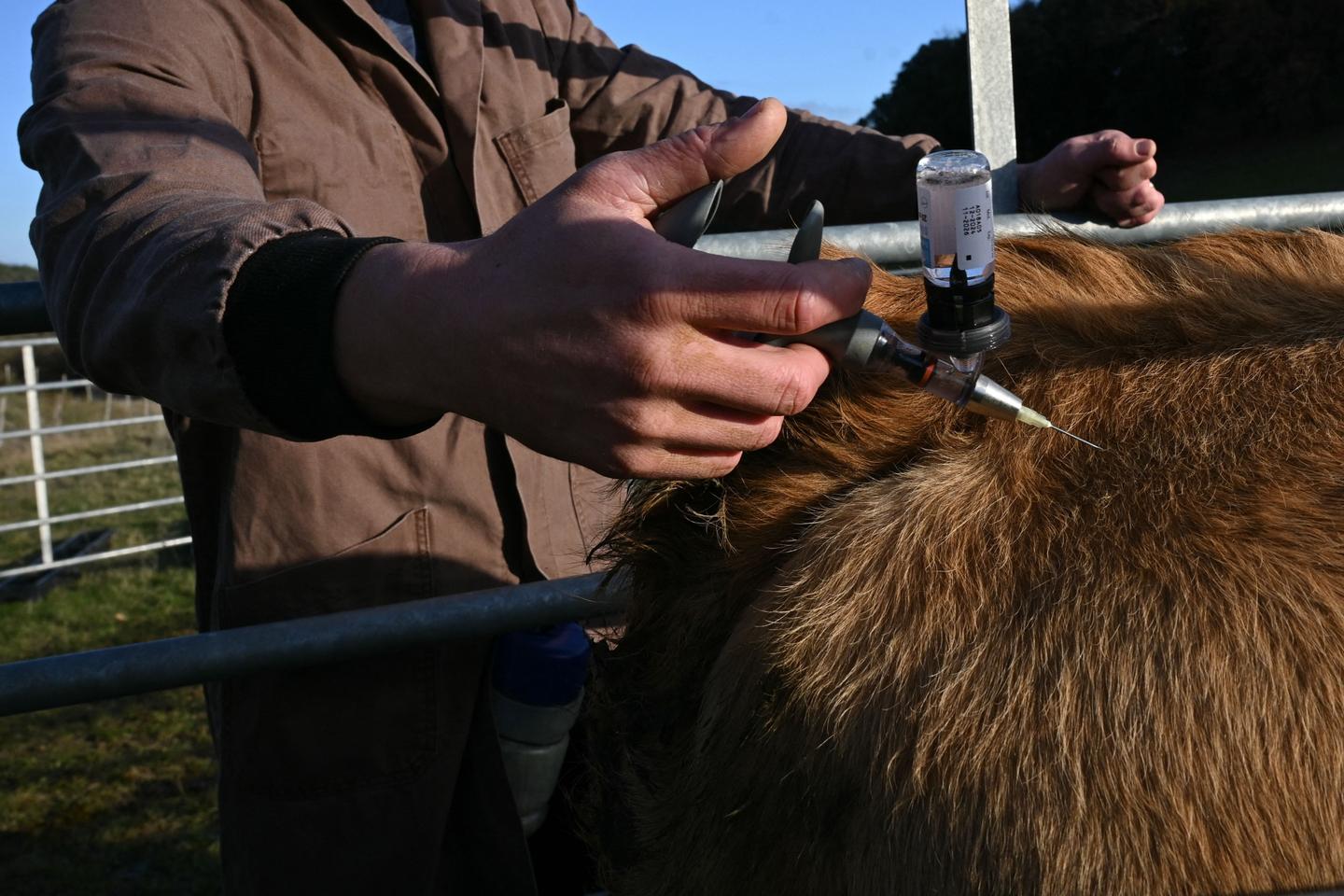
Vaccinating a cow against lumpy skin disease in Pomy, France, December 17, 2025. MATTHIEU RONDEL/AFP
The recent arrival of lumpy skin disease (LSD) in France, with the 115th case recorded on Monday, December 22, follows a series of animal disease outbreaks in French livestock in recent years. Cattle herds have already had to contend with the emergence or return of several pathogens, such as epizootic hemorrhagic disease (EHD) and bluetongue disease (BTV), the latter of which mainly impacts sheep, while poultry farms have faced a serious threat from avian influenza for several years. All these events raise the question how vulnerabile French livestock is to disease.
Is this simply a matter of increased scrutiny in a post-Covid-19 world, where the links between animal and human health have been highlighted in unprecedented ways and are now under close watch? In the 1950s, the health standards in French livestock farming were much lower than today, and significant efforts were made after World War II to achieve higher standards – often at the cost of mass culling and the introduction of new regulations. "What is new over the last 20 years is the emergence in our territory of vector-borne diseases, particularly from the African continent," said Boris Boubet, the head of the Creuse animal health defense group.