https://arab.news/jg2jx
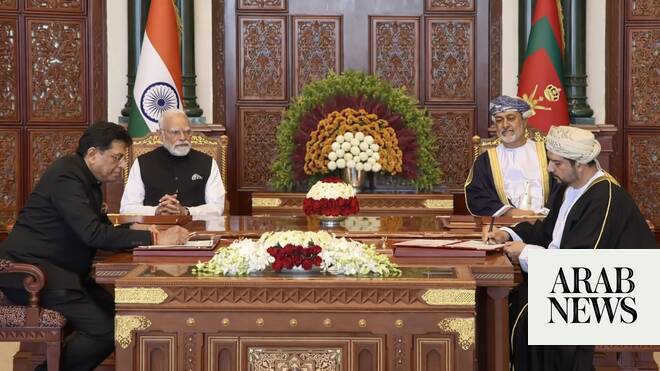
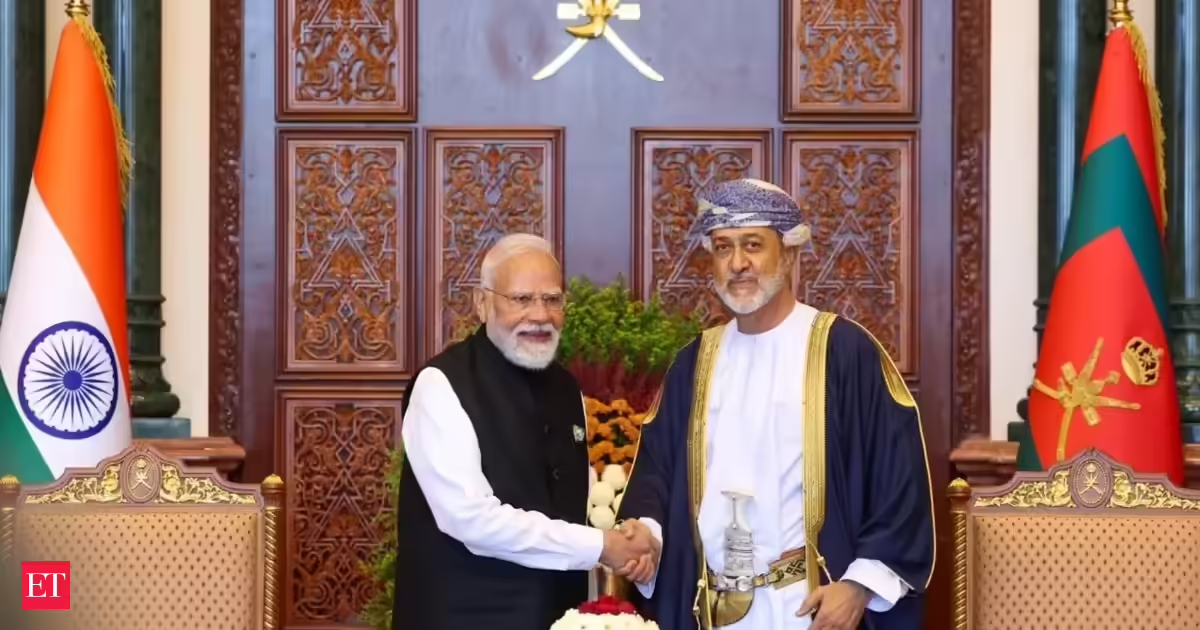
Oman and India recently signed a Comprehensive Economic Partnership Agreement that will offer duty-free access to over 98 percent of India’s exports to Oman. Bilateral trade between the two countries reached $10.6 billion in 2025. More than 6,000 India-Oman joint ventures operate in Oman. Outward foreign direct investment from India to Oman is $675 million. This latest agreement aims to increase bilateral trade and promote India’s exports of textiles, engineering goods, pharmaceuticals, and agricultural goods. India will offer tariff liberalization of almost 77.8 percent of its total tariff lines, which involves more than 94 percent of imports from Oman by value. India will cut tariffs on select goods, such as dates and petrochemicals, from Oman. The recent development in the region is the classic example of adopted effective economic statecraft policy.
In his 1985 book “Economic Statecraft,” David Baldwin reevaluates the effectiveness of economic statecraft and other forms of economic techniques. The “statecraft” is the foreign policy tool used by the state holders with the aim to influence other global actors. Economic statecraft includes all economic tools that are used in foreign policies. There are forms of positive economic statecraft — so-called “carrots”: financial aid, investments, subsidies for exports and imports, favorable tariff discrimination — and negative forms, referred to as “sticks”: embargos, boycotts, license denial, blacklisting, tariff increases, and freezing assets. Highlighting their significance, Baldwin argues that “economic techniques usually cost more than propaganda or diplomacy and thus tend to have more inherent credibility.”