Ireland’s 2015 Gender Recognition Act was born in an era of optimism and consensus, but as gender-critical activism grows so does debate whether it can hold
Soon after Ireland passed its Gender Recognition Act in 2015, Kevin Humphreys, a Labour politician, visited a residential home for senior citizens – where an older woman thanked him for the new law.
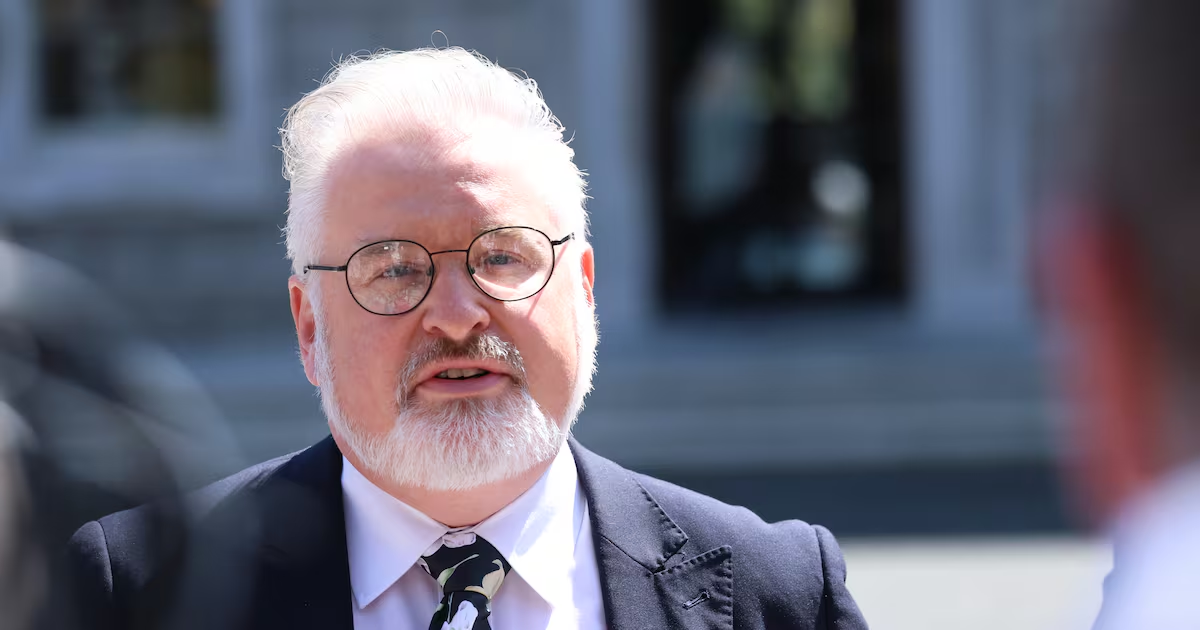
It was Humphreys who, as the minister of state for social protection 10 years ago, guided through the legislation that has meant transgender people in Ireland can apply to have their lived gender legally recognised by the state through a simple self-certification process.
“She was around 80,” Humphreys recalls, “and for the first time she was able to tell her friends and family she was transgender. She told me the relief she felt to be accepted by her own community, and by the state, in the last few years of her life.”
“We were very fortunate in Ireland that we were able to do the legislation in an era of openness and progressive discussion,” he says.