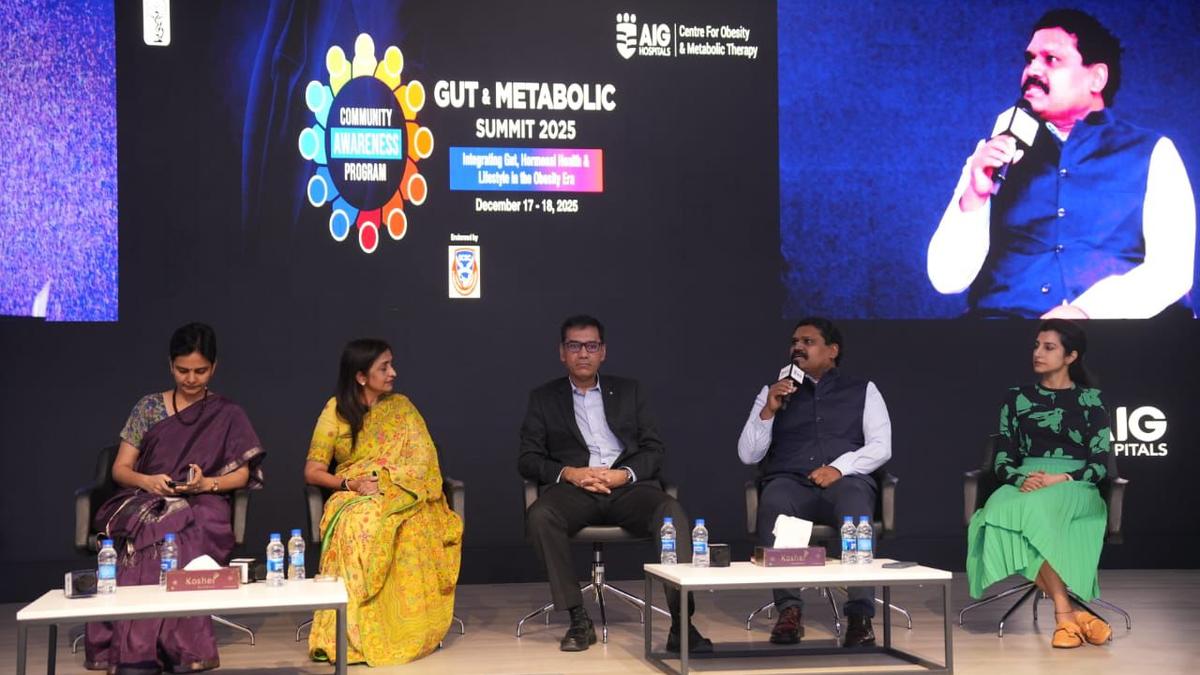
Rural women and community institutions were positioned as key drivers of India’s response to the growing burden of obesity and metabolic diseases at a panel discussion on public private collaboration held at AIG Hospitals, Hyderabad on Thursday, December 18.
The discussion, titled The Public-Private Collaboration to Tackle the Metabolic Crisis, was moderated by Dr Rakesh Kalapala, Director of the Centre for Obesity and Metabolic Therapy at AIG Hospitals. The panel brought together Telangana Commissioner of Civil Supplies Stephen Raveendra; Chief Executive Officer of the Society for Elimination of Rural Poverty (SERP), Telangana, Divya Devarajan; Executive Director of Heritage Foods Nara Brahmani; Executive Director of Granules India Uma Chigurupati; and Chief Executive Officer of AIG Hospitals SAM Rizvi.
Opening the session, Dr Kalapala said that with metabolic disease emerging as a silent pandemic driven by changing food habits, stress and sedentary lifestyles across both urban and rural India, solutions would have to extend beyond hospitals and involve governance, industry and community institutions.
Placing rural women at the centre of the discussion, Ms Devarajan said government food systems and welfare programmes had played a decisive role in shaping dietary patterns over decades. “Large-scale distribution of polished rice through the public distribution system had gradually displaced traditional diets based on millets such as jowar and ragi, which are nutritionally richer and have a lower glycaemic index. While such policies were necessary at a time of food scarcity, the present context of self-sufficiency offered an opportunity to rethink food baskets,” she said.