As you enter Jagdalpur, the district headquarters of Bastar, a towering sculpture of Bison Horn Maria dancers comes into view, welcoming visitors. It stands as a striking symbol of the region’s cultural pride and the enduring legacy of the Dandami Madia community.
The Dandami Madia (also spelt as Maria) people have long shaped the cultural landscape of southern Chhattisgarh. Their settlements across Darbha, Tokapal, Lohandiguda and Dantewada continue to maintain a deep relationship with the forest, where livelihood and beliefs remain closely intertwined.
Identifying themselves as part of the larger Gond tradition, the community carries echoes of the ancient Gondwana region that once stretched across central India. Among their most recognisable cultural expressions is the Bison Horn Maria dance.
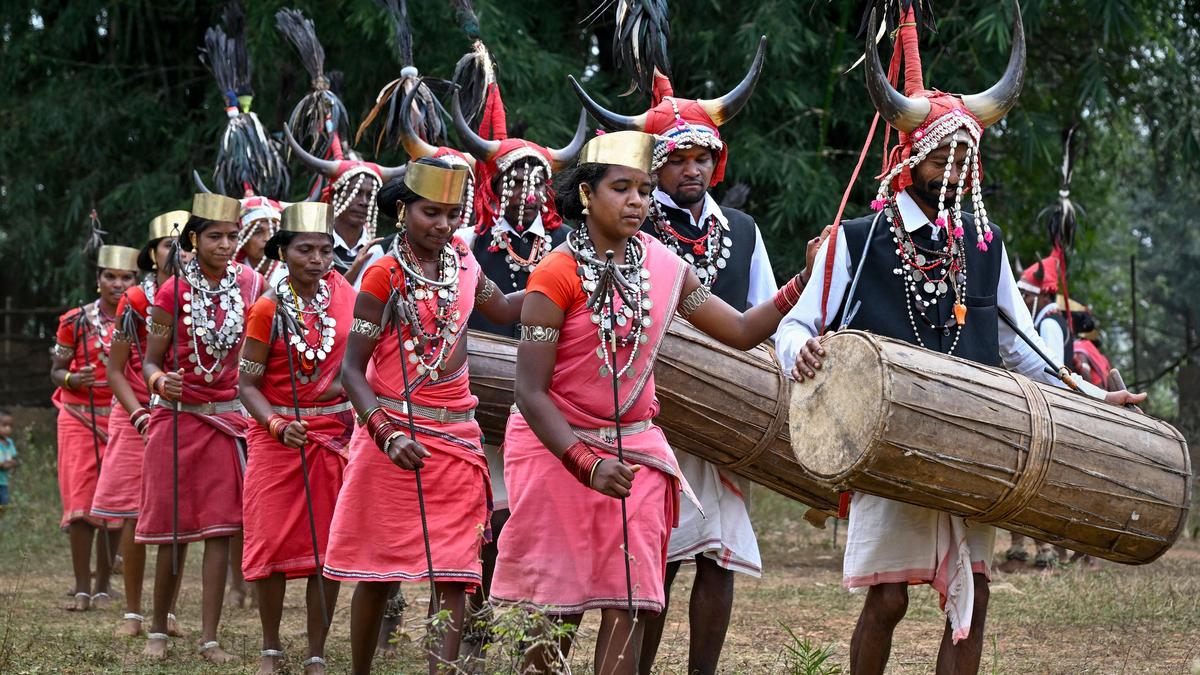
Performed by both men and women, the dance turns the village clearing into a vibrant spectacle of colour and sound. Men wear the iconic horn-shaped headgear made from bamboo, adorned with bison horns, feathers, and bright cloth strips that sway with each movement. Layers of bead necklaces cover their torsos, while brass bells tied to their ankles create a rhythmic jingle as they dance.
Women wear bright, handwoven saris, heavy silver and brass ornaments, and headgear. Coins in the denominations of ₹1 to ₹10 are worked into their jewellery, and many also don a brass crown, adding to the ceremonial visual appeal. Their movements flow in graceful arcs, shoulders swaying to the beat of drums and bamboo flutes.