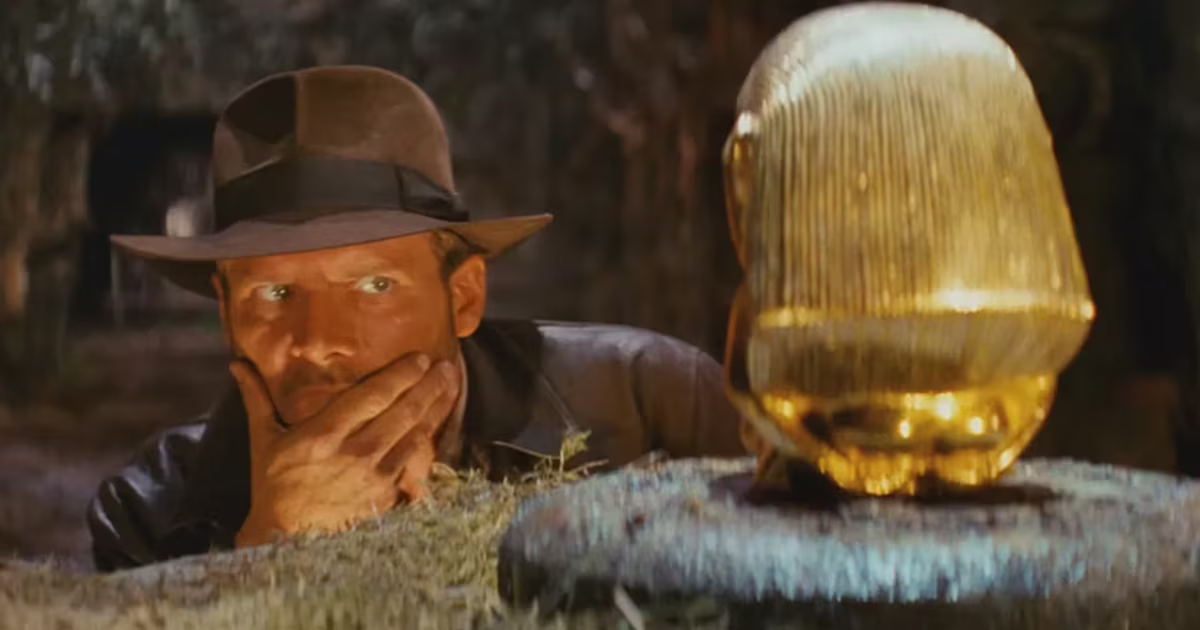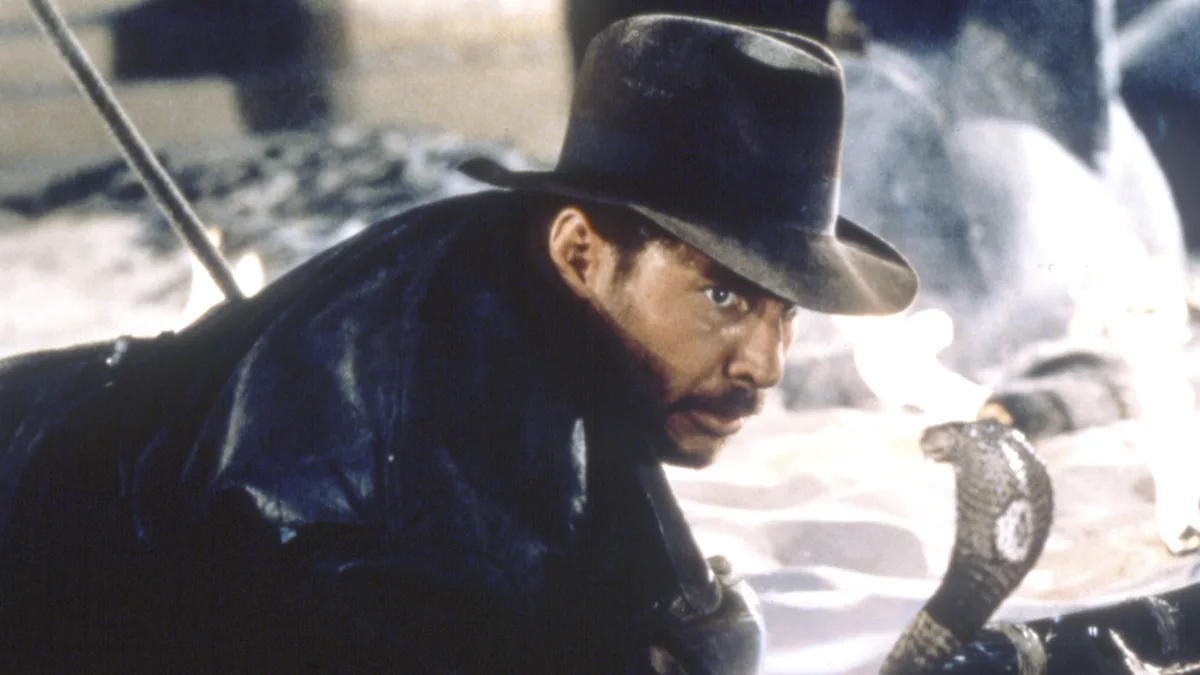
In the final scene of Steven Spielberg’s Indiana Jones film Raiders of the Lost Ark, the camera cuts to the golden chest as it is placed inside a wooden storage crate, which is then nailed shut and padlocked. It’s wheeled through a cavernous warehouse full of identical boxes and slotted into a random row: safe from the enemy at last. The end credits roll.
“I’ve always, in my career, had that image in my mind,” says Tim Reeve, deputy director and COO of the Victoria and Albert Museum. “I just imagined myself being allowed into that space, prising open a crate and seeing what’s inside.” The dream was realised when, in 2015, Reeve was presented with the challenge of moving the V&A’s collection from its permanent storage space in Blythe House, Kensington, to its new home in Stratford. He thought: “Wouldn’t it be amazing if the general public was allowed to go into these places and trespass, explore and be in charge of what they do and don’t see?”
From top: Jason chair, 1950-1951, designed by Carl Jacobs, manufactured by Kandya; cabinet, Augsburg, 1575-1600, maker unknown; chair, 1951, by Harry Bertoia © Niall Hodson
The result is the V&A East Storehouse, which opened in east London in May this year. Thanks to New York-based architects Diller Scofidio + Renfro, known for their work on the High Line and LA’s The Broad museum, what was a hangar has been transformed into an open-plan, sleek, industrial glass and metal museum, centred on a huge atrium. The Storehouse holds the objects not currently being displayed in the museum’s other outposts: paintings, furniture, objects, weapons, clothing, shoes and architecture, mostly on open shelves. In September, they opened a centre dedicated to David Bowie, filled with 90,000 objects including the singer’s eyepatch, Alexander McQueen jumpsuit and 12-string acoustic guitar.