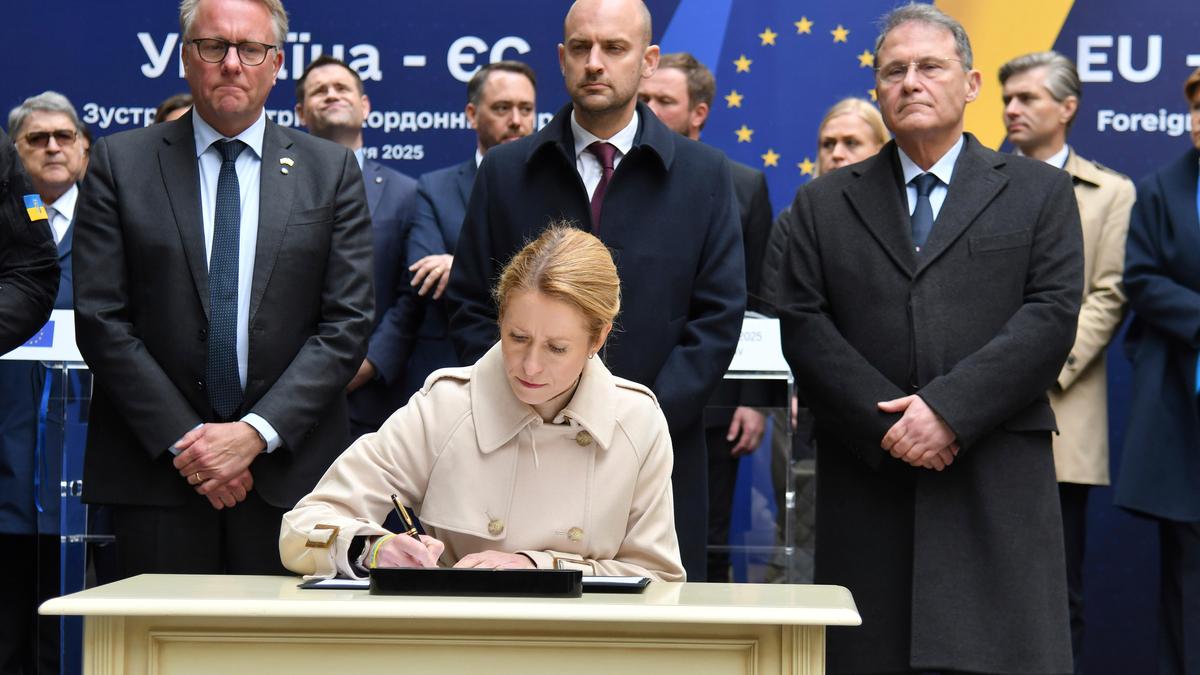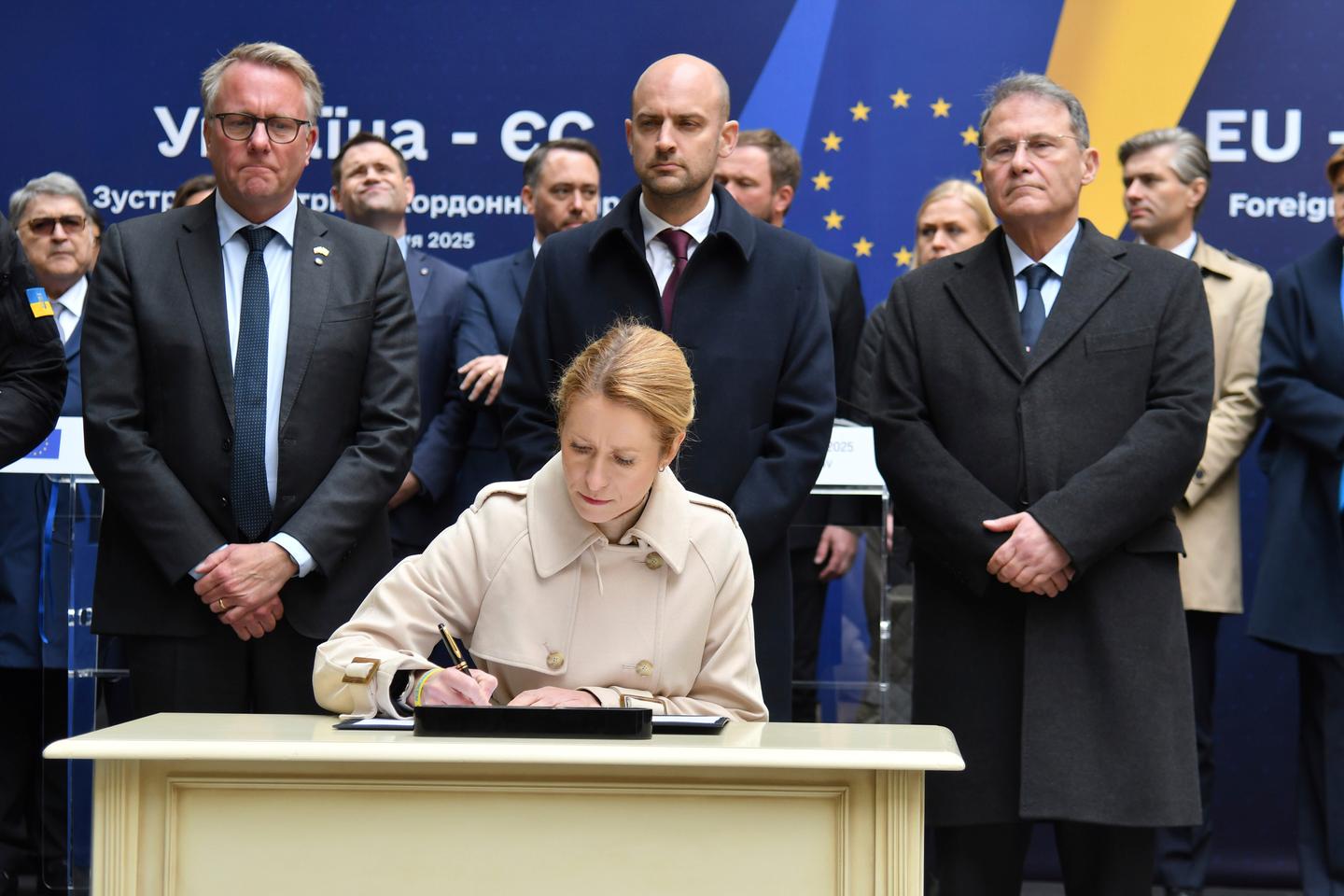
The European Union's High Representative for Foreign Affairs and Security Policy, Kaja Kallas, in Lviv, Ukraine, on May 9, 2025. MYKOLA TYS/AP
As Europeans try to avoid being sidelined by the United States in negotiations over a peace plan for Ukraine and seek ways to continue financially supporting Kyiv, they took an important step on Friday, December 12 – one that is likely to help their goals. They agreed to freeze the assets that the Russian central bank held in Europe before the conflict began, until the end of the war in Ukraine.
Until now, as with other sanctions the European Union imposed on Moscow, its member states had to unanimously renew the asset freeze every six months. Each time, there was a risk that strongly pro-Russian countries, such as Hungary or even Slovakia, would veto the renewal, potentially letting the Russian institution recover €210 billion in assets for its treasury. Since the Russian invasion in February 2022, Budapest had generally played along with the EU, but in recent months, Hungarian Prime Minister Viktor Orban, who is campaigning ahead of his country's 2026 parliamentary elections, has toughened his stance and repeatedly stated that he no longer wants to help Ukraine.