New Orleans started 2025 with a terrorist attack and prison escape and is ending it with a National Guard enforcement. But at least it avoided hurricanes.Show Caption
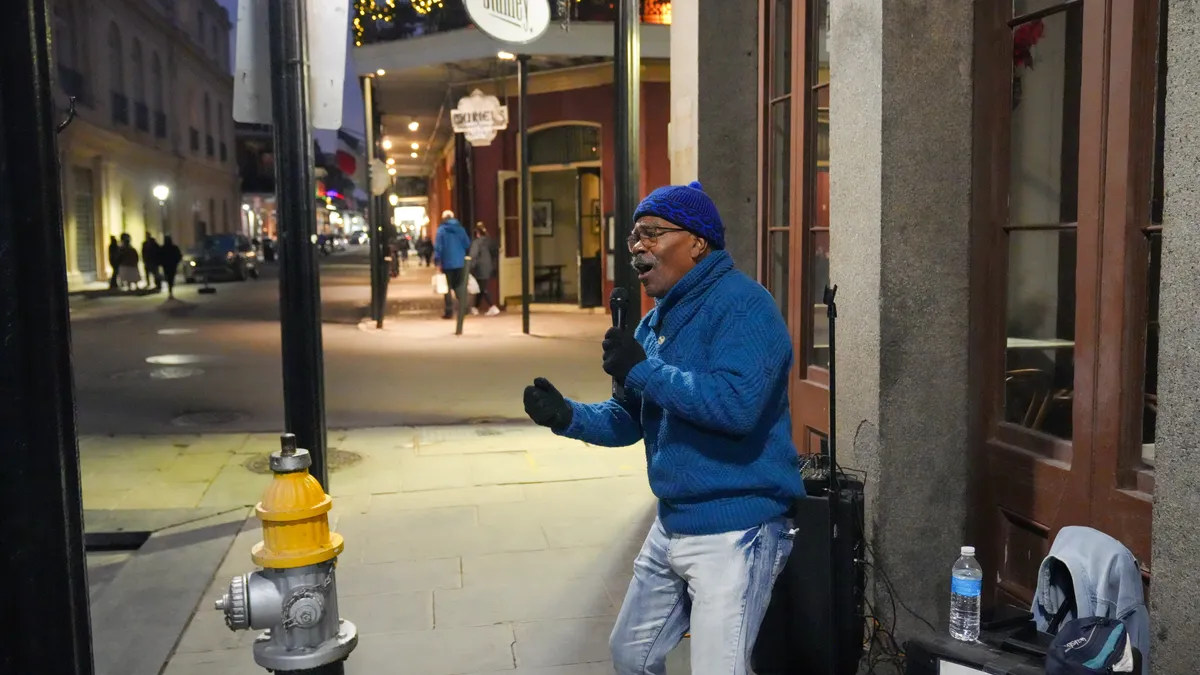
NEW ORLEANS ‒ At first glance, Bourbon Street remains as it always was: Tourists clutch cocktails as they totter down the uneven sidewalks in high heels. The shoeshine guys make their bad dad jokes. The brass bands draw crowds, cell phone cameras in hand. The beignets are still piping hot, the frozen margaritas still frosty.But in the quieter areas, things are, well, quieter. On a cool December evening as raindrops polka-dotted the pavement, longtime street performer Onunze Ubaka, 72, crooned Motown classics to a virtually empty corner off the usually busy Jackson Square in the French Quarter. Few tourists passed by. Even fewer stopped to drop dollar bills into his white-tip bucket."You can feel the change," Ubaka said in between songs from Lou Rawls and The Temptations. Inside his tip bucket, a small pile of greenbacks barely covered the 15-pound dumbbell he started putting in after a young man tried to run off with it.Ubaka said there has been a general economic slowdown, in particular a loss of international tourists.He said the city's broader struggles haven't helped, either, from the devastating terror attack on Bourbon Street Jan. 1 to the embarrassing jailbreak of 10 inmates from the Orleans Parish Justice Center in May, followed by the mayor’s indictment on federal corruption charges and a surprise city budget shortfall.And now federal immigration agents are prowling the edges of the city in the high-profile "Operation Catahoula Crunch.""I think a lot of that has contributed to the slowdown," Ubaka said. "It's kind of put a damper on things."Tourists have stayed awayAlthough city leaders have been diversifying the local economy, New Orleans depends heavily on tourism, and the shocking terror attack Jan. 1 that killed 14 people on Bourbon Street started the year on a tragic note. In that attack, Army veteran Shamsud-Din Jabbar of Texas drove a rented pickup down Bourbon Street packed with revelers celebrating the new year.A New Orleans police officer shot and killed Jabbar after he crashed the truck, and city officials reopened the street for parties the next day.Experts and locals alike say the news coverage of the attack slowed tourism to the city just when it was starting to regain momentum after the COVID-19 pandemic. In late 2024, superstar Taylor Swift's three-night Eras Tour appearance at the iconic Caesars Superdome provided a $500 million boost to the local economy, according to tourism experts.New Orleans draws more than 18 million visitors a year, dwarfing the 364,000 who call the city home. And those visitors are typically about twice as wealthy as local residents, according to a 2021 study commissioned by state officials. In addition to individual tourists, tens of thousands of convention-goers pour $2 billion into the economy each year.In an effort to reassure those all-important visitors that the city was safe, particularly those coming for the Super Bowl Feb. 9, city officials flooded the streets with police officers, installed new security barriers and hung new cameras in busy areas. And while the game went off without a hitch, police overtime contributed to a significant budget shortfall, as did a snowstorm in late January.The city ultimately had to borrow $125 million to cover the costs and has cut about $150 million from next year's budget to close the gap. City officials are also struggling to pay for Hurricane Katrina-related street repairs, which are still needed 20 years after the storm swamped large portions of the low-lying city.City leaders say part of the problem can be attributed to the indictment of Mayor LaToya Cantrell on federal corruption charges in August. Cantrell is term-limited and leaving office in January. She's being replaced by City Council member Helena Moreno, a Mexico-born Democrat and former television journalist.The local sheriff also lost her job after the May jailbreak. It took authorities five months and hundreds of thousands of dollars to recapture all the escapees.Even the local sports teams are having terrible seasons: The New Orleans Saints are 3-10, one of the worst records in the NFL, and the New Orleans Pelicans are 4-22 and in last place in their conference in the NBA."It's been a year of transition, a difficult year," said former Mayor Marc Morial, who is now president of the National Urban League. "I think there's optimism in the city with the new mayor coming in, but there's still a lot of uncertainty."Morial said he worries about further budget cuts, given President Donald Trump's criticisms of New Orleans as "quite bad," and overall federal spending reductions on social programs and road repairs at the same time there's a dramatic expansion of immigration enforcement. Morial was mayor from 1994 to 2002.Morial said he's also worried that the immigration enforcement campaign in the New Orleans area is scaring away workers needed to keep the city's hotel and restaurants humming. In December, migrant rights groups organized several small protests in downtown New Orleans and hung signs criticizing the Trump administration's enforcement campaign.Tough times for the local economyOn Royal Street in the city's storied French Quarter, longtime business owner Benny Naghi said he's having one of his worst years in memory. Naghi, who has run Mardi Gras Zone for 25 years, said customers aren’t buying, employees have quit and prices are up for the international goods he imports.But standing inside the warehouse-like store surrounded by bead necklaces, sequined dresses and trinkets decorated with the city’s iconic fleur-de-lis, Naghi said he remains optimistic.Naghi said that while the city has struggled recently, he's confident Trump's approach to international trade and tariffs, American manufacturing and immigration enforcement will ultimately boost the entire country's economy."I honestly believe this is the golden age of America. And people won't realize it until 10 years from now," said Naghi, who was born in Iran before his Jewish family fled to safety in Israel when he was still a child. They later emigrated to the United States.Naghi, 59, said his pizza-window workers quit after he hung an Israeli flag in memory of the Oct. 7, 2023, attack by Hamas, and because of the new immigration enforcement, he can't find anyone to pick apples on his farm 30 miles south of the city."You can feel the crunch. But it's for multiple reasons," he said. "We're going through big change in the country. And change creates uncertainty."Like Naghi, French Quarter tarot card reader Marie "Betty Boo" Ware dismisses concerns about corruption in the city. She said every port city she has ever worked in shared similar traits. And she said that while New Orleans has been suffering this year, she feels many other Americans are as well.From her folding table in Jackson Square, where she can see a memorial to the 14 people killed in the Jan. 1 attack, Ware, 58, greets other passing fortune tellers, musicians and homeless people by name.With her new puppy, Lilybell, sitting in a wheeled cart at her side, Ware said she has been priced out of the French Quarter over the past two decades, and now lives on the other side of the Mississippi River. She gave thanks that Mother Nature spared the region from hurricanes this year but worried the city can't afford to put enough cops on the streets to reassure tourists.She said conversations all year with her clients have also revealed a deep economic uncertainty among the public ‒ enough to make her wonder aloud whether she should give up her decades-old gig as a tarot card reader, or at least find another income source.Mardi Gras is in mid-February for 2026, relatively soon after the year-end holidays, and Ware said she's worried people struggling with their finances at Christmas won't be willing to spend even more to celebrate Mardi Gras."If you get into an environment where everyone is economically nervous … then I have to start wondering whether I should get a real part-time job," she said. "All you can do it try to keep trying to put the best face on your tourism."The Big Easy remains optimisticThough tourists don't necessarily notice the city's challenges, United Way officials on the front lines say they hope 2026 starts on an upswing. Michael Williamson, president and CEO of United Way of Southeast Louisiana, said he hears a sense of optimism across the area.The number of people seeking help via the United Way nearly doubled from 2023-2024 to 2024-2025, and the organization has rolled out "prosperity centers" to help locals do their taxes, qualify for government programs and even make down payments on houses or vehicles."I think folks here take an immense amount of pride in this being their home, and they show up every day to make it better. The way the community shows up for each other ... that breeds optimism when people see others stepping up to lead," Williamson said. "Who couldn't be excited about being in New Orleans with Mardi Gras and Jazz Fest and all these people wanting to come to visit?"That's the attitude Michelle Gollner feels whenever she visits her hometown. A native of New Orleans, Gollner, 44, moved to Baton Rouge a few years ago and was visiting the city with friends recently after her wedding.She said she never had a second thought about encouraging her wedding guests to visit the Big Easy, even after all the struggles it has had."One thing they say about New Orleans is that we're resilient," Gollner said. "Even Katrina couldn't take us out. We're here to stay."(This story was updated to add new information and correct a typo.)