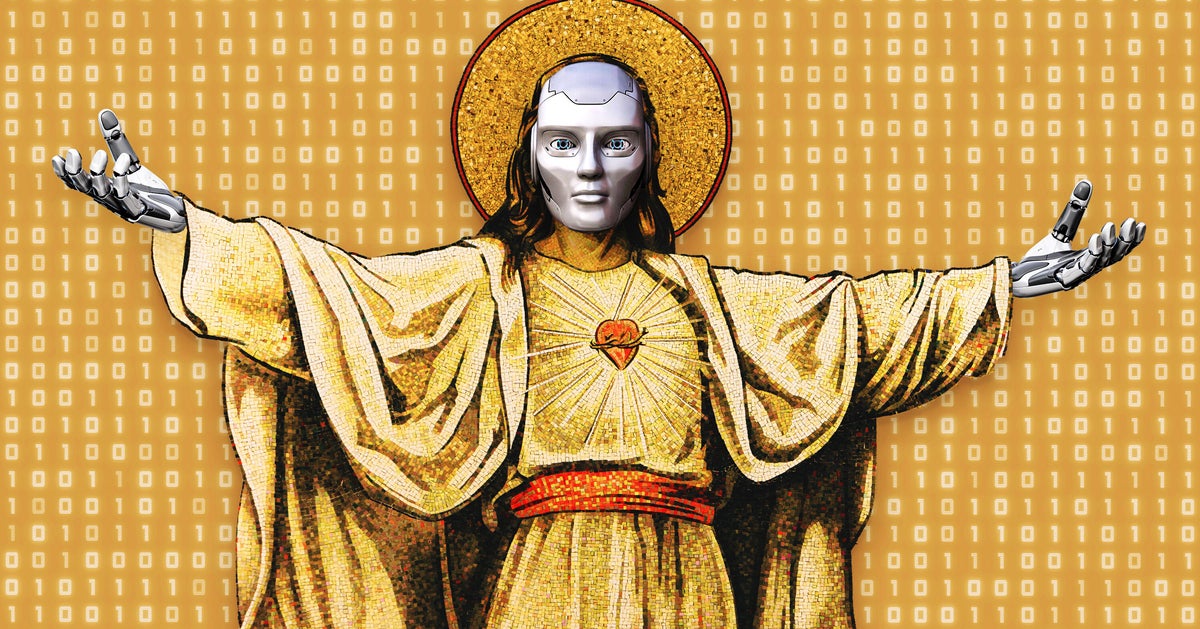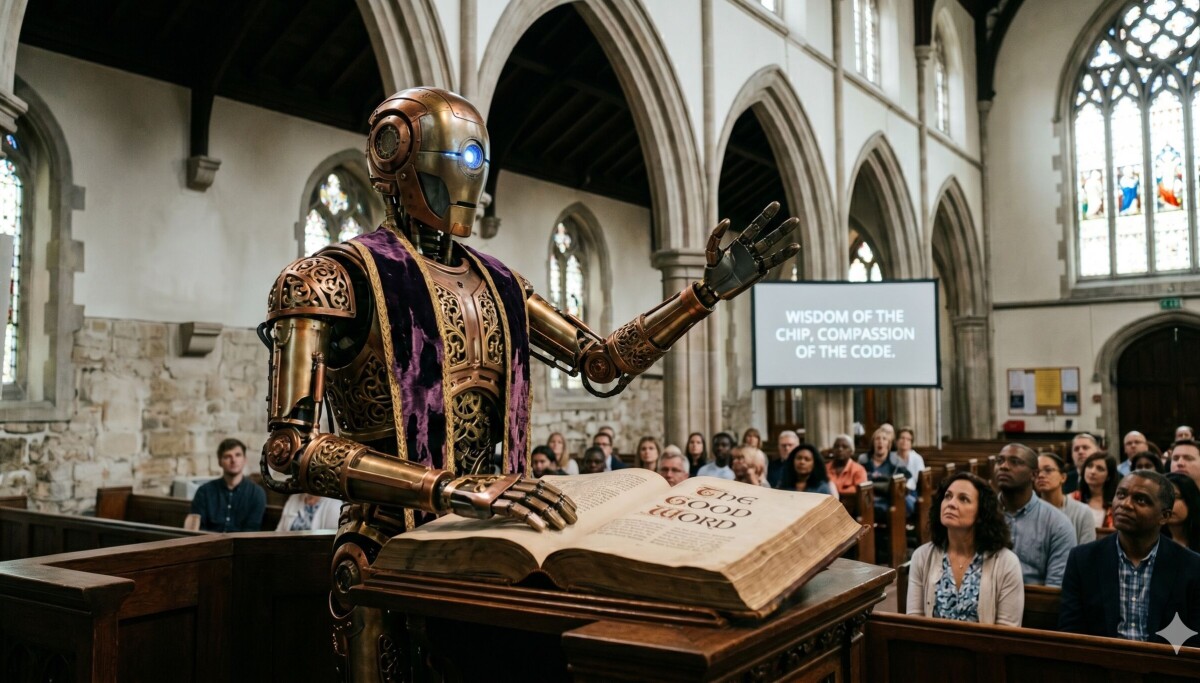
Comforting reassurance was once the work of the church. Now it’s increasingly being sought from the machine
A few summers ago I attended two funerals in a week.
One was for a man who was atheist and had lots of worldly success. The second was for a woman who was Catholic, raised three children and lived a much quieter life.
In the first funeral the man’s achievements were celebrated, but there was a deep sadness at the core of the service. No one would be seeing him again – this farewell was final.
By contrast the second funeral, a religious service, was more impersonal. The woman’s name was barely mentioned, her achievements were rattled off in a sentence or two by the priest. This woman’s individuality was dissolved during the Catholic mass into something more universal, neutral even.