French marine archaeologists have discovered a massive undersea wall off the coast of Brittany, dating from around 5,000 BC.
They think it could be from a stone age society whose disappearance under rising seas was the origin of a local sunken city myth.
The 120-metre (394ft) wall – the biggest underwater construction ever found in France – was either a fish-trap or a dyke for protection against rising sea-levels, the archaeologists believe.
When it was built on the Ile de Sein at Brittany's western tip, the wall would have been on the shore-line – between the high and low tide marks. Today it is under nine metres of water as the island has shrunk to a fraction of its former size.
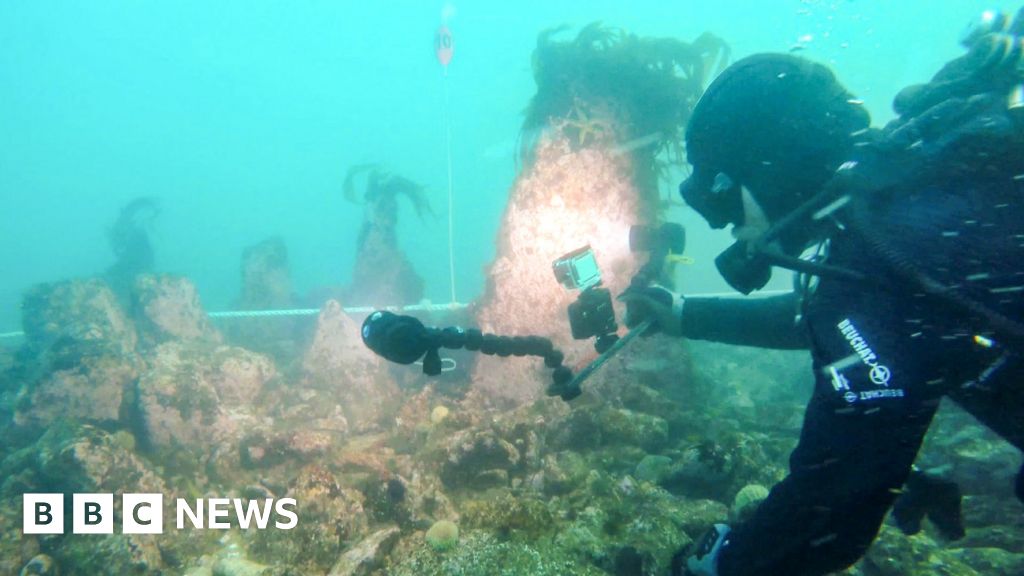
The wall is on average 20 metres wide and two metres high. At regular intervals divers found large granite standing stones – or monoliths – protruding above the wall in two parallel lines.