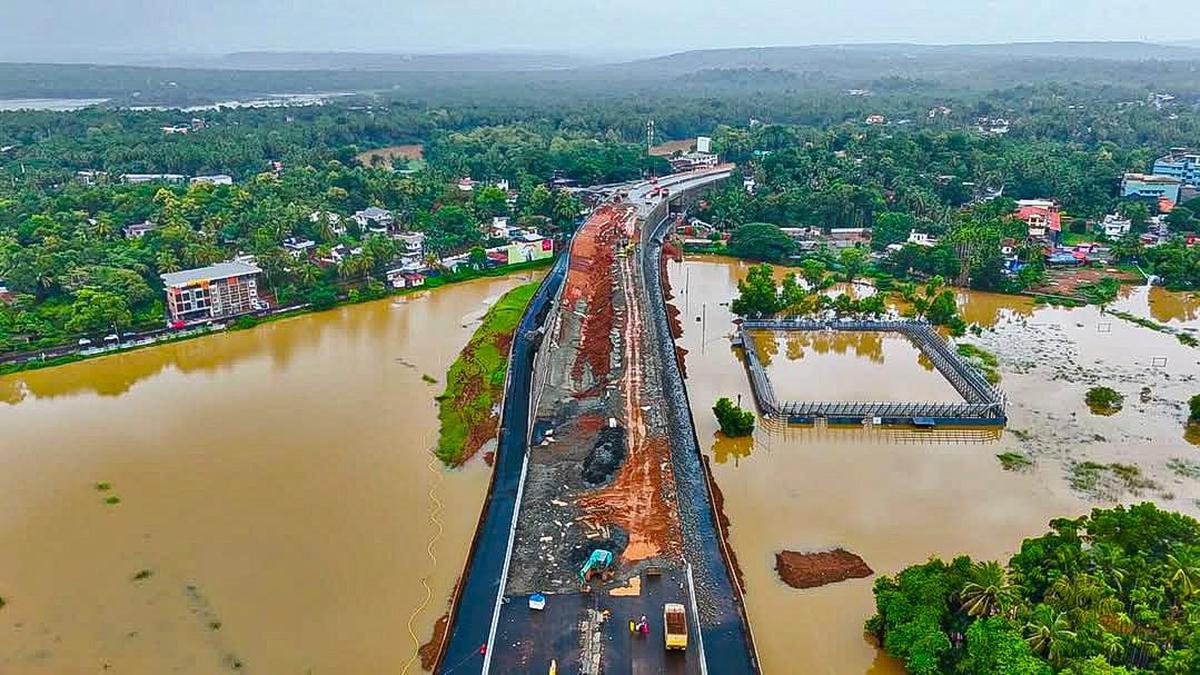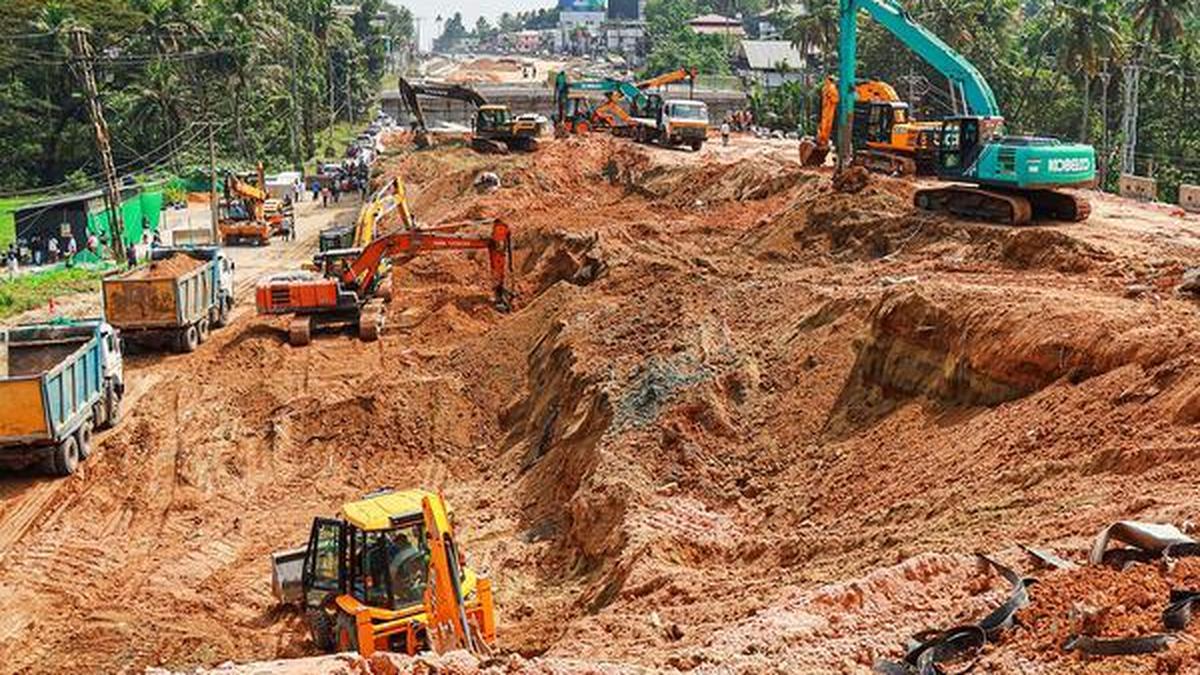
Construction method disregarding the terrain and ground water charactersitics is the main reason for the collapse of NH stretch at Mylakkadu, near Kottiyam, in Kollam, say experts. They point out that the site is inherently high-risk, featuring compressible soil and multiple water pathways between surrounding polders, making it highly susceptible to collapse from water saturation. “It is a geotechnical failure because the low-strength soil conditions were not properly addressed during the design and construction process,” says Jayakrishnan Menon, senior geotechnical engineering consultant.
While geotechnical failures carry severe financial and structural risks, including catastrophic damage, delays, and cost overruns, their most critical consequence is the potential for loss of life. “Kerala’s coastal and lowland regions are geotechnically very sensitive, dominated by soft marine, alluvial and lagoonal residual deposits that behave very differently from soils in many other Indian States, where high embankments are more common. In Mylakkadu, a 4 to 5 metre embankment fill was placed in one stretch. This imposed an additional load roughly equal to 10–11 tonnes per square metre possibly far higher than what the weak subsoil could safely support. When the applied load significantly exceeds the shear strength and bearing capacity of the underlying soil, failure becomes inevitable,” explains Mr. Menon.