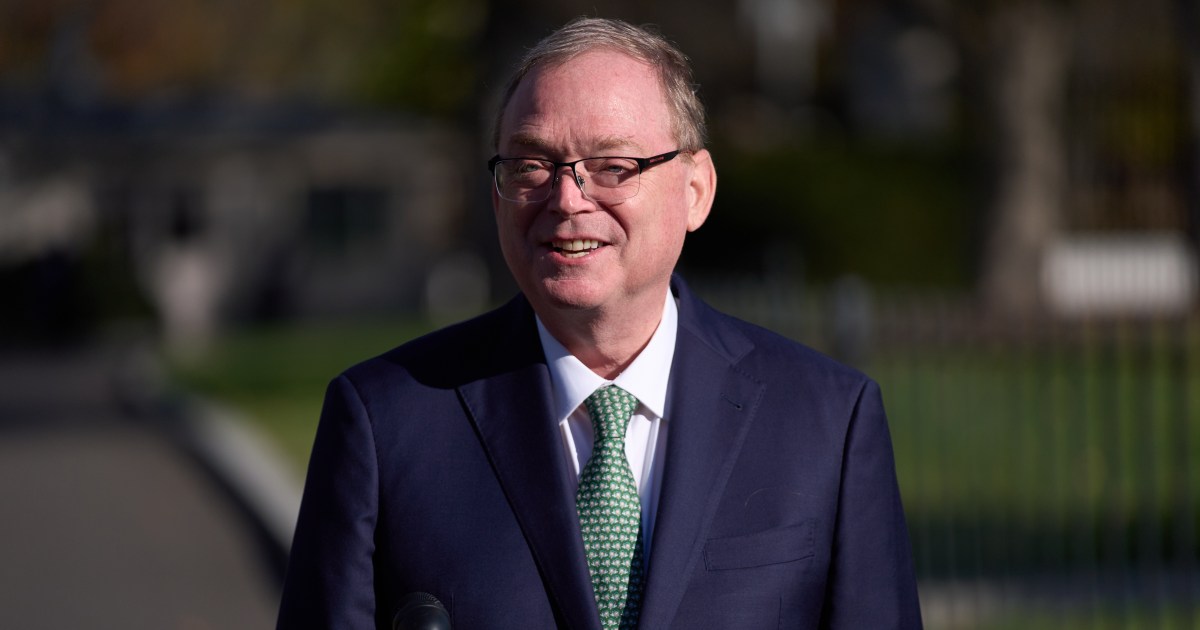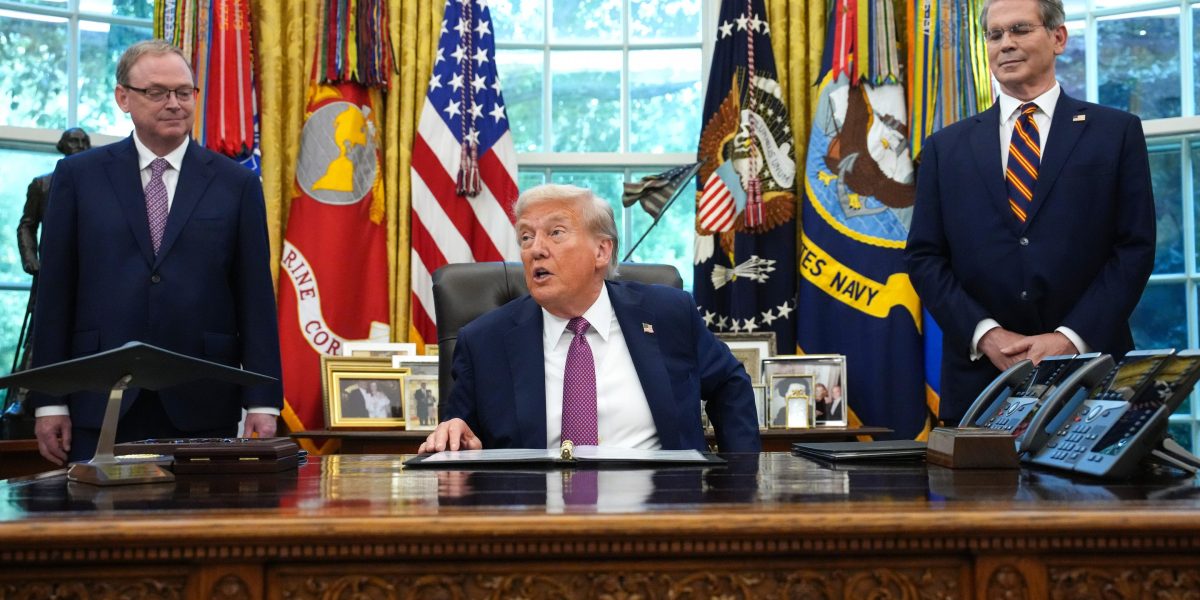
Kevin Hassett, director of the National Economic Council and the current favorite to take over as Federal Reserve chairman, argued on Thursday President Donald Trump’s sweeping tariffs are playing a meaningful role in tackling America’s $38 trillion national debt. In conversation with billionaire David Rubenstein, the Carlyle cofounder, Hassett argued the first step to tackling the debt was to reduce it relative to target: “And we clearly are doing that with the big reductions in the deficit right now.”
Hassett continued, saying he’s not only bullish about growth in the economy, but “the fact that we have tariff revenue and we’ve got a lot more spending restraint than was here in the past.” He noted tariffs are an important part of Trump’s economic policy and “a lot of the revenue coming in to the Treasury” is from tariffs. Hassett cast tariffs as part of a broader supply-side strategy he said he believes can boost growth, widen the tax base and, over time, ease the debt burden.
Just a day earlier, at the DealBook Summit in New York, Hassett’s fellow cabinet member and Treasury Secretary Scott Bessent had described tariff revenues as more like a “shrinking ice cube” than a lasting fiscal fix. This aligned with the recent estimate from the Congressional Budget Office (CBO) that savings on the national debt had shrunk by $1 trillion between August and November, as trade deals resulted in a lower and lower effective tariff rate. Pantheon Macroeconomics found recently tariffs have brought in $100 billion less than the White House first expected, with a plummet in imports from China the main reason.