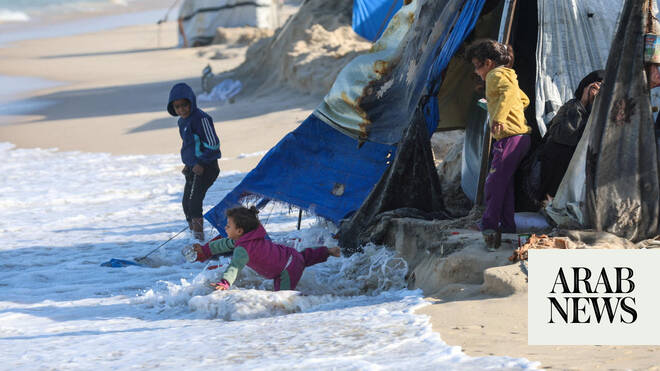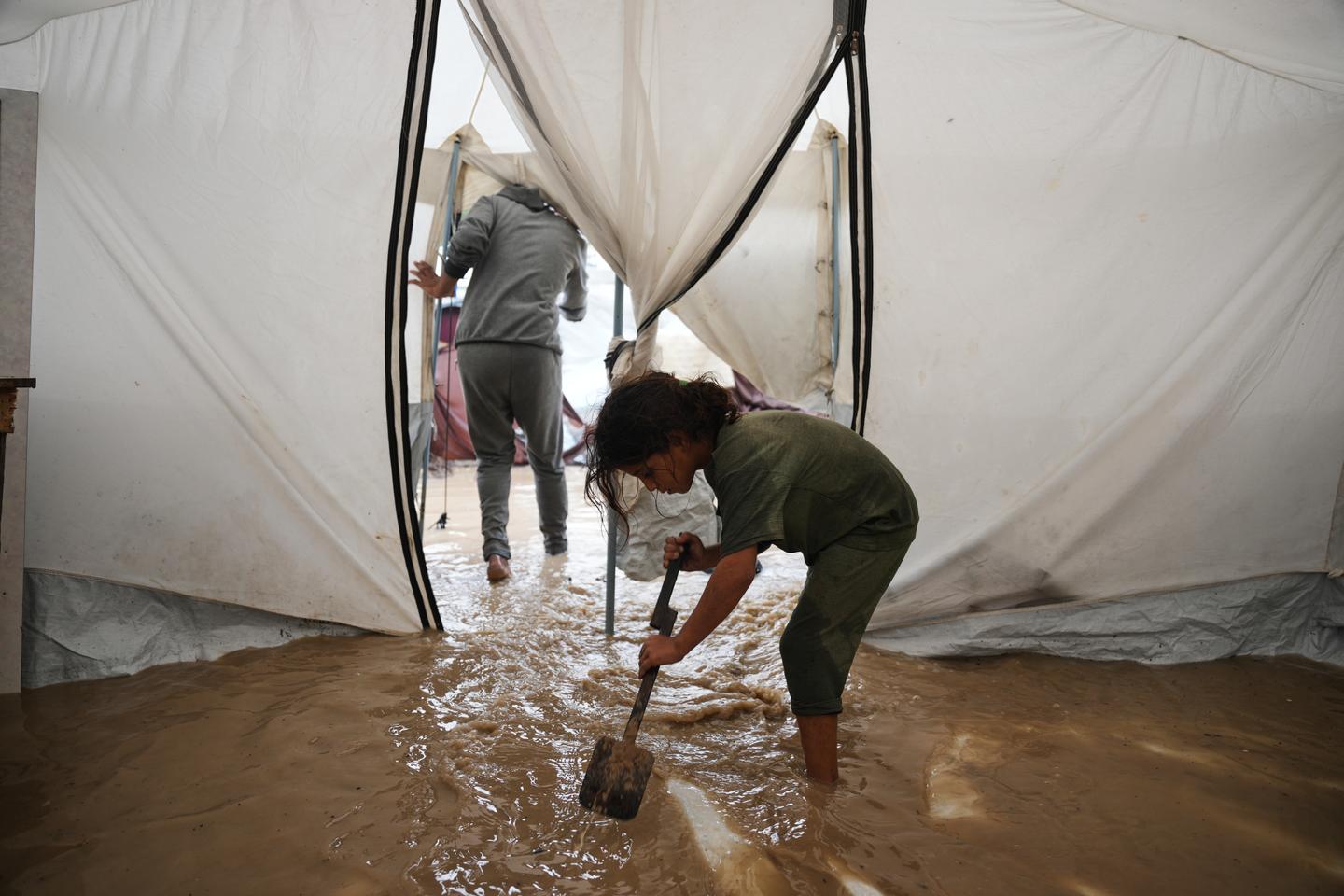
Saja Fayyad, age 7, tries to drain water from her family's flooded tent at a makeshift camp for displaced Palestinians after heavy rainfall in Deir al-Balah, central Gaza, November 25, 2025. ABDEL KAREEM HANA / AP
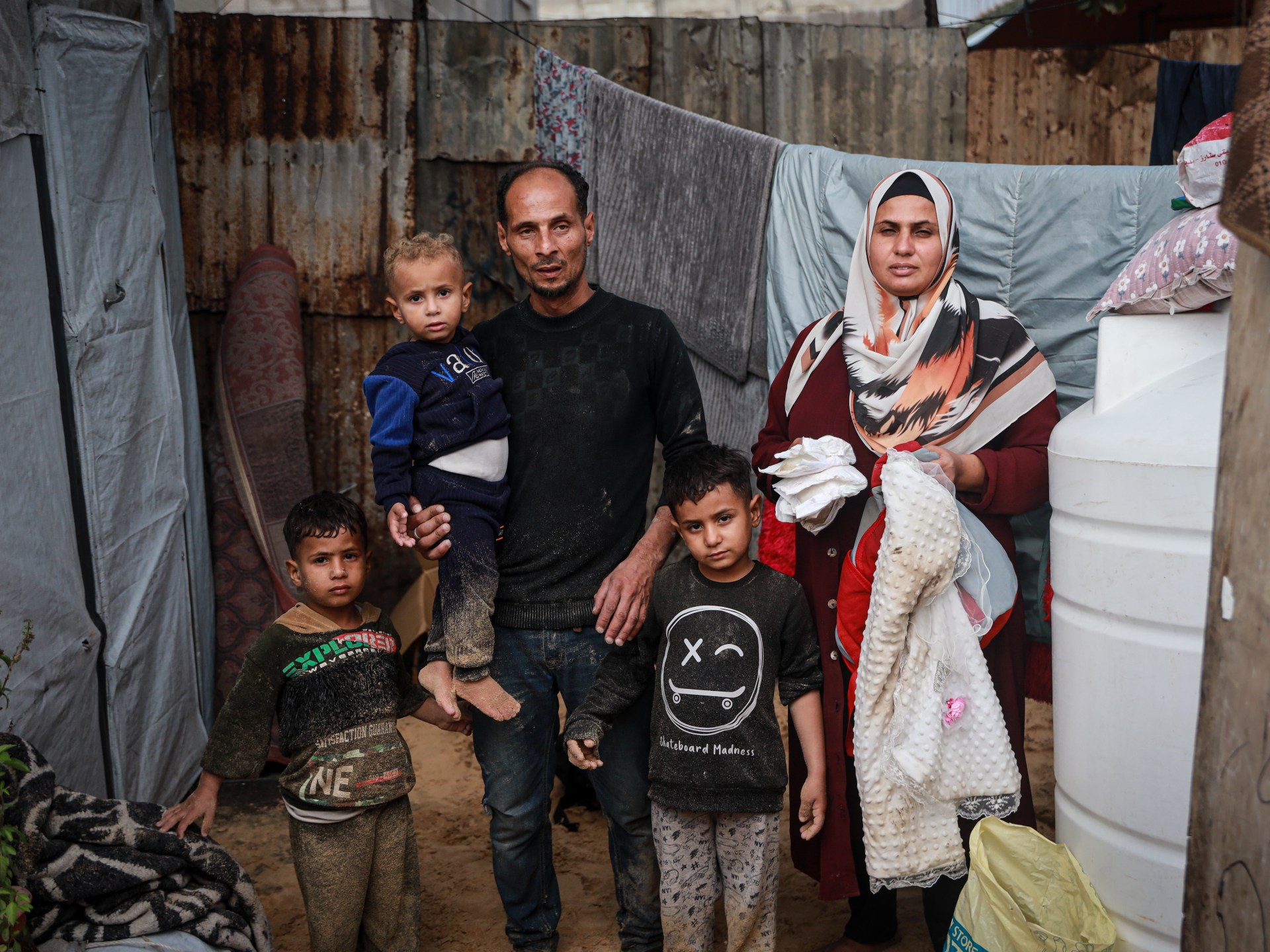
When Basma al-Laham recalled the recent waves of rain that hit the Gaza Strip, she broke down in tears. "I am as afraid of the rain as I was of the war. I don't even want to think about it, I can't," said the anxious woman, reached by phone. Israel continues to bar foreign press access to the Palestinian enclave. Al-Laham, 31, is exhausted. Originally from Rafah, a city completely razed by Israel, the mother of three has been subjected to forced displacement since the start of Israel's ground offensive, launched in response to the attack carried out by Hamas on October 7, 2023.
Despite a ceasefire that took effect on October 10, 2025, Gazans continue to face sporadic Israeli military airstrikes and to endure "extremely difficult" living conditions, according to the United Nations. More than 350 people have been killed since the ceasefire.
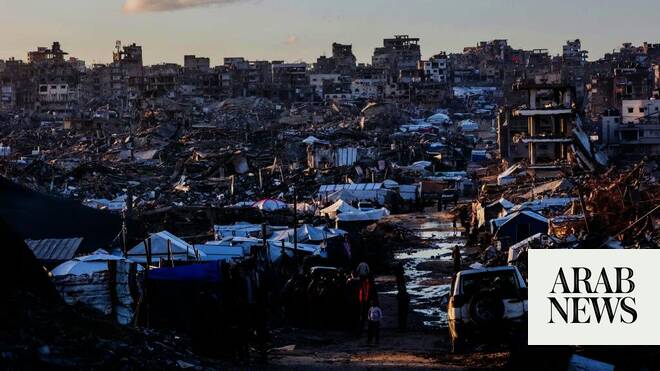
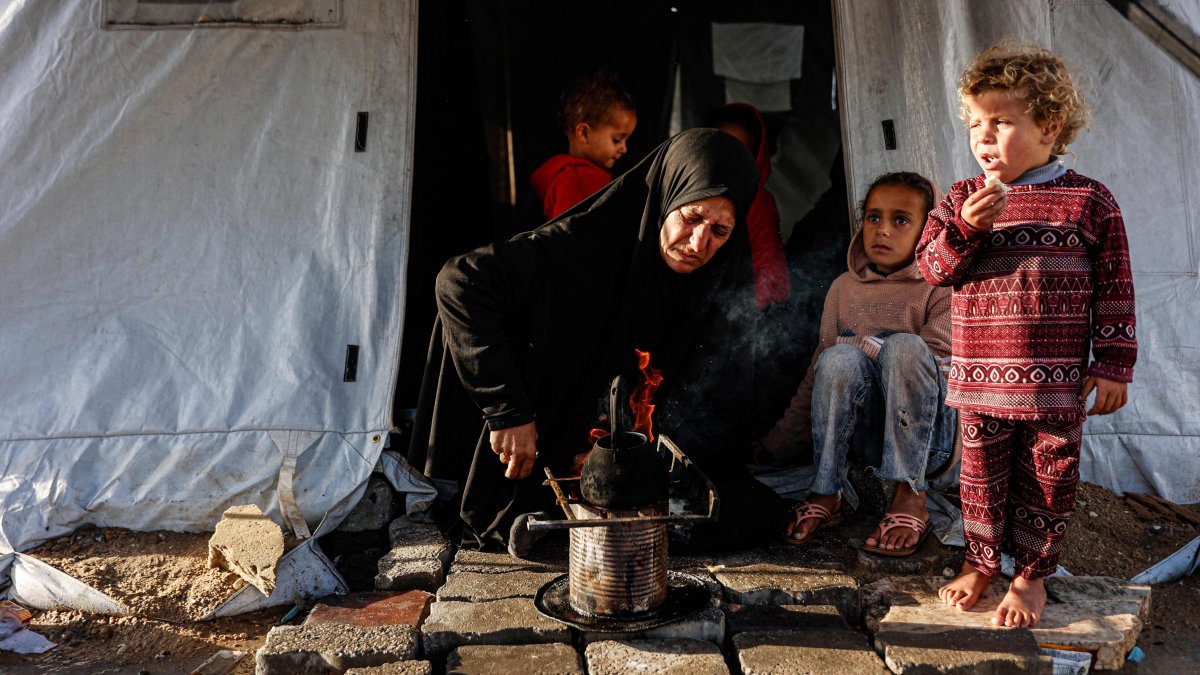
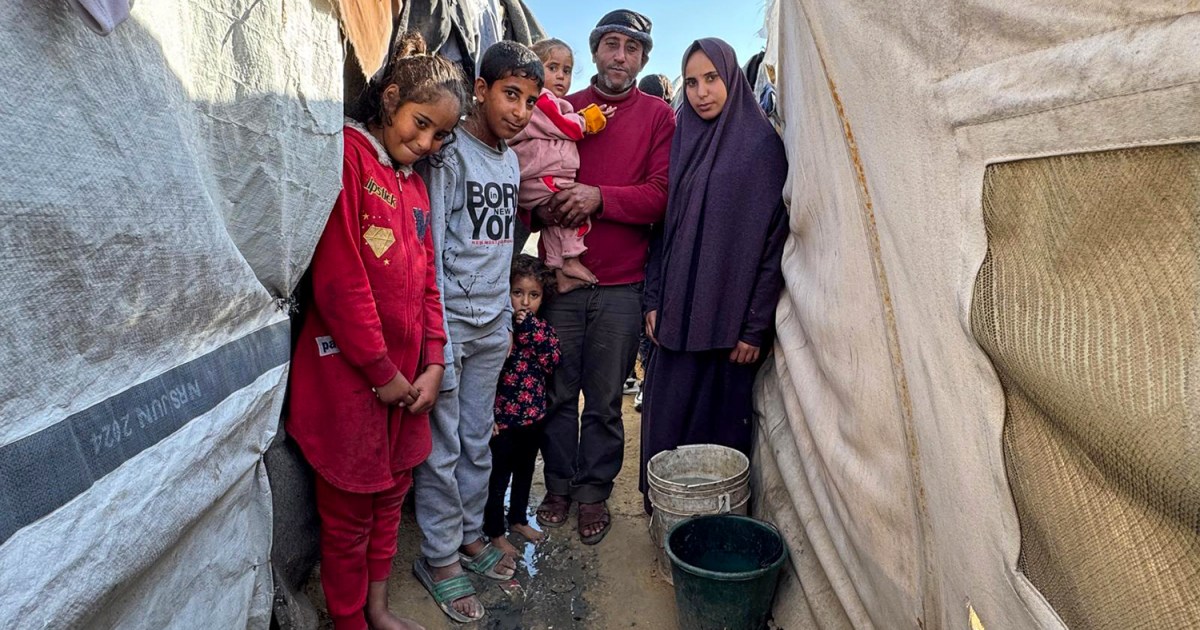
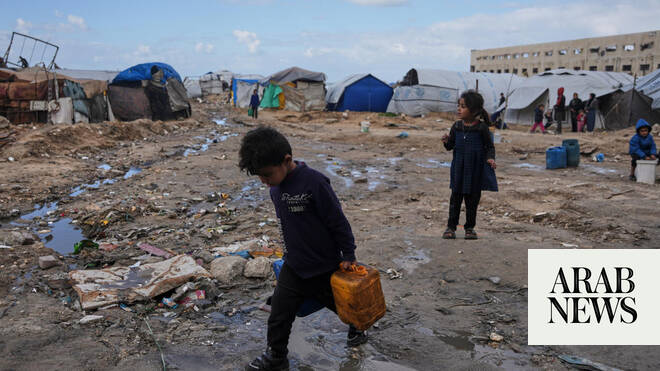
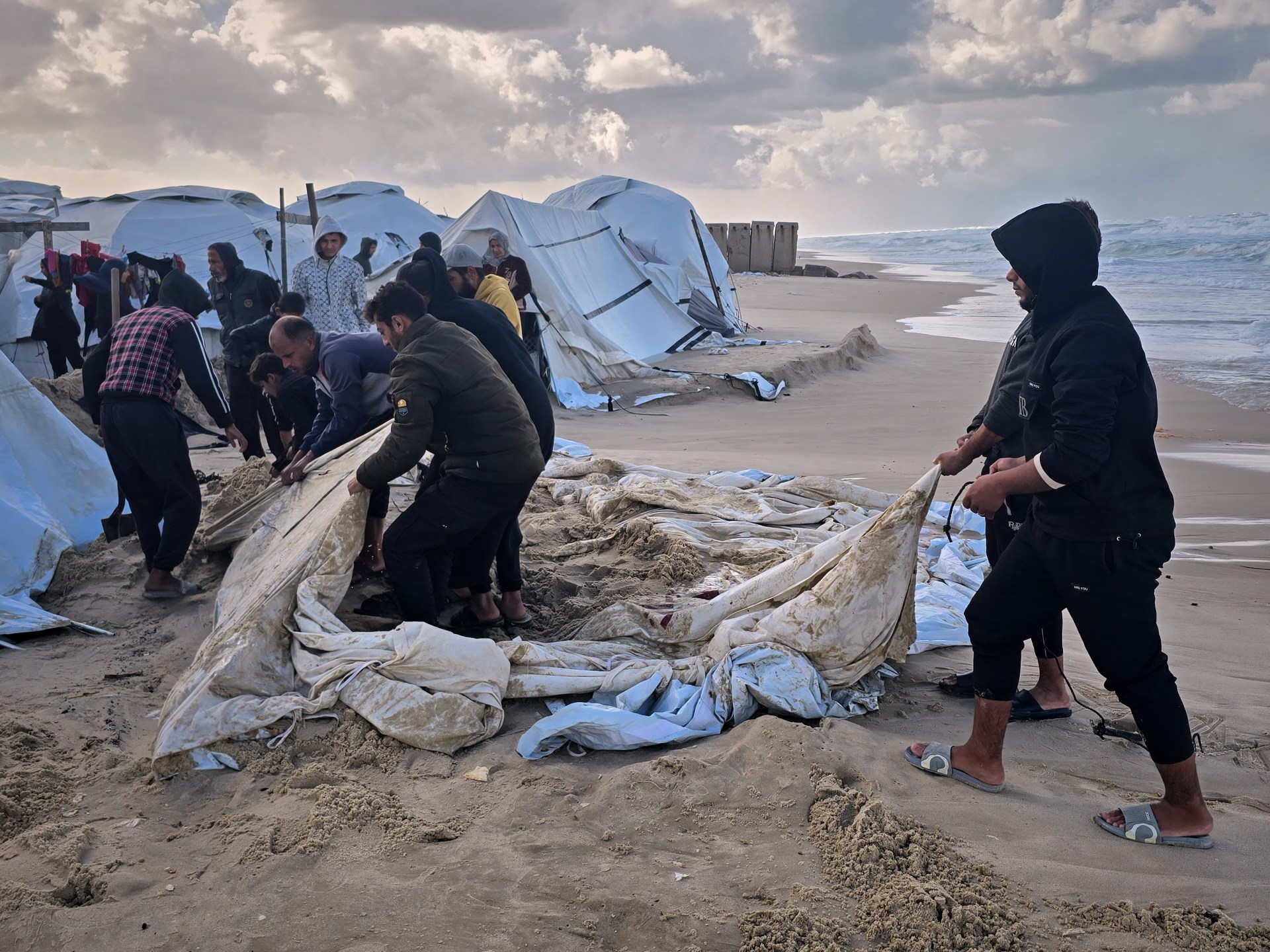
Gazans are facing their third winter in a territory that has become largely uninhabitable. More than 80% of infrastructure – homes, hospitals, schools – has been destroyed, as have drainage networks and water evacuation and sanitation systems. The Gaza Strip – particularly the low-lying coastal zones where the majority of displaced people are concentrated – is vulnerable to flooding. During the severe weather that hit the enclave at the end of November, footage showed flooded roads, water pouring into tents – some of them carried away by the wind – and families bailing out their fragile shelters with buckets or towels as their belongings were completely soaked.