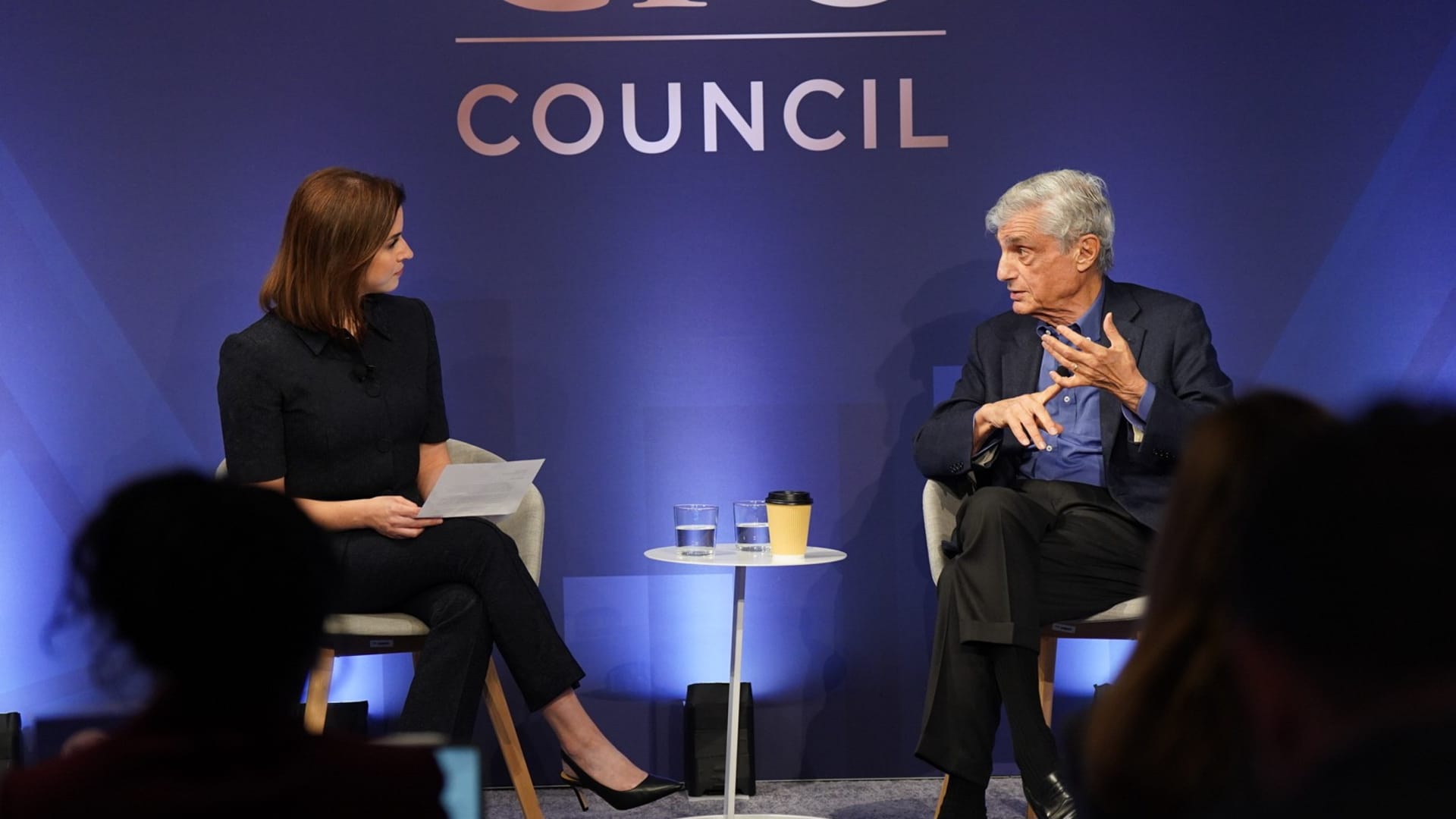
To learn more about the CNBC CFO Council, visit cnbccouncils.com/cfo
The market has been consumed in recent weeks by concerns about tech stock valuations and an AI bubble in the making. But for former U.S. Treasury Secretary and former Goldman Sachs co-chairman Robert Rubin, market complacency runs much deeper than any current debate over whether record market highs can be sustained by a handful of growth stocks. In his view, debate over the current AI boom and whether it will resemble the financial crash or dotcom bubble misses the point. October 1987, and what is known as “Black Monday,” is the historical comparison he is asking the market to focus on.
Rubin has been outspoken about the risks the U.S. economy is running related to the increase in government debt, and he expanded on those concerns at the CNBC CFO Council Summit in Washington, D.C., on Wednesday.
Recent estimates from the Congressional Budget Office put the debt held by the public at 99.8% of gross domestic product for fiscal year 2025. That is twice the historical average of 51% over the past 50 years. But Rubin noted that long-term average masks a trend that has been worsening more recently. In 2000, the same ratio was at 30%.