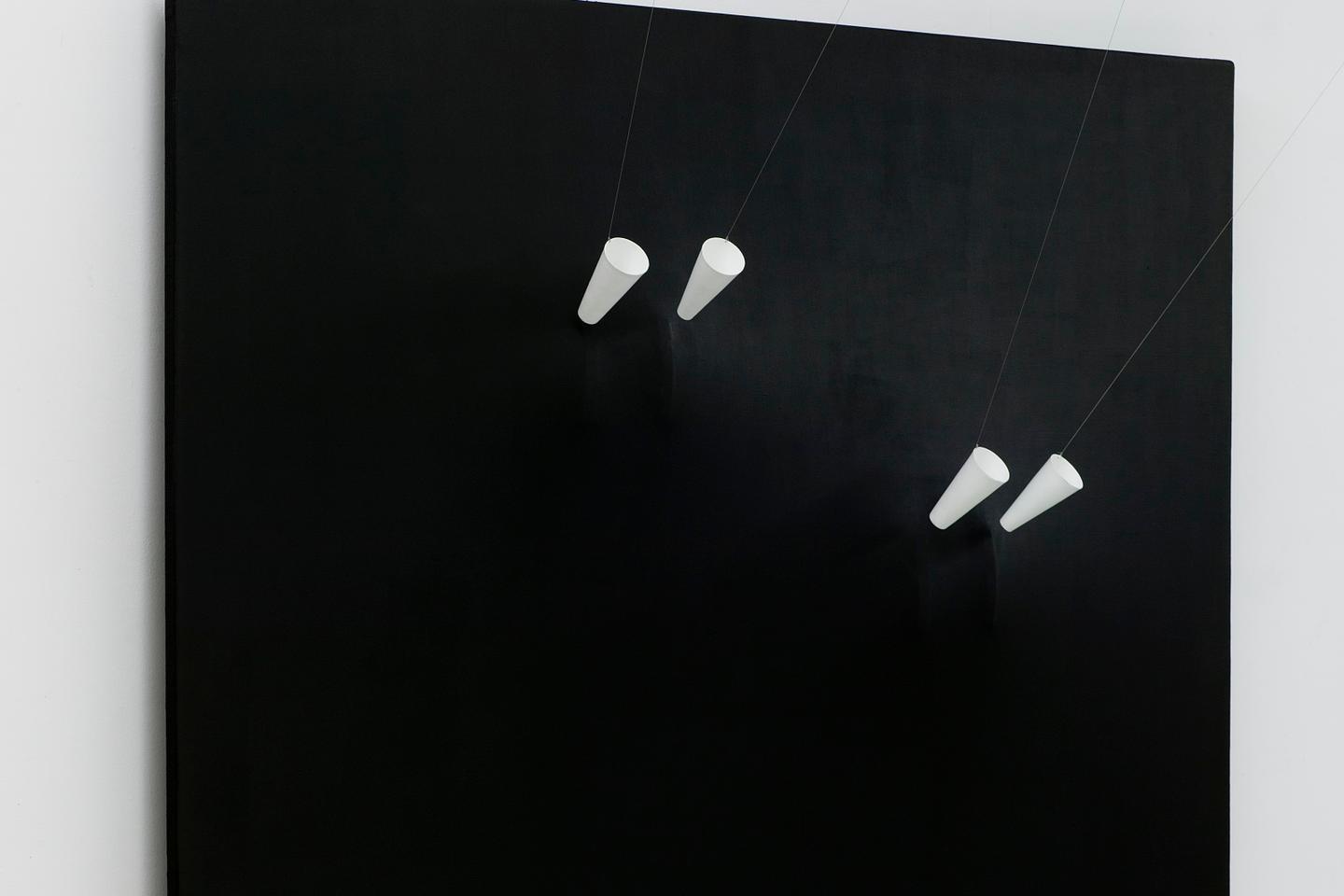
'Mur magnétique' (Magnetic Wall, 1972), by Takis. FRÉDÉRIC LANTERNIER/GALERIE XIPPAS/ADAGP, PARIS, 2025
Opportunities to revisit the works of Greek artist Panayotis Vassilakis (1925-2019), known as Takis, have been rare, as the last major exhibition was held at the Palais de Tokyo a decade ago. While the tribute now presented by the gallery that has represented him since 1990 cannot match that previous scale, it remains rich. The close proximity of sculptures and assemblages enhances the sense of both the diversity and the consistency of his creative output.
Takis was best known for harnessing a physical phenomenon previously unused in sculpture: magnetism. As early as the 1950s, he learned to stretch metal wires through space using just a single point of attachment. Magnetization kept them floating, drawings suspended in the void by an invisible force. When the magnetism was electric, these drawings became mobile, moving in rhythms the artist could control, and when a needle danced against a piano wire, the construction was also sonorous. Sometimes, a sphere would swing at the end of its cable like a monumental pendulum.
Depending on the work, Takis made the technique almost invisible or, conversely, exposed plumb lines, dials, coils, motors, and bulbs. Thus, as much as his contemporary Jean Tinguely, he is one of those who discovered a poetic use for scientific modernity. Light, whether flickering or steady, also played a role in the creation of the Signaux (Signals), such as those Takis later installed at La Défense (Hauts-de-Seine, a business district outside Paris).