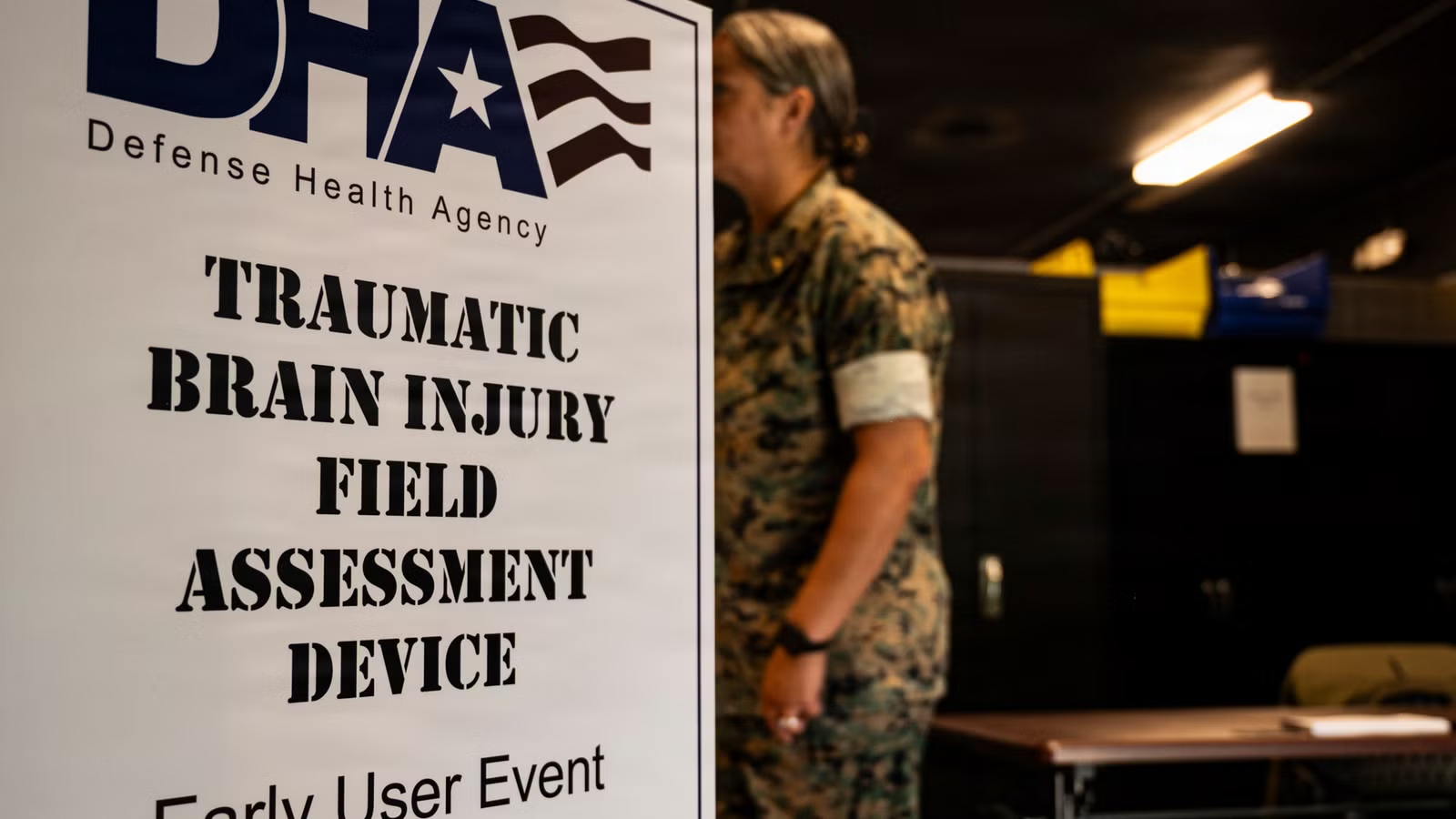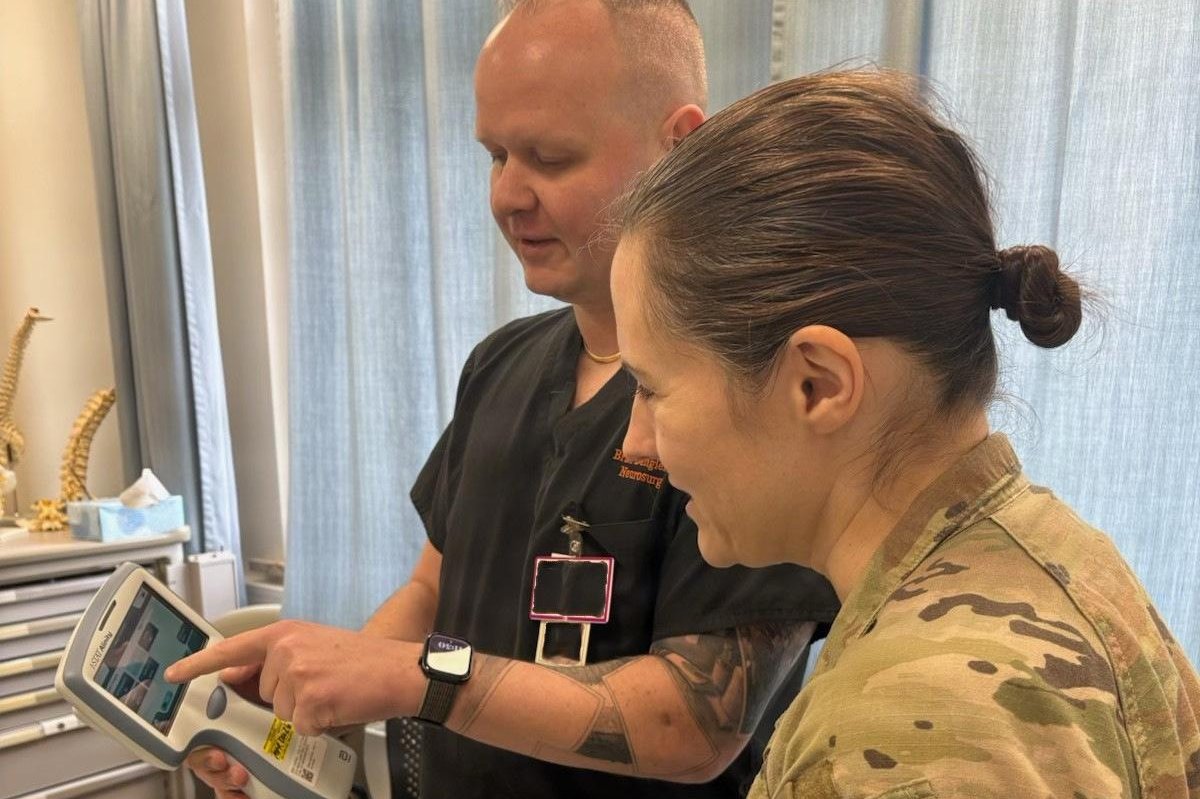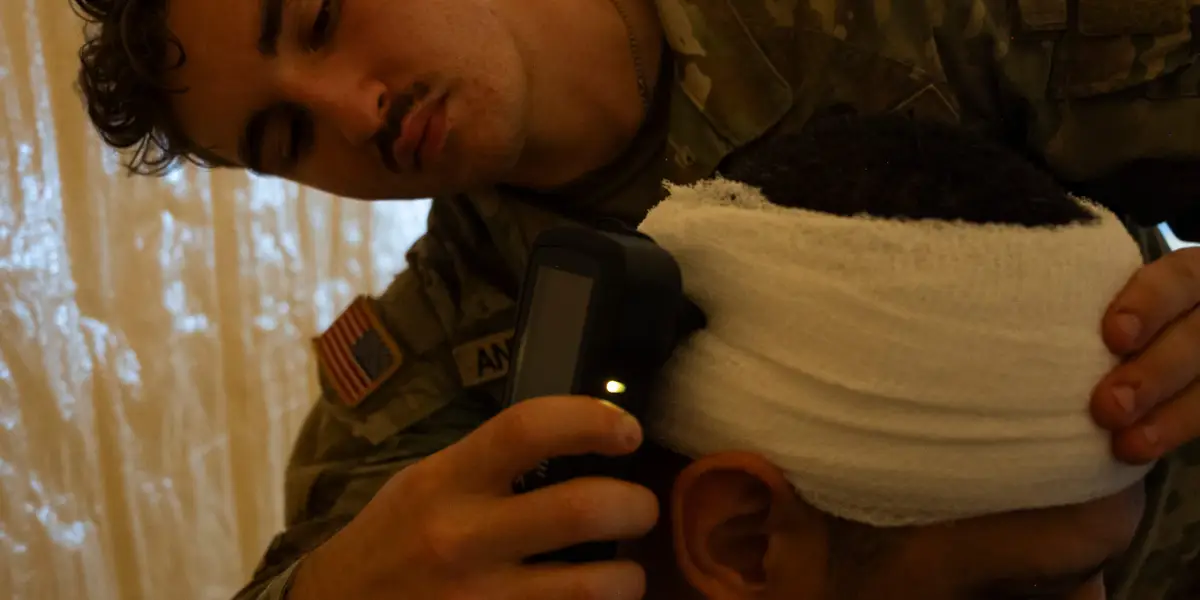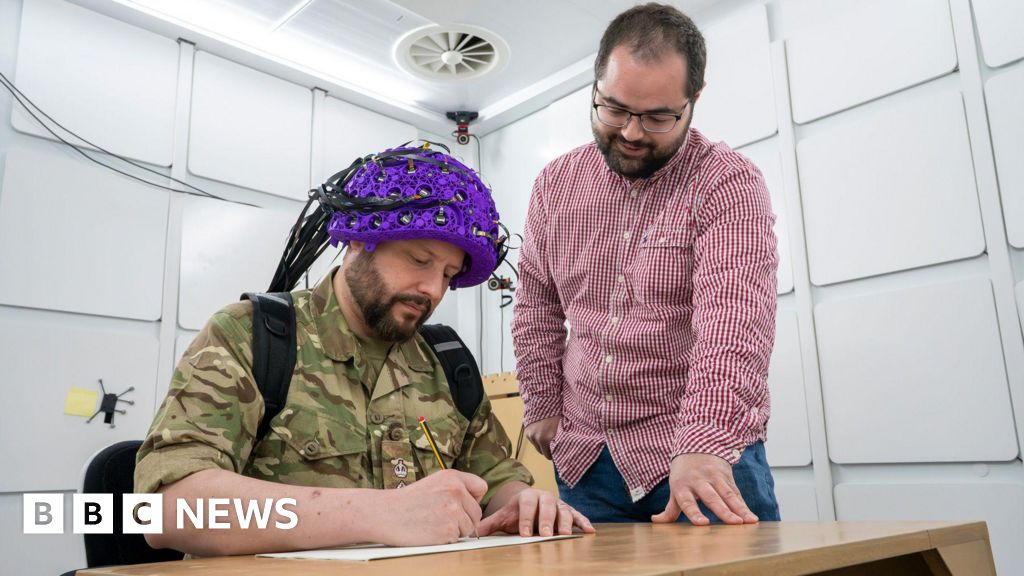
A mobile brain scanning system, thought to be the first of its kind, is being developed to measure the effect of blast exposure in soldiers.
A team at the universities of Nottingham and Birmingham has used £3.1m of Ministry of Defence funding to develop a vehicle-based lab that can be taken to field hospitals, firing ranges and rehabilitation centres.
It will allow the study of how blast and other trauma affects brain function within minutes of the event, far faster than relying on static equipment, scientists said.
It is also likely to be able to be used beyond the military, significantly benefitting research into sports concussion, dementia and epilepsy, researchers added.
The system is believed to be the world's first first fully mobile magnetoencephalography (MEG) scanner - a technique which uses magnets to monitor brain activity in real time.