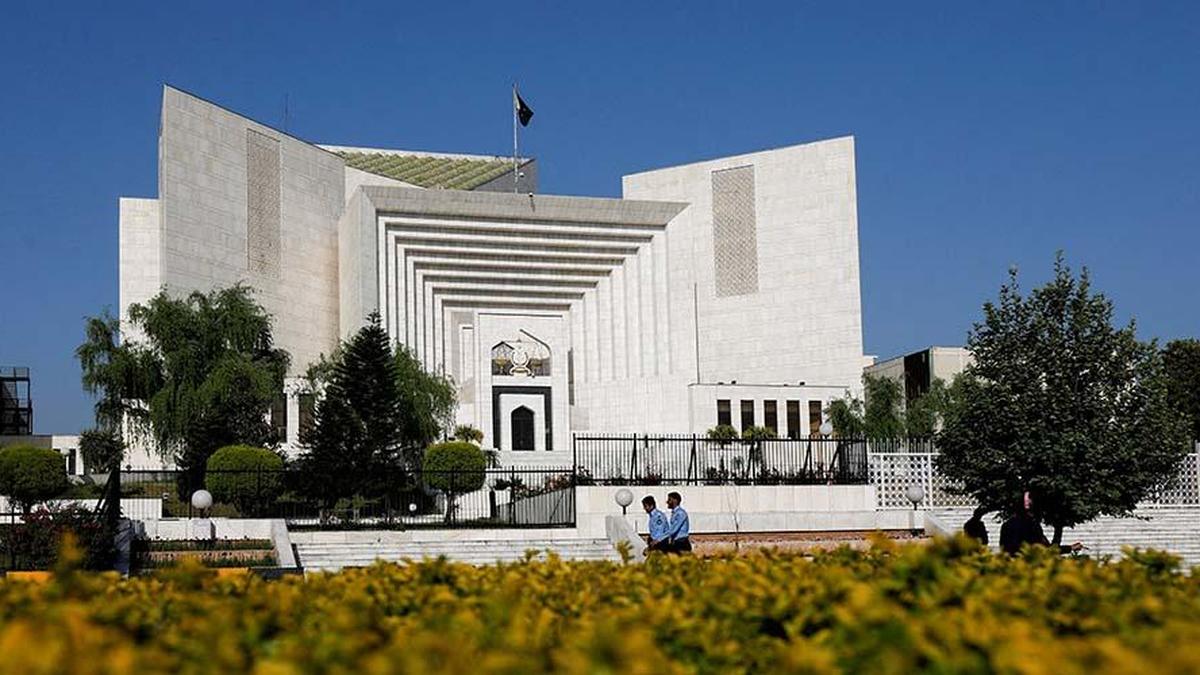
The story so far:
O
n November 12-13, Pakistan’s National Assembly and the Senate passed the 27th amendment, with the President also giving his assent. While the amendment introduces new provisions in the military command structure, it has far-reaching implications for Pakistan’s judiciary. The amendment has created a new Federal Constitutional Court (FCC), and has curtailed the Supreme Court’s role as the custodian of the Constitution, thereby reducing the judiciary’s independence. Three judges from the Supreme and High Courts have already resigned in protest against the 27th amendment, while four judges from the Islamabad High Court have appealed against it.
What are the implications?
The 27th amendment will affect the judiciary’s independence in the following ways. First, the creation of a new FCC to address issues relating to the Constitution and federal-provincial relations would mean that the Supreme Court would no longer have its original jurisdiction. Thus, the Supreme Court would not hear cases relating to the interpretation of the Constitution, fundamental rights, or questions of federal-provincial relations. In recent years, the Supreme Court had used its original jurisdiction to deliberate on a few high profile political developments including the Panama Case (which resulted in the formation of a Joint Investigation Team and the disqualification of Nawaz Sharif, the then Prime Minister in 2017) and the Memogate (in which Pakistan’s Ambassador to the U.S. was investigated on whether he authored a memo that asked the U.S. to support the civilian government in 2011, then led by the Pakistan People’s Party (PPP), and prevent a coup).