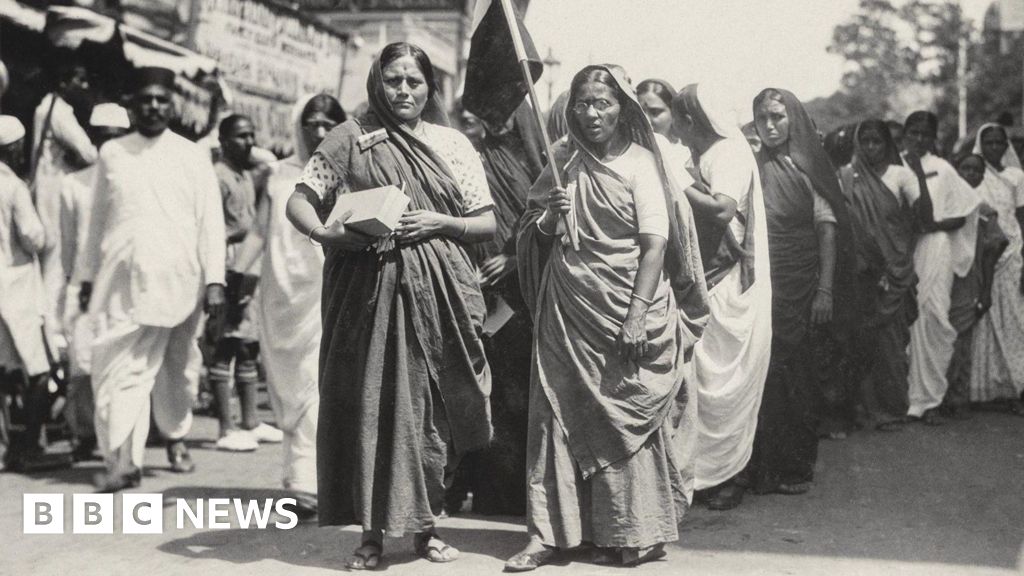
In India, a set of recently discovered photographs is drawing attention to the role of women in one of the country's biggest anti-colonial movements, known as the civil disobedience movement, led by Mahatma Gandhi in 1930-31.
The images do not simply capture female participation. They are visual proof of how women commanded and dominated political activity, often relegating men to the sidelines.
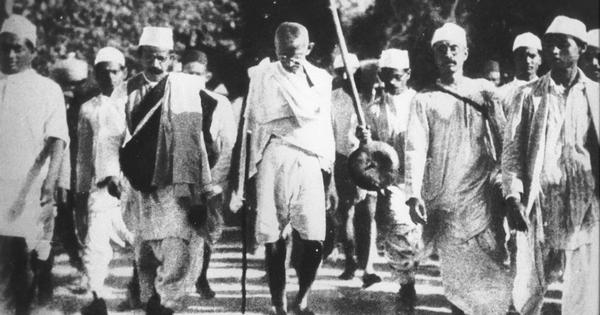
In April 1930, Gandhi concluded his pivotal salt march, breaking the British monopoly on salt production - a charged symbol of colonial misrule. Raising a handful of muddy salt from the sea, he declared himself to be "shaking the foundations of the British Empire".
Afterwards, Gandhi presided over waves of civil disobedience protests, encouraging supporters of the Indian National Congress to manufacture contraband salt, boycott foreign goods, and face down phalanxes of lathi-wielding policemen. Just a few months before, the Congress had declared purna swaraj (complete independence) as its political objective for India.
Historians have long recognised the civil disobedience movement as an important turning point in Indian politics.