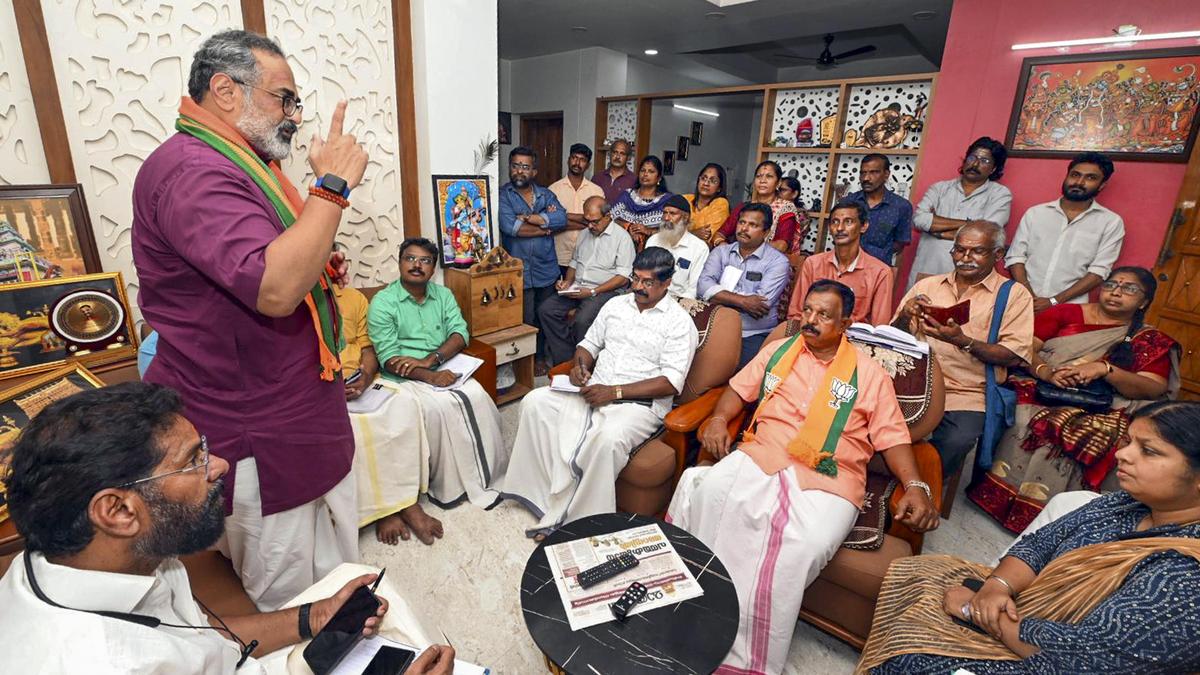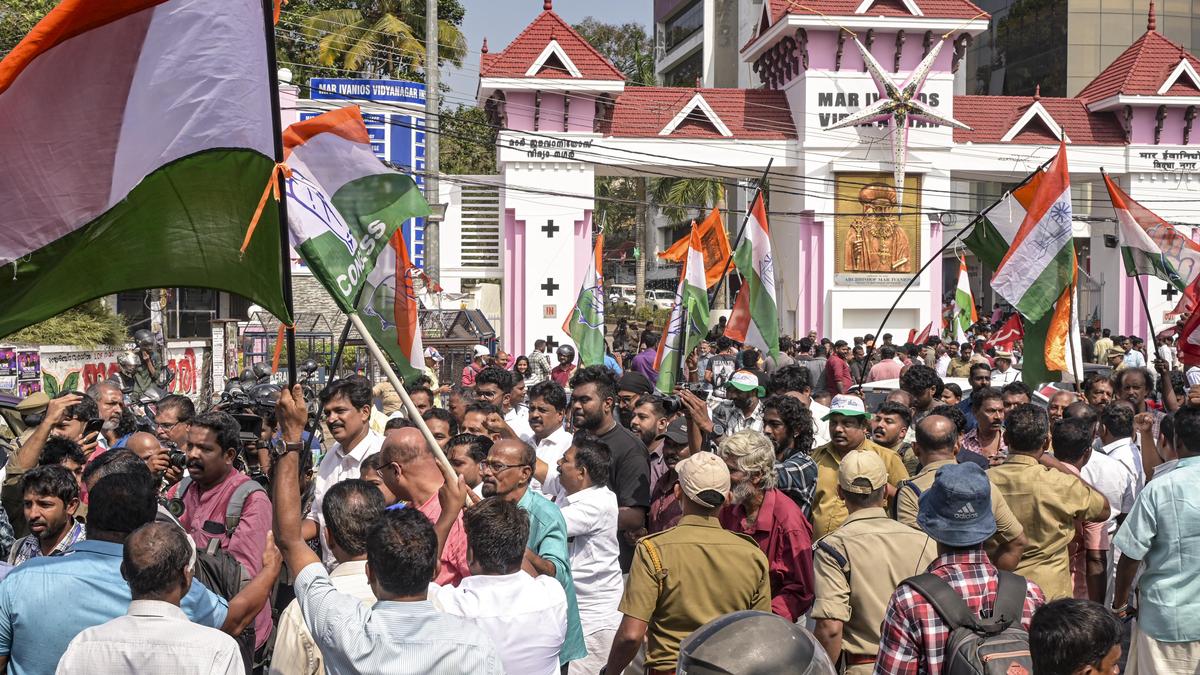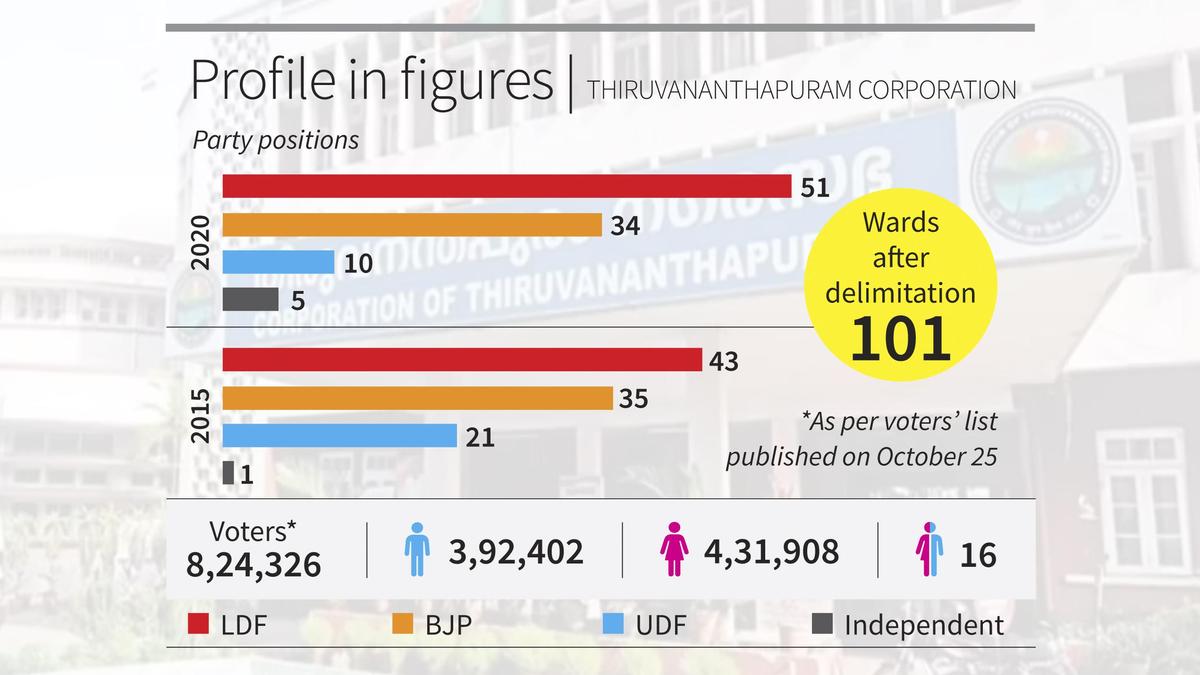
In the days leading up to the local body polls in 2020, the Thiruvananthapuram Corporation had an air of a fort about to be breached. The Bharatiya Janata Party (BJP), which had in the previous election sprung a surprise by increasing its seat tally in the 100-ward Corporation from 6 to 35, had mounted a massive campaign to capture power. As the civic body controlling the capital city, the Corporation holds great symbolic value in Kerala’s politics. The Left Democratic Front (LDF), facing decades of anti-incumbency and with a thin majority of 43 wards against the BJP’s 35 in the previous election, appeared to be on a weak wicket.
Yet, the results proved much of the projections wrong, with the LDF weathering the storm comfortably and improving its tally to 51 wards, in addition to the support of a couple of Independent councillors, while the BJP stayed almost static at 34. The continued decline of the Congress-led United Democratic Front (UDF) has been the story of the past two elections. In 2015, when the UDF’s tally slumped from 40 to 21 seats and the front got pushed to the third place by the BJP, it came as a shock for many. However, when it further declined to 10 seats in 2020, the surprise was much less as many within the party had projected such an outcome especially due to issues in candidate selection.