With Kerala sharing striking similarities with Assam, not only in climate and environment but also in wildlife habitat and their conservation methods, it can draw valuable lessons from the measures adopted by the Assam Forest department in the conservation of one-horned rhinoceroses in its protected sanctuaries with the help of rescued wild elephants.
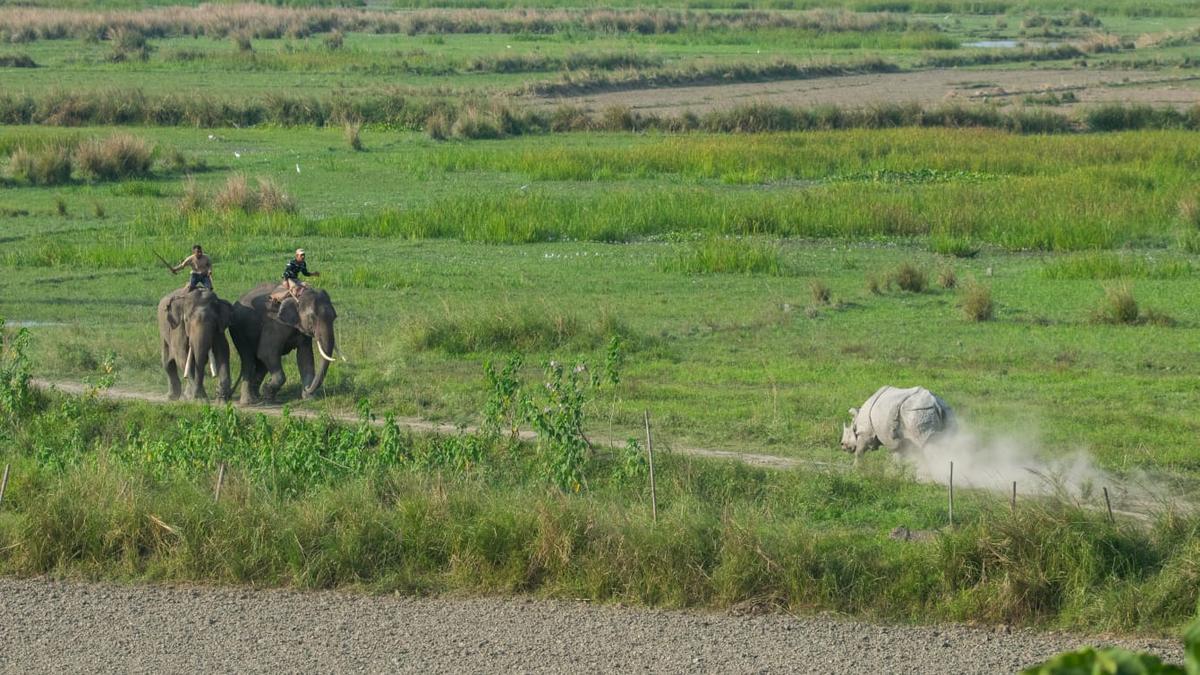
Kerala and Assam face rising man-animal conflict in villages close to wildlife sanctuaries or forest fringe areas. For instance, the Pobitora Wildlife Sanctuary at Mayong, which comes under the Morigaon and Kamrup (metro) districts of Assam and is known for holding the highest density of Greater One-Horned Rhinoceros in the country, is home to 107 rhinos and a kumki elephant force comprising 15 rescued elephants.
The Pobitora Wildlife Sanctuary at Mayong, which comes under the Morigaon and Kamrup (metro) districts of Assam and is known for holding the highest density of Greater One-Horned Rhinoceros in the country, is home to 107 rhinos and a kumki elephant force comprising 15 rescued elephants | Photo Credit: Debajit Nath
Speaking to The Hindu, Pranjal Baruah, ranger of Pobitora Wildlife Sanctuary under Guwahati WL Division, Basistha, said the sanctuary covers around 37 villages, and rhinos stray into 70% of the areas under these villages. Unlike Kerala, marauding rhinos stray into human habitations at least 20 times in a day. However, in 80% of the cases, the rhinos would return to the sanctuary on their own, and only the rest had to be chased back to the sanctuary by the Forest department.