R
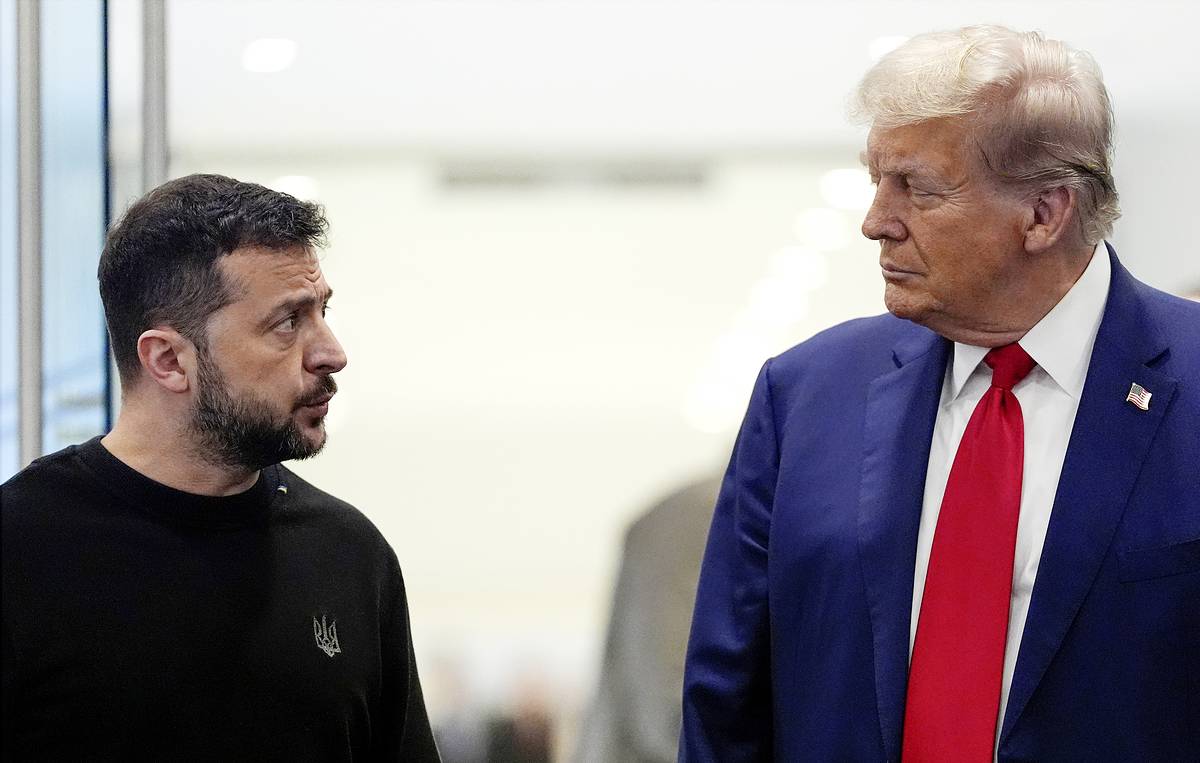
ussian President Vladimir Putin has just achieved one of his dearest wishes: implicating the US in his effort to dismantle international law. That was the main objective of the "Witkoff plan," which Donald Trump has ordered Ukrainian president Volodymyr Zelensky to sign by November 27. Clearly, this plan was drafted at the Kremlin. It repeats all of the war aims initially formulated by Putin in 2022.
While it is clear the plan will not be implemented as is, its significance lies elsewhere: it reveals the Kremlin's future policy goals and illustrates how Putin's inner circle sees the future of the conflict. Some of its bullet points, which have not received enough attention from Western observers, deserve closer analysis.
Let's start with point number two: "A comprehensive non-aggression agreement will be concluded between Russia, Ukraine and Europe. All ambiguities of the last 30 years will be considered settled."
Any historian would have no trouble listing the non-aggression pacts violated by Moscow since the Soviet-Finnish non-aggression pact signed in 1932. But the phrase about "ambiguities (…) settled" gives pause. It appears to be an exhortation from the Russians to Ukrainians and Europeans to wipe the slate clean regarding Russia's behavior in recent years and to reset the clock to zero. Forgotten are Russia's weaponization of its gas supplies as a form of blackmail against Europe, the nuclear apocalypse threats, and the hundreds of thousands of deaths in Ukraine: The only thing that matters is the "reset." Once again, the Russians are counting on Western amnesia, which has never let them down.