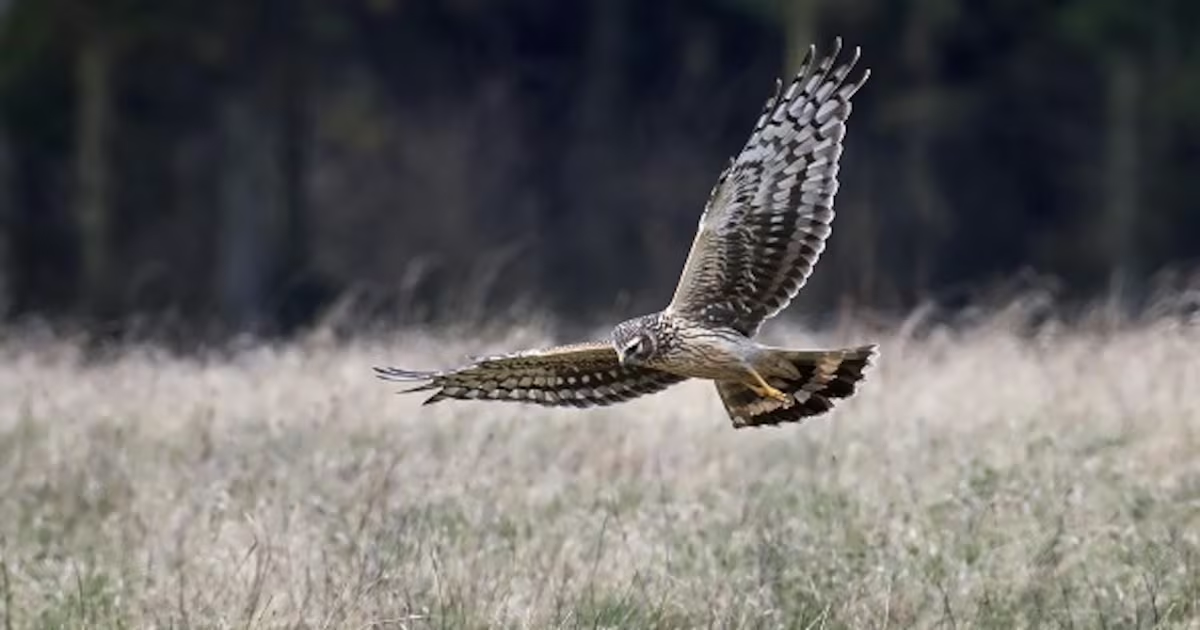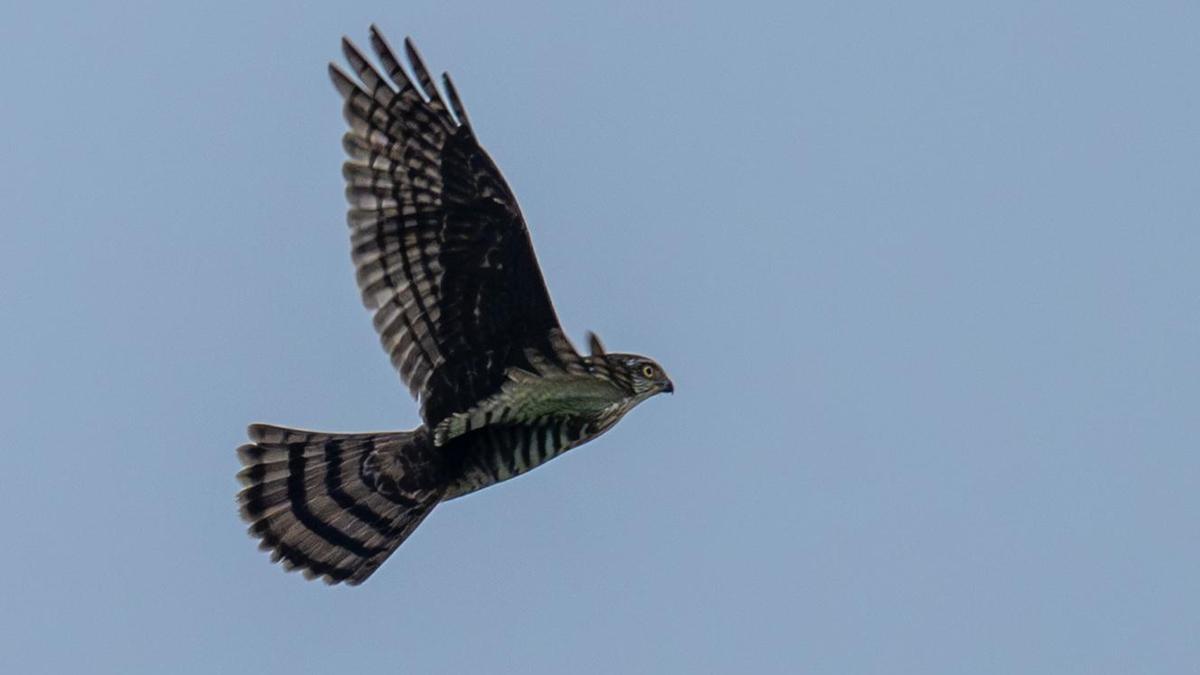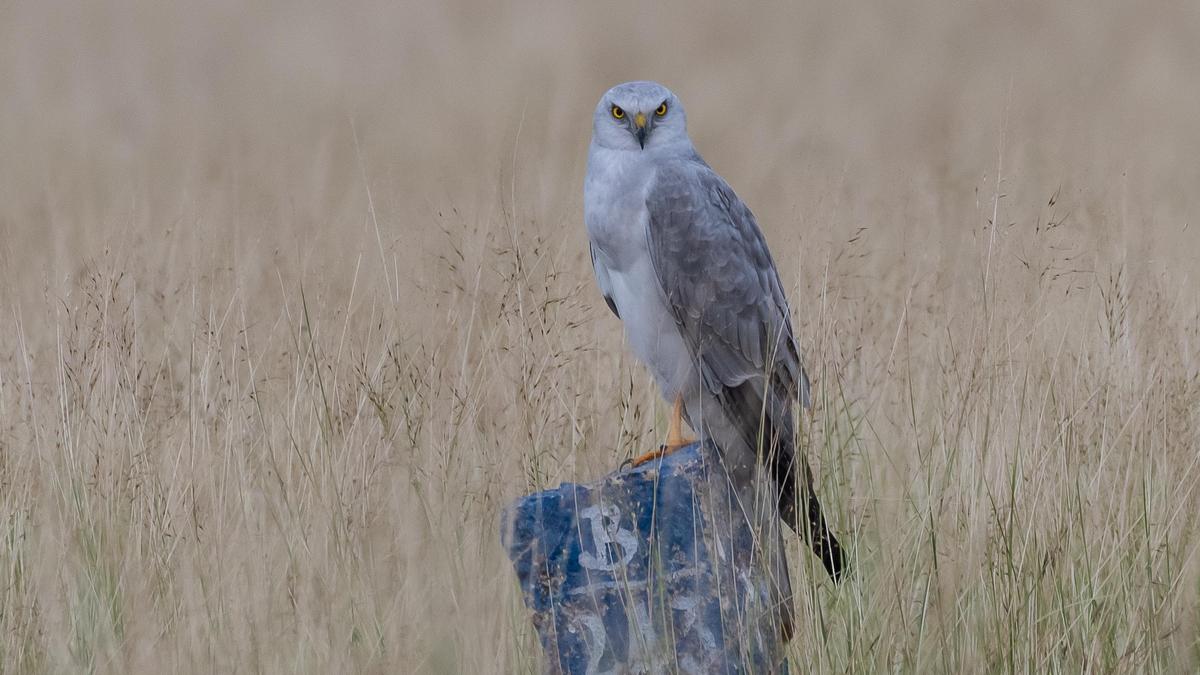
About a week back, in mid-November, researchers at Bengaluru-based ATREE were alerted to data transmitted from a small 9.5 gm transmitter connected to the back of a bird. The Pallid Harrier, geo-tagged by them, has reached its roosting ground in Tirunelveli, all the way from Kazakhstan.Harriers, winged migrants from Central Asia, have started visiting India, flying about 5,000 km in search of grasslands.
A Pallid Harrier. The birds, which breed in Central Asia, come to the Indian sub-continent in winter. Owing to physiological reasons, they don’t cross over the Himalayas, but fly around it.
| Photo Credit:
Sankar Subramanian
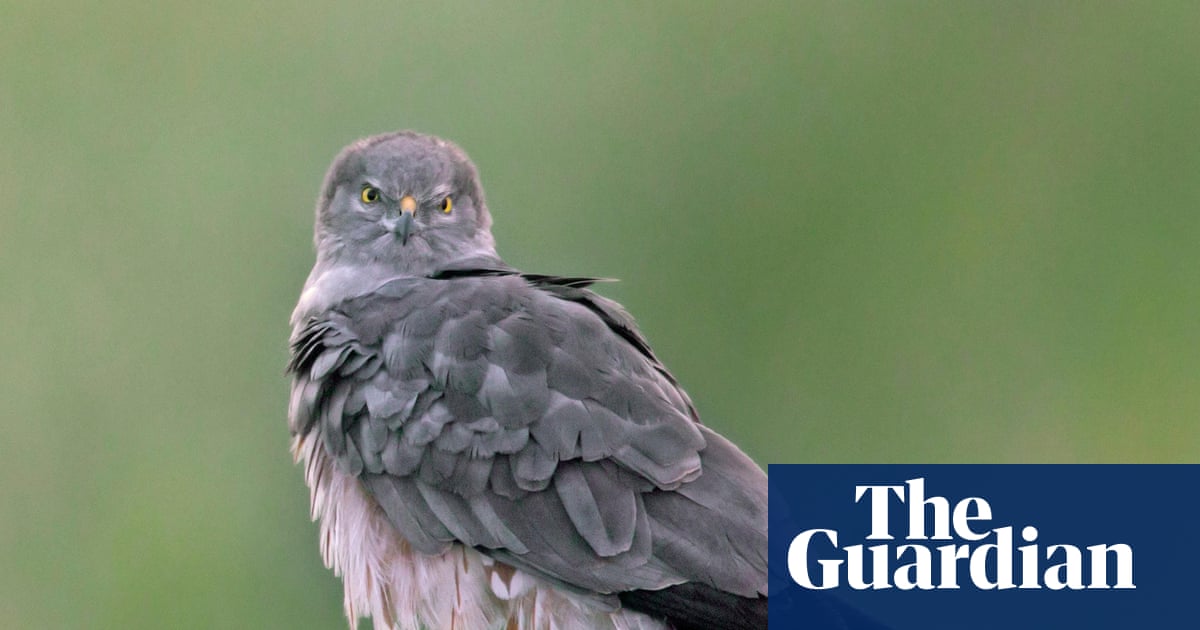
The Harrier Watch Project, a long-term project founded by researchers T. Ganesh and Prashanth M.B., has been monitoring the six harrier species that arrive in India in winter, with the aim of monitoring the raptors and their grassland habitats and assessing the impact of loss of grasslands on the species.Roosting on the ground“Did you know Madiwala lake was a roosting site for Western Marsh Harriers?” asks Arjun Kannan, a PhD student who works with the project, citing a study published in 2010 by Ashok Verma.Among the winter visitors to India are Western Marsh Harriers, Montagu’s Harrier, Pallid Harrier, Hen Harrier, Pied Harrier, and Eastern Marsh Harriers. Unlike many other birds, they roost on the ground among tall grasses and therefore make grasslands their habitats.“We have mapped their roosting sites spanning Western India to South India. We’ve also tagged a few to understand their migration,” said Mr. Kannan. Starting in 2016, the ATREE team has so far tagged about 20 harriers- eight Pallid Harriers and 12 Montagu’s Harriers- from roosting sites in Tal Chhapar in Rajasthan, Nannaj in Maharashtra, and Tirunelveli in Tamil Nadu.Around the Himalayas