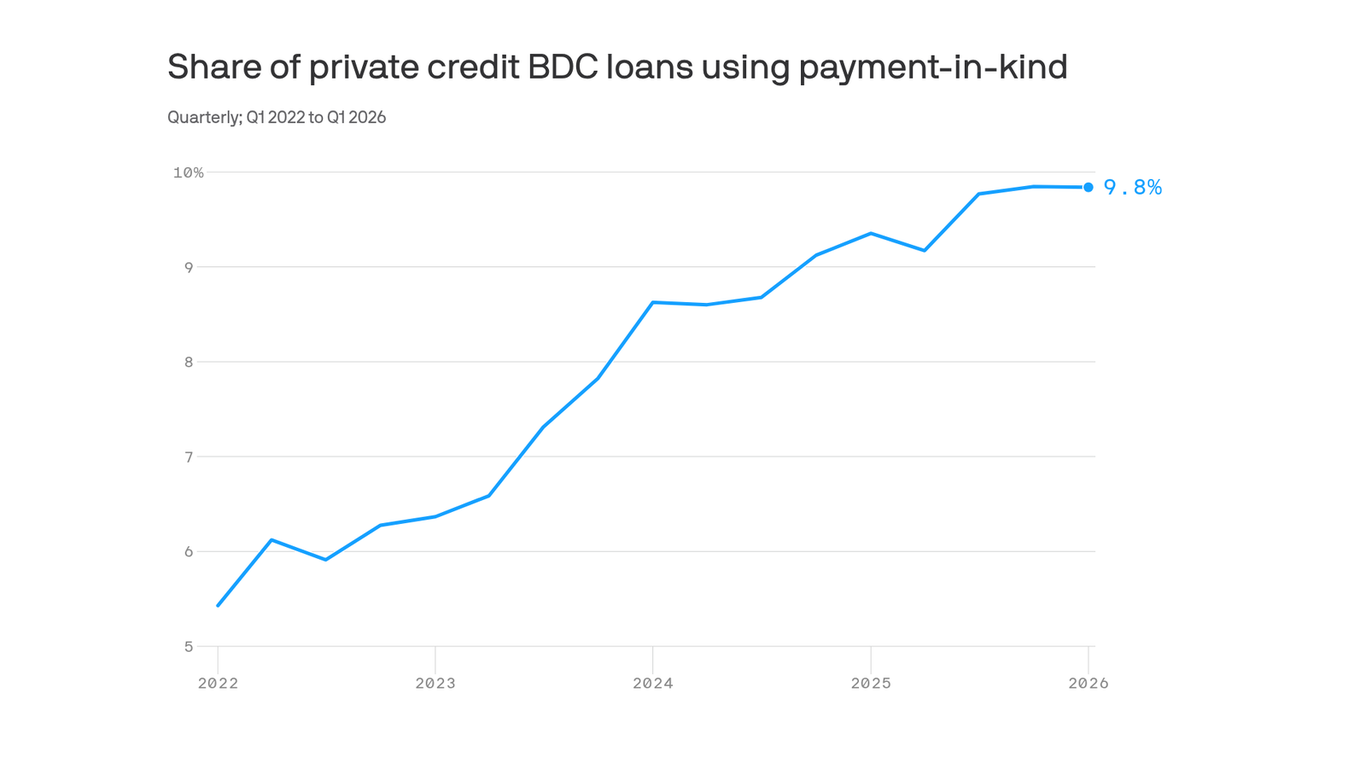
The number of private credit deals that are changed after the initial deal is signed to include more risky terms for the lender is on the rise, according to Lincoln International, an investment bank advisory service that monitors that market. That’s a sign that there are potential “cracks” in the $3 trillion private credit market, according to Brian Garfield, Lincoln’s managing director and head of U.S. portfolio valuations.
Garfield told Fortune that the broader private credit market was healthy, and companies borrowing within it are largely growing their revenue and profits. But the number of companies taking on new debt featuring “payments-in-kind,” or PIKs, had increased.
A PIK typically involves allowing a borrower to forgo paying the usual interest payments on their debt in favor of adding that interest to the principal balance of the debt, which becomes due when the debt matures. PIKs usually use a higher interest rate to compensate the lender, who is taking the extra risk. Companies that take PIKs often do so because they are trying to conserve cash in the short-term.
PIKs aren’t always a negative thing, although they tend not to be used by companies with strong balance sheets. If a PIK is built into a deal from the start, then both sides know what to expect, and the lender will be compensated with a richer yield when the PIK matures. That might count as a “good PIK.”