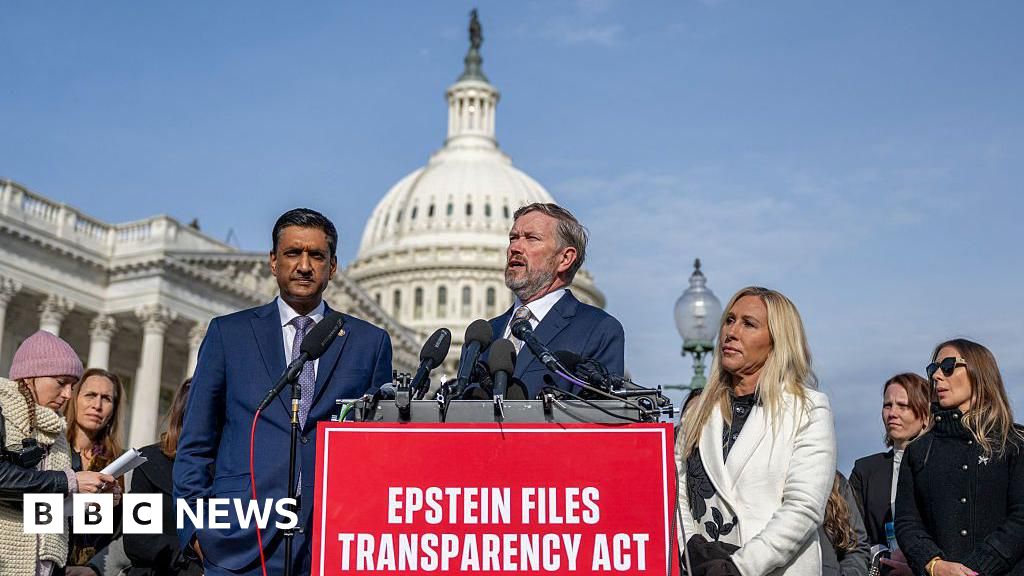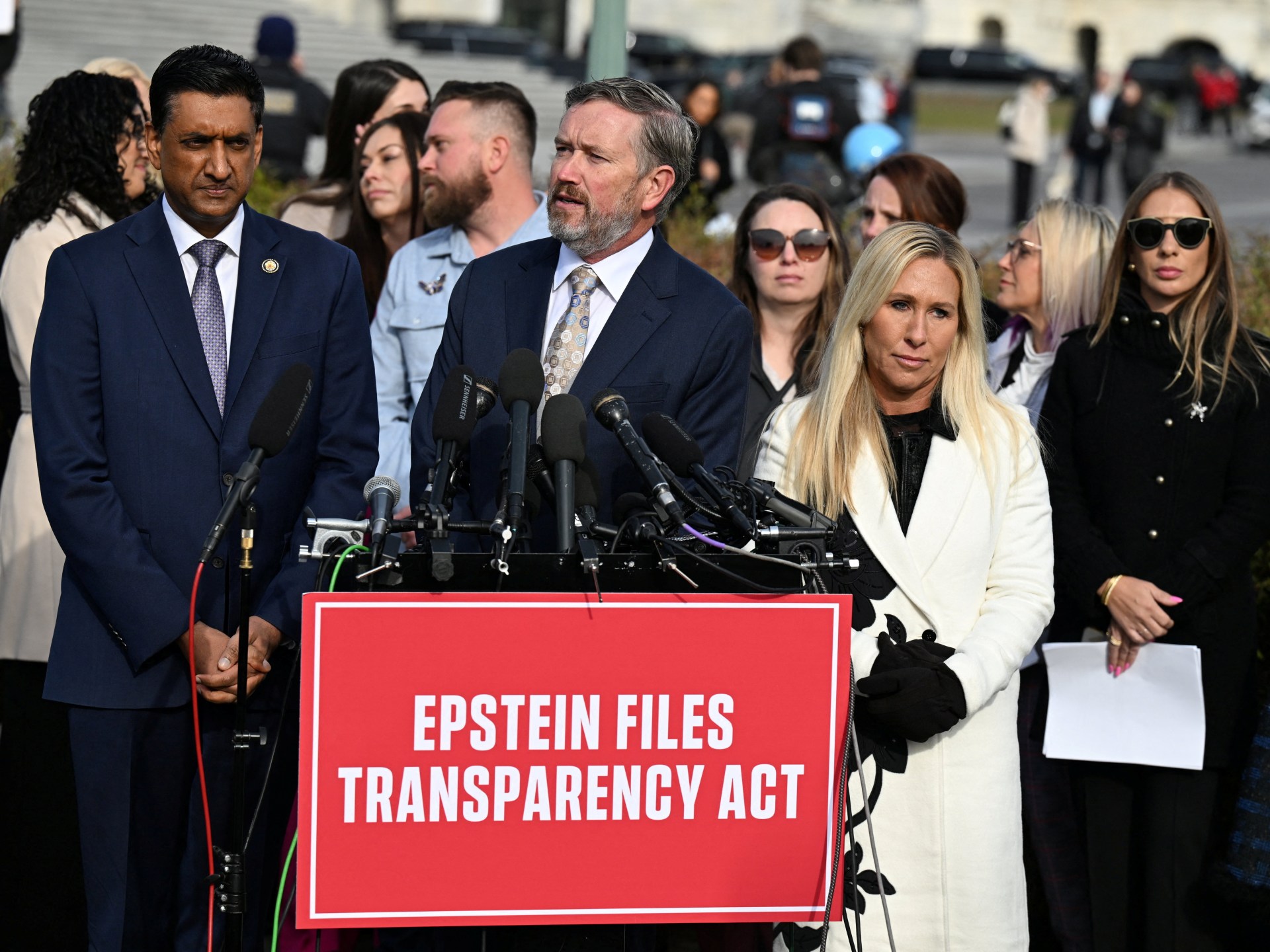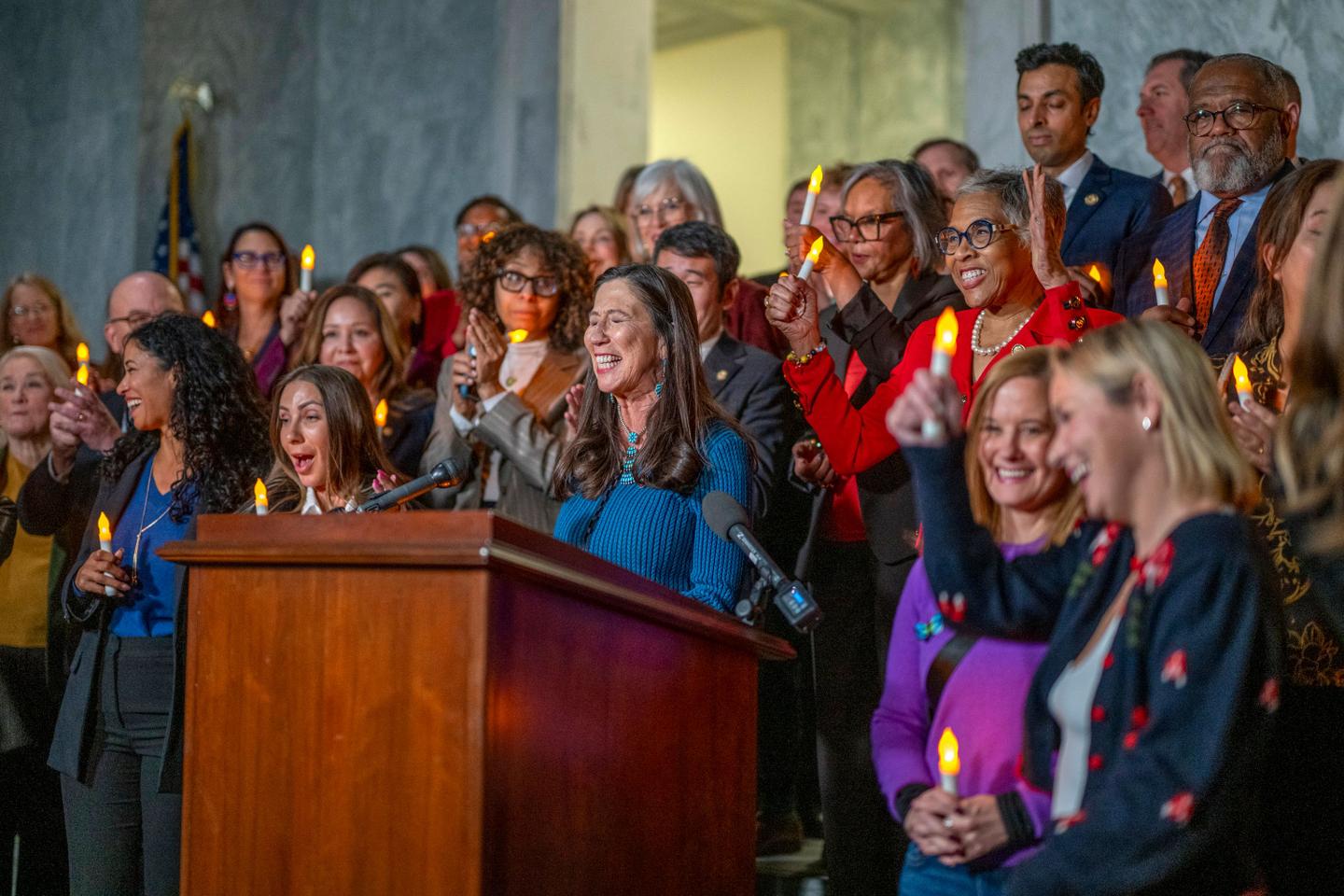
US congresswoman Teresa Leger Fernandez (C), Democrat of New Mexico, announces to attendees of a candlelight vigil to honor the victims of convicted sex offender Jeffrey Epstein, that the US Senate passed the Epstein Files Transparency Act in Washington, DC on November 18, 2025. DANIEL HEUER / AFP
Donald Trump signed into law on Wednesday, November 19, legislation requiring the release of government records on convicted sex offender Jeffrey Epstein, spurring a showdown over whether the US president will allow full disclosure – or return to trying to bury the case.
Trump stunned Washington over the weekend, reversing his months-long opposition to the Epstein Files Transparency Act, and ensuring that it sailed through Congress on Tuesday in a rare show of bipartisan unity.
The Republican president, a former friend of the late sex offender, announced on social media late Wednesday that he had signed the bill, forgoing any media spectacle of the event. Insiders warn that even with the president's signature, his administration could lean on redactions, procedural delays or lingering federal investigations to keep explosive details out of the public eye.
"Once the president signs the bill, he must apply and execute it faithfully. There must be no funny business from Donald Trump," top Democrat Chuck Schumer warned in a speech on the Senate floor. "He must not use the excuse of frivolous investigations to release some Epstein documents, while intentionally hiding others that deserve to be seen by the American public."